











 Secure payments
Standard refund policy
Trade Assurance
Secure payments
Standard refund policy
Trade Assurance
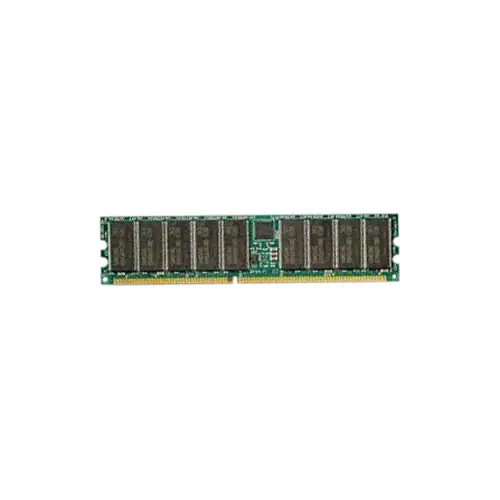
| Model | MT9JSF12872PZ-1G4F1 |
|---|---|
| Product Type | Memory Module |
| Compliance Standards | RoHS |
| Memory Capacity | 1 GB |
| Memory Technology | DDR3 |
| Product Voltage | 1.5V |
| RAM Speed | 1333MHz |
| RAM Standard | DDR3-1333/PC3-10600 |
| Error Identifying | ECC |
| Signal Type | Registered |
| Column Access Strobe (CAS) | CL9 |
| Rank | Single Rank x8 |
| Quantity of Pins | 240-pin |
| RAM Genre | RDIMM |
This Micron 1GB DDR3-1333 Registered ECC RDIMM is purpose-built for entry-level servers and small-scale virtualization hosts where data integrity under continuous operation is critical. Its single-rank x8 organization and CL9 latency deliver predictable electrical loading and low-latency access for memory-resident databases, while the registered signal path ensures stable multi-DIMM configurations even on dual-socket platforms with all channels populated.
1. ECC error correction guards against silent data corruption, delivering the end-to-end data integrity that mission-critical server applications such as financial ledgers and virtualized database clusters demand.
2. Registered buffering enhances signal integrity across fully loaded memory channels, enabling stable, high-capacity server configurations that can scale without compromising uptime.
3. DDR3-1333 frequency strikes a optimal balance of bandwidth and energy use, reliably serving concurrent requests in multi-tenant web hosting and light containerized environments.
4. CL9 latency reduces memory access delays, boosting transaction throughput in latency-sensitive enterprise workloads like OLTP and real-time analytics.
5. Single Rank x8 organization lowers bus electrical load, preserving clock stability and maximizing memory compatibility in dense, multi-DIMM rack server deployments.
Designed for mission-critical server environments, the Micron MT9JSF12872PZ-1G4F1 is a DDR3-1333 Registered DIMM that directly addresses the realities of enterprise computing. Its ECC capability is non-negotiable: in a virtualization cluster hosting dozens of VMs, a single cosmic-ray-induced bit flip can silently corrupt a financial transaction or a customer record. ECC detects and corrects these errors in real time, turning a potential outage into a non-event. The registered signal buffer tackles the stability challenge head-on—when you populate all memory channels in a dense data center node, the register re-drives address and command signals, preventing electrical loading that would otherwise cause boot failures or unpredictable crashes under heavy consolidation workloads. At 1333MHz with CL9 latency, this module feeds in-memory databases like Redis or SAP HANA with the consistent bandwidth needed for millions of low-latency lookups per second, ensuring analytics queries complete without stalling the CPU pipeline. The single-rank x8 organization further benefits database acceleration by enabling balanced interleaving across channels, maximizing throughput without excessive power draw, so your entire rack operates reliably within its thermal envelope. This is not just memory—it is insurance for data integrity and uptime in environments where every byte matters.
Server Memory (DDR3 ECC Registered RDIMM) Identified
General Virtualization
For a lightweight hypervisor hosting 6–8 VMs, target 16 GB minimum using 16 identical MT9JSF12872PZ modules. Populate across three memory channels per CPU with a balanced 2‑DIMM‑per‑channel configuration to enable triple‑channel interleaving. Full ECC and registered signal integrity ensure stable guest uptime and error resilience.
In-Memory Database
Demanding in‑memory datasets push minimal practical capacity to 128 GB, which would require 128 modules — often exceeding available slots on dual‑socket platforms. Where feasible, install six 1‑GB RDIMMs per channel (1DPC‑2DPC mixed) to maximize density while maintaining registered clocking. Strongly prefer migrating to high‑capacity 8 GB or 16 GB RDIMMs for sane slot count and power draw.
High‑Performance Computing
Lightweight per‑node memory for computation‑bound tasks can start at 32 GB using 32 modules. Fill all six channels (two CPUs × three channels) with matched pairs, keeping rank count low to sustain DDR3‑1333 CL9 latency. This single‑rank x8 configuration reduces electrical loading, preserving memory bandwidth critical for MPI‑intensive workloads. Scale by adding identical modules in symmetrical groups only.
Rigorously tested for servers. Works with Dell PowerEdge R720, HP DL380p Gen8, IBM x3650 M4.
Q: Can I mix this MT9JSF12872PZ-1G4F1 with other memory modules of different brands or speeds?
A: Mixing RDIMMs of differing brands or speeds is not recommended. It forces the memory controller to default to the slowest module's speed and may cause signal integrity issues, risking system instability.
Q: Is this memory compatible with my Intel or AMD server platform?
A: This DDR3-1333 registered ECC module is compatible with servers using Intel Xeon 5500/5600 series or AMD Opteron 4100/6100 series platforms that require 1.5V 240-pin RDIMMs. Always verify against your system's qualified vendor list.
Q: What is the recommended DIMM population order for optimal performance?
A: Populate identical modules in matched sets per memory channel, typically starting with slots farthest from the CPU. For dual-processor boards, balance DIMMs equally across both memory riser banks. Consult your server manual for exact slot numbering.
Q: Does this module support overclocking or XMP profiles?
A: No. This is a server-grade registered ECC module designed strictly for stability at JEDEC-standard DDR3-1333 CL9 timings. It does not support XMP profiles or overclocking, as data integrity is paramount in server environments.
Q: What warranty and typical failure rate can I expect?
A: This module includes a one-year warranty. Enterprise-class RDIMMs exhibit an annualized failure rate well below 1% under normal operating conditions, provided they are kept within specified voltage and thermal limits and free from ESD damage.