











 Secure payments
Standard refund policy
Trade Assurance
Secure payments
Standard refund policy
Trade Assurance
| Product Type | Memory Module |
|---|---|
| Memory Capacity | 2 GB |
| Memory Technology | DDR3 |
| Product Voltage | 1.5V |
| RAM Standard | DDR3-1333/PC3-10600 |
| Error Identifying | ECC |
| Signal Type | Registered |
| Column Access Strobe (CAS) | CL9 |
| Rank | Dual Rank x8 |
| Quantity of Pins | 240-pin |
| RAM Genre | RDIMM |
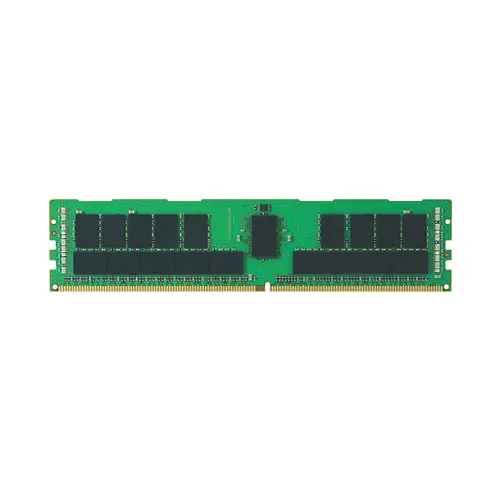
This 2GB DDR3-1333 Registered ECC RDIMM is explicitly engineered for legacy server platforms, delivering critical data integrity for virtualization hosts and light memory-database workloads where error correction is mandatory. Its dual-rank x8 configuration and registered signal buffering enhance memory bus stability, ensuring reliable operation under sustained multi-DIMM population in aging enterprise infrastructure.
1. ECC protection automatically detects and corrects single-bit errors, safeguarding data integrity in financial transactions or database queries where memory faults cannot be tolerated.
2. Registered signal buffering stabilizes high-capacity memory configurations, preventing command bottlenecks when populating all DIMM slots in a dense virtualization host.
3. Dual Rank x8 organization interleaves memory accesses across two internal ranks, maximizing channel utilization and sustaining throughput under mixed workload consolidation.
4. The DDR3-1333/PC3-10600 interface delivers a reliable 10.6 GB/s peak transfer rate, well-suited for consistent performance in legacy enterprise servers running stable production loads.
5. A 2 GB capacity per module provides a granular building block, allowing precise memory sizing for lightweight containers or dedicated appliance roles without overprovisioning.
As a registered DDR3 RDIMM, the MT18JSF25672DZ-1G4 is purpose-built for servers where uptime and data integrity are non-negotiable. Its ECC support is your first line of defense against single-bit memory errors caused by background radiation—a critical safeguard when running a virtualized cluster. Without ECC, a silent bit flip in a hypervisor can corrupt multiple guest VMs simultaneously, leading to unexplained crashes or data loss.
The registered signal architecture adds buffering, which keeps the memory bus stable as you scale capacity. In a dense 2U virtualization host, this means you can populate all DIMM slots without overwhelming the CPU’s memory controller, preserving smooth performance even when dozens of VMs compete for resources.
Dual rank x8 organization further boosts real-world throughput through rank interleaving. For an in-memory database like Redis or a transactional SQL server, the controller can read from one rank while the other is refreshing, effectively hiding latency and delivering more consistent query response times under load.
Coupled with a 1333 MT/s speed at CL9, this module provides the balanced bandwidth needed to keep multi-threaded server workloads from stalling. It is not about peak gaming frame rates; it is about guaranteeing that your data is accurate, your platform remains responsive, and your services stay online through the most demanding business hours.
General Virtualization
For basic virtualization hosts, a minimum of 32 GB is advisable to run several light VMs. Using these 2 GB RDIMMs, populate at least 16 modules across all channels—ideally in a dual‑socket server with 18 or more slots to leverage channel interleaving and ECC reliability. Avoid mixing with unbuffered DIMMs, and leave room for future expansion since 2 GB sticks provide very low density for modern hypervisors.
In‑Memory Database
In‑memory databases thrive on capacity and sustained throughput, often demanding 128 GB or more. With 2 GB RDIMMs, you would need 64 modules, quickly exhausting typical server slot counts. This configuration is impractical; instead, treat these modules only for small test or development instances with limited datasets. For production, replace them with 8 GB or 16 GB Registered DIMMs to reduce loading and power while meeting capacity goals.
High‑Performance Computing
HPC clusters balance core count and memory bandwidth. Populate all memory channels symmetrically with identical 2 GB RDIMMs to achieve maximum interleaving and predictable latency. On a dual‑socket node with three channels per CPU, install six modules per socket (12 total) for 24 GB. This suits lightweight compute tasks but will bottleneck memory‑intensive workloads—plan to transition to higher‑density modules as problem sizes grow.
Server DDR3 RDIMM rigorously tested. Compatible: Dell PowerEdge R710, R610, HP DL380 G7, and more.
Q: Can I mix this MT18JSF25672DZ-1G4 with other memory modules of different brands or speeds?
A: We strongly advise against mixing brands or speeds in registered server platforms. Mixed modules can cause signal integrity issues, boot failures, or silent data corruption. Always use identical, validated RDIMMs for guaranteed stability.
Q: Is this memory compatible with my system?
A: This DDR3-1333 ECC Registered DIMM is compatible with Intel Xeon 5500/5600 series and AMD Opteron 6100 series platforms. Please verify your server board supports 1.5V RDIMMs and 240-pin DDR3 slots before ordering.
Q: What is the recommended DIMM population order for optimal performance?
A: Populate identical RDIMMs per memory channel, starting with the slots farthest from the CPU. Typically, fill blue slots first, then black, in matched pairs or trios. Always consult your server motherboard manual for platform-specific balancing rules.
Q: Does this module support overclocking or XMP profiles?
A: No. This is a JEDEC-standard server-grade RDIMM. It does not support XMP or overclocking, as enterprise environments require absolute stability. It runs strictly at DDR3-1333 with CL9 timings at 1.5V.
Q: What warranty and typical failure rate can I expect?
A: This module includes a 1-year warranty. Typical annualized failure rate (AFR) for quality enterprise RDIMMs is below 0.5%. Our units undergo rigorous testing to ensure reliability well beyond the warranty period.