











 Secure payments
Standard refund policy
Trade Assurance
Secure payments
Standard refund policy
Trade Assurance
| Product Type | Memory Module |
|---|---|
| Compliance Standards | RoHS |
| Memory Capacity | 32 GB |
| Memory Technology | DDR4 |
| Product Voltage | 1.2V |
| RAM Speed | 2400MHz |
| RAM Standard | DDR4-2400/PC4-19200 |
| Error Identifying | ECC |
| Signal Type | Registered |
| Column Access Strobe (CAS) | CL17 |
| Rank | Quad Rank x4 |
| Quantity of Pins | 288-pin |
| RAM Genre | RDIMM |
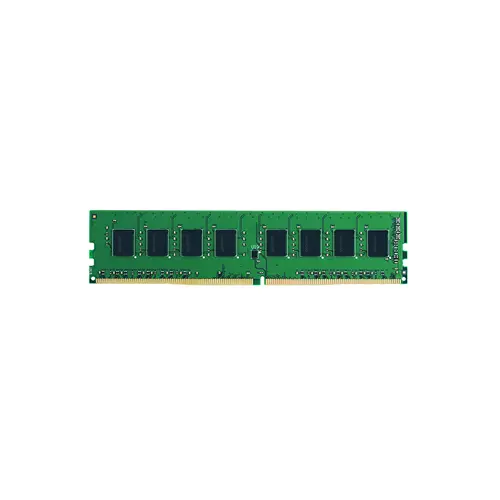
This DDR4-2400 Registered DIMM with ECC and a quad-rank x4 configuration is engineered for server platforms running memory-intensive workloads such as virtualization and in-memory databases, where its error correction and signal integrity ensure critical data protection under continuous operation. The quad-rank design maximizes capacity density per channel while the low 1.2V operating voltage and CL17 latency deliver a balanced mix of energy efficiency and reliable performance in multi-slot server deployments.
1. Registered DIMM architecture buffers command and address signals, stabilizing multi-DIMM server platforms and enabling higher memory population density without compromising system reliability.
2. ECC error correction detects and corrects single-bit memory faults in real time, preserving data integrity for transactional databases and mission-critical workloads where even silent corruption is unacceptable.
3. 32 GB per module capacity allows dense memory footprints in 1U and 2U servers, multiplying headroom for virtualization hosts and in-memory analytics without exhausting physical DIMM slots.
4. Quad Rank x4 organization packs four logical ranks on a single stick, maximizing total server memory capacity while maintaining interleaved access patterns that help sustain bandwidth under heavy multi-tenant loads.
5. DDR4-2400 speed delivers a solid 19.2 GB/s peak transfer rate, striking a power-efficient balance that handles concurrent enterprise application streams without driving excessive thermal strain in tightly packed racks.
The Micron MTA72ASS4G72LZ-2G3A2 is a server-class RDIMM engineered for mission-critical enterprise workloads, and its four defining characteristics directly address the real-world pain points of data center operators. First, ECC corrects single-bit memory errors caused by cosmic radiation or electrical noise. In a virtualized cluster hosting dozens of VMs, an undetected bit flip can silently corrupt hypervisor state and cascade into application crashes or data loss; ECC transforms a silent threat into an instantly corrected event, preserving the integrity of financial transactions or patient records. Second, the registered buffer isolates the memory controller from the electrical load of multiple ranks. This enables stable population of all DIMM slots in dense multi-socket servers, so when you scale from a few VMs to a full hybrid cloud stack, the platform runs without signal degradation under sustained pressure. Third, the quad-rank x4 organization maximizes interleaving efficiency – this becomes tangible in an in-memory database like Redis or SAP HANA, where higher rank count increases bank-level parallelism, delivering lower command latency and faster query responses under concurrent access. Fourth, a 32 GB capacity per module keeps the memory-to-core ratio balanced, letting you allocate large datasets entirely in RAM for analytics workloads without paying a latency penalty for swapping to SSDs. Together, these features ensure your virtualization cluster or real-time analytics engine stays resilient, responsive, and scaled precisely to demand.
General Virtualization
For general virtualization hosts, this 32GB Registered ECC DDR4-2400 module provides the reliability and stability essential for hypervisor environments. Deploying six to eight modules per dual-socket server (192–256 GB total) comfortably supports 30–50 modest virtual machines. Always install modules in matched sets per memory channel to maintain balanced performance and take full advantage of the error-correcting capability under constant uptime demands.
In-Memory Database
In-memory databases like Redis or SAP HANA demand both capacity and data integrity, making Registered ECC RDIMMs non-negotiable. Populate all available DIMM slots with these 32GB quad-rank modules to maximize capacity, targeting 512 GB or more on a single node for large datasets. Be aware that quad-rank DIMMs may force a slight reduction in memory speed when all channels are fully loaded; validate the maximum operating frequency in your server’s manual to balance capacity against latency.
High-Performance Computing (HPC)
HPC workloads running simulation or fluid dynamics require high memory bandwidth and sustained error-free operation over days-long jobs. Populate each CPU's memory channels symmetrically with one or two 32GB RDIMMs per channel—typically eight modules for a dual-socket node—to achieve a sweet spot of 256 GB capacity at full 2400 MT/s speed. Avoid mixing quad-rank configurations across uneven channels, as it can break the uniform memory access pattern critical for parallel MPI applications.
Rigorously tested for server compatibility. Works with Dell PowerEdge R740, HPE DL380 Gen10, Lenovo SR650, and more.
Q: Can I mix this MTA72ASS4G72LZ-2G3A2 with other memory modules of different brands or speeds?
A: We strongly advise against mixing different brands, speeds, or ranks in a server. Mixing can cause signal integrity degradation, boot failures, and system instability, especially with registered ECC modules that require strict population homogeneity.
Q: Is this memory compatible with my Intel Xeon Scalable or AMD EPYC server platform?
A: This DDR4-2400 RDIMM is designed for DDR4-based server platforms supporting registered ECC memory. Verify your motherboard's QVL for this specific Micron part number, as quad-rank x4 configuration may impose population limitations on some AMD EPYC or older Intel Xeon systems.
Q: What is the recommended DIMM population order for optimal performance with this quad-rank module?
A: To maximize memory bandwidth, populate identical quad-rank RDIMMs in sets of four per memory channel when supported. Always consult your server's manual; generally, fill the farthest slot from the CPU first, then balance across channels to avoid performance penalties.
Q: Does this module support overclocking or XMP profiles?
A: No. As an enterprise-grade registered ECC DIMM, this module operates strictly at JEDEC standard DDR4-2400 with CL17. Overclocking and XMP are disabled to ensure data integrity, reliability, and 24/7 server stability required for mission-critical workloads.
Q: What warranty and typical failure rate can I expect for this server memory?
A: This Micron module includes a 1-year warranty. Annualized failure rates (AFR) for enterprise RDIMMs are typically below 0.5% under proper thermal management. We recommend proactive hardware monitoring and adhering to your server vendor's environmental specifications to maximize longevity.