











 Secure payments
Standard refund policy
Trade Assurance
Secure payments
Standard refund policy
Trade Assurance
| Product Type | Memory Module |
|---|---|
| Memory Capacity | 32 GB |
| Memory Technology | DDR3 |
| Product Voltage | 1.5V |
| RAM Speed | 1333MHz |
| RAM Standard | DDR3-1333/PC3-10600 |
| Error Identifying | ECC |
| Signal Type | Registered |
| Column Access Strobe (CAS) | CL9 |
| Rank | Octal Rank x4 |
| Quantity of Pins | 240-pin |
| RAM Genre | RDIMM |
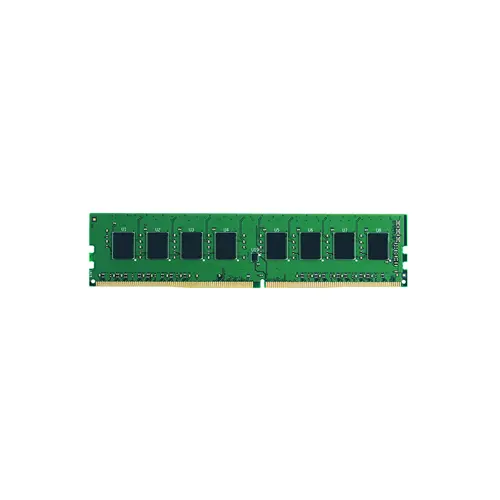
This RDIMM is a server-class memory module designed for legacy enterprise platforms requiring high memory capacity and data integrity in virtualized environments or in-memory databases. Its octal-rank x4 organization maximizes density per channel while the registered signal type and ECC ensure stable operation and error correction under heavy, multi-DIMM workloads.
1. High-density module capacity enables aggressive server consolidation, allowing hypervisors to host significantly more virtual machines and in-memory databases on a single node.
2. ECC protection provides a vital safety net against single-bit data corruption, preserving the integrity of financial transactions and mission-critical analytics.
3. Registered clocking buffers the command/address lines, maintaining crisp signal integrity when fully populating high-capacity server boards under sustained load.
4. Octal rank interleaving maximizes bank-level parallelism, keeping data pipelines saturated and reducing stalls during heavily concurrent query processing.
5. The balanced operating frequency ensures dependable, bandwidth-consistent throughput for content delivery and collaboration services without exceeding thermal design limits.
The MT144JSZQ4G72LZ-1G1D1A5 is a 32 GB DDR3-1333 registered RDIMM, purpose-built for server environments where uptime and data integrity are non-negotiable. Its ECC capability silently corrects single-bit memory errors, directly preventing silent data corruption in a virtualization cluster running dozens of VMs — a flipped bit in a hypervisor’s memory structure could otherwise crash an entire host. The registered signal buffer stabilizes heavy loads by reducing electrical strain on the memory controller, so a fully populated 2U server remains rock-solid even under sustained 90% memory utilization.
Equally critical is the octal-rank x4 organization combined with 1333 MHz speed and CL9 latency. In an in-memory database like Redis or SAP HANA, high rank count boosts interleaving depth, raising effective bandwidth for simultaneous read-modify-write streams during a transactional peak. This means your financial reporting runs in seconds, not minutes. Finally, the 240-pin form factor guarantees seamless drop-in compatibility with legacy DDR3 server boards, protecting your hardware investment while meeting today’s memory-hungry workloads.
General Virtualization
For virtualized environments, reliability and capacity are paramount. Deploy these 32GB DDR3-1333 RDIMMs symmetrically across all memory channels in a dual-socket server—for example, install one DIMM per channel (eight modules total) to achieve 256GB while sustaining full 1333MHz speed. If higher consolidation ratios demand more memory, populate two DIMMs per channel (16 modules, 512GB), but verify platform support because the octal-rank design may force a speed reduction to 1066MHz or 800MHz.
In-Memory Database
In-memory databases require balanced low latency and maximum capacity. Populate each processor’s memory channels with a single 32GB RDIMM to maintain CL9 latency and the full 1333MHz frequency, delivering 256GB on a typical dual-socket, four-channel-per-CPU platform. When the dataset exceeds this, move to two DIMMs per channel for 512GB total; be aware that the octal-rank x4 organization can limit achievable memory speed and may necessitate relaxing timings, so consult your server’s memory population guide for optimal configuration.
High-Performance Computing (HPC)
HPC workloads are highly sensitive to memory bandwidth. To maximize throughput, install exactly one 32GB RDIMM into each available memory channel across all CPU sockets—on a dual-socket machine with four channels per socket, this yields 256GB running at the peak 1333MHz without any clock degradation. Avoid mixing ranks per channel or overpopulating beyond one DIMM per channel unless absolutely necessary, as adding a second octal-rank RDIMM will typically downclock the entire channel, directly impacting floating-point and simulation performance.
Strictly tested, guaranteed compatible with servers like Dell PowerEdge R720 and HP ProLiant DL380p Gen8.
Q: Can I mix this MT144JSZQ4G72LZ-1G1D1A5 with other memory modules of different brands or speeds?
A: Mixing Registered ECC modules of different brands or speeds is not recommended. Server platforms demand strict uniformity to maintain signal integrity and avoid POST issues or memory errors.
Q: Is this MT144JSZQ4G72LZ-1G1D1A5 memory compatible with my Intel Xeon or AMD server platform?
A: It is compatible with servers supporting DDR3 Registered ECC memory, such as Intel Xeon E5-2600 v2 series or AMD Opteron 6300 series. Always verify CPU and motherboard qualification lists.
Q: What is the recommended DIMM population order for optimal performance?
A: Populate identical DIMMs in balanced groups per memory channel (e.g., slots A1, B1, C1, D1). Follow the server vendor’s guide to maximize interleaving and avoid performance penalties from unbalanced configurations.
Q: Does this module support overclocking or XMP profiles?
A: No. This RDIMM with ECC adheres to JEDEC DDR3-1333 specifications for mission-critical stability. Overclocking and XMP profiles are disabled to ensure data integrity in server environments.
Q: What warranty and typical failure rate can I expect?
A: This module includes a one-year warranty. Enterprise-grade RDIMMs exhibit an extremely low annualized failure rate, typically below 0.2%, due to stringent component screening and error-correction capabilities.