











 Secure payments
Standard refund policy
Trade Assurance
Secure payments
Standard refund policy
Trade Assurance
| Model | MTA36ADS4G72PZ-2G3B1 |
|---|---|
| Product Type | Memory Module |
| Compliance Standards | RoHS |
| Memory Capacity | 32 GB |
| Memory Technology | DDR4 |
| Product Voltage | 1.2V |
| RAM Speed | 2400MHz |
| RAM Standard | DDR4-2400/PC4-19200 |
| Error Identifying | ECC |
| Signal Type | Registered |
| Column Access Strobe (CAS) | CL17 |
| Rank | Dual Rank x4 |
| Quantity of Pins | 288-pin |
| RAM Genre | VLP RDIMM |
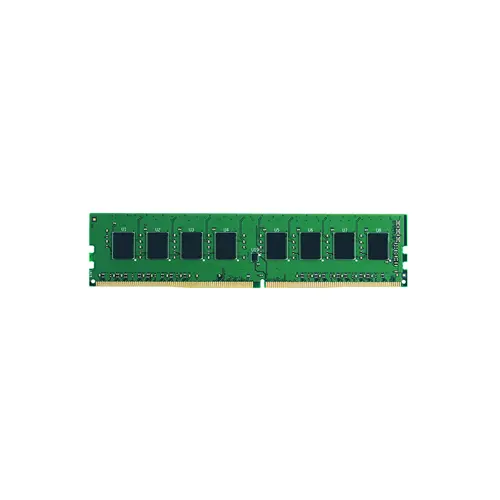
Engineered as a 32GB DDR4-2400 VLP RDIMM with dual-rank x4 organization and CL17 latency, this module delivers registered signal integrity and ECC protection for mission-critical server workloads such as virtualization and in-memory databases. Its very low-profile form factor optimizes thermal clearance in dense rack deployments, while the dual-rank configuration boosts bandwidth efficiency under heavy multi-DIMM population.
1. ECC protection continuously detects and corrects single-bit errors, preventing silent data corruption in high-availability enterprise databases and financial transaction systems.
2. Registered signal buffering stabilizes command and address lines across densely populated server boards, enabling seamless scaling to massive memory configurations without signal degradation.
3. Very Low Profile form factor allows this RDIMM to fit into 1U blade servers and tightly spaced rack nodes, maximizing airflow and memory density in constrained chassis.
4. Dual Rank x4 organization sustains higher per-channel bandwidth utilization, accelerating virtual machine responsiveness under heavy consolidation and concurrent user loads.
5. A 32 GB capacity per module gives data centers the headroom to run memory-hungry hypervisors and in-memory analytics platforms while minimizing costly physical socket usage.
When you are running a multi-node virtualization cluster or an in-memory database like SAP HANA, the memory module you choose dictates whether your workloads finish cleanly or collapse under silent data corruption. The Micron MTA36ADS4G72PZ-2G3B1 is a 32GB DDR4-2400 VLP RDIMM purpose‑built for exactly these enterprise environments, and its four defining characteristics—ECC, registered buffering, dual‑rank x4 organization, and the very low‑profile form factor—translate directly into operational resilience.
With ECC, single‑bit errors caused by cosmic background radiation are detected and corrected in real time; for a financial transaction database or a virtual machine hosting dozens of tenants, that means no flipped bits can silently corrupt a calculation or crash a guest OS. The registered interface buffers command and address signals, so you can populate all memory channels with large‑capacity DIMMs without signal degradation—a critical requirement when a single hypervisor must support 768 GB or more of RAM for dense virtual desktop infrastructure. The dual‑rank x4 design leverages bank interleaving, allowing the memory controller to queue concurrent accesses and boost effective bandwidth under the heavy, random request patterns typical of database joins and live migration. Finally, the VLP profile fits effortlessly into 1U blade servers and tightly packed rack nodes where every millimeter of clearance matters for airflow. This is not just a memory specification sheet; it is a guarantee that your 24/7 services remain consistent, responsive, and trustworthy.
Capacity Planning Guide for 32GB DDR4-2400 ECC RDIMM (MTA36ADS4G72PZ-2G3B1)
General Virtualization
Install 8 modules (256GB) evenly across all available memory channels on a dual-socket host — one module per channel. This balanced layout delivers consistent bandwidth and comfortably supports dozens of virtual machines. Scale to 12 or 16 modules (384–512GB) as VM density increases, always keeping channels symmetrically populated to avoid performance skew.
In-Memory Database
Maximize usable capacity by fully populating every memory channel. On a dual-socket platform with 12 channels per CPU, installing 24 modules (768GB) keeps large datasets fully resident. A two-module-per-channel (2DPC) configuration is acceptable; prioritize absolute capacity over peak frequency and use ECC protection without memory mirroring to preserve all available space.
High-Performance Computing
Prioritize bandwidth by adopting a one-module-per-channel (1DPC) approach. Across two 8-channel CPUs, 16 modules (512GB) sustain the rated 2400MT/s with no frequency downclocking, which is critical for simulation and modeling codes. Move to 2DPC only if additional capacity is required and a slight speed reduction can be tolerated.
Thoroughly tested server memory, compatible with Dell PowerEdge R740, R640, HPE ProLiant DL380 Gen10, Lenovo ThinkSystem SR650.
Q: Can I mix this MTA36ADS4G72PZ-2G3B1 with other memory modules of different brands or speeds?
A: Mixing brands or speeds on a registered server platform is not recommended. Unmatched timings and signal integrity can compromise stability. Stick to identical modules for guaranteed reliability.
Q: Is this memory compatible with my system?
A: This 32GB DDR4-2400 VLP RDIMM with ECC suits servers using Intel Xeon E5-2600 v3/v4 or AMD EPYC 7001 series. Verify your board supports registered ECC DIMMs and 2400MHz speeds.
Q: What is the recommended DIMM population order for optimal performance?
A: For dual-processor servers, balance identical DIMMs evenly across CPU memory channels. Populate identical slots per CPU, starting with the first slot in each channel, to maintain interleaving and full bandwidth.
Q: Does this module support overclocking or XMP profiles?
A: No. This is a JEDEC-compliant registered ECC module purposed for server reliability. Overclocking and XMP are not supported; it operates strictly at DDR4-2400 with CL17 timings.
Q: What warranty and typical failure rate can I expect?
A: It’s backed by a 1-year warranty. Micron’s enterprise-grade Registered DIMMs exhibit very low failure rates, guaranteeing mission-critical uptime under typical server workloads.