











 Secure payments
Standard refund policy
Trade Assurance
Secure payments
Standard refund policy
Trade Assurance
| Product Type | Memory Module |
|---|---|
| Memory Capacity | 32 GB |
| Memory Technology | DDR4 |
| Product Voltage | 1.2V |
| RAM Speed | 2933MHz |
| RAM Standard | DDR4-2933/PC4-23400 |
| Error Identifying | ECC |
| Signal Type | Registered |
| Column Access Strobe (CAS) | CL21 |
| Rank | Single Rank x4 |
| Quantity of Pins | 288-pin |
| RAM Genre | RDIMM |
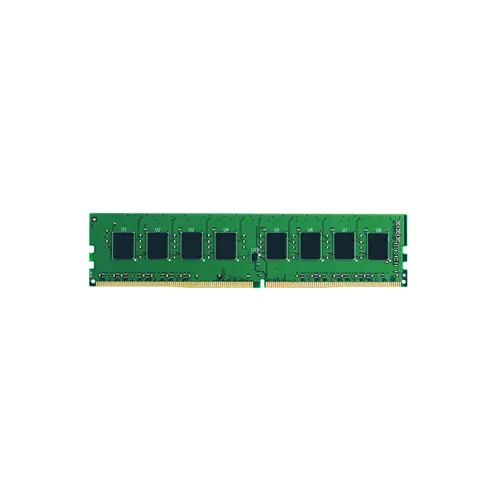
This is a server-grade RDIMM designed for enterprise platforms requiring uncompromising data integrity, making it ideal for virtualization clusters and in-memory databases where ECC protection and registered signal buffering ensure rock-solid stability under heavy loads. Its single-rank x4 configuration at CL21 latency optimizes command and address bus efficiency, delivering reliable 2933MT/s throughput with minimal electrical loading on high-density memory channels.
1. ECC protection silently corrects single-bit errors in real time, safeguarding transactional databases and virtualized workloads from silent data corruption.
2. Registered buffering strengthens signal integrity across fully loaded memory channels, enabling dense server configurations to scale without compromising uptime.
3. A 32GB capacity per module expands the memory pool for heavy virtualization, allowing more VMs per node and reducing software licensing overhead.
4. The 2933MHz frequency sustains high throughput to multi-core server CPUs, cutting latency in real-time analytics and large-scale in-memory processing.
5. Single Rank x4 organization leverages x4 DRAM devices to support advanced chipkill-level error resilience, keeping mission-critical services online even during a component-level failure.
The MTA18ASF4G72PZ-2G9 32GB DDR4-2933 RDIMM directly tackles the critical pain points of server infrastructure. Its ECC technology silently corrects background radiation-induced errors, shielding financial ledgers and patient records from silent data corruption—a single bit-flip can crash a critical transaction, making on-the-fly error correction an absolute necessity for data integrity. The registered buffer decouples the memory controller from heavy electrical loads, so you can max out every DIMM slot in a 4-socket server without signal degradation or stability fears, ensuring reliable boots even at extreme multi-terabyte capacities.
Its single-rank x4 design pairs 32GB density with true 2933MT/s speed, eliminating the latency penalty often seen in dual-rank modules. In a virtualization farm, this guarantees consistent low latency when dozens of VMs compete for memory, avoiding hypervisor stalls during live migrations. For memory-hungry in-memory databases like SAP HANA, the combination of high bandwidth and single-rank efficiency enables real-time aggregation of terabytes of data with zero integrity lag. Ultimately, this memory transforms infrastructure risk into a competitive advantage—a silent sentinel that keeps your services up, your transactions accurate, and your data-driven ambitions accelerating without compromise.
General Virtualization
For general virtualization hosts, populate memory channels symmetrically to maximize bandwidth. A balanced configuration uses six identical 32GB RDIMMs per CPU for 192GB total, allowing comfortable consolidation of 20-30 typical VMs while leaving room for memory overcommit. Avoid mixing ranks or speeds, as consistency ensures stable NUMA performance across multiple sockets.
In-Memory Database
In-memory databases demand the lowest latency and highest capacity. Configure all memory channels identically—typically twelve 32GB RDIMMs per dual‑socket server—to achieve 384GB of uniform access RAM. Keep modules at their native 2933MT/s speed and enable ECC scrubbing; single‑rank x4 DIMMs strike the optimal balance between capacity and command rate for large Redis or SAP HANA workloads.
High Performance Computing (HPC)
HPC clusters benefit from per‑core memory bandwidth rather than raw capacity alone. Populate one 32GB RDIMM per channel (e.g., eight DIMMs per dual‑socket node) to deliver peak 2933MT/s throughput without throttling. Registered ECC memory is non‑negotiable for data integrity during week‑long simulations, and matched single‑rank sticks minimize variability when scaling to hundreds of identical compute nodes.
Rigorously tested server memory, compatible with Dell PowerEdge R750, HPE ProLiant DL380 Gen10 Plus, Lenovo ThinkSystem SR650 V2.
Q: Can I mix this MTA18ASF4G72PZ-2G9 with other memory modules of different brands or speeds?
A: Mixing with different brands or speeds is not recommended. All installed RDIMMs should match in rank, speed, and timings to ensure stable ECC and registered operation.
Q: Is this memory compatible with my Intel Xeon Scalable or AMD EPYC server platform?
A: It is compatible with server boards supporting DDR4-2933 registered ECC RDIMMs. Please verify your CPU and chipset support this standard, commonly found in Intel Xeon Scalable and AMD EPYC 7002/7003 series.
Q: What is the recommended DIMM population order for optimal performance?
A: Follow your server motherboard’s manual for balanced memory configuration. Typically, populate identical DIMMs in corresponding blue or white slots per channel, starting with the farthest slot from the CPU.
Q: Does this module support overclocking or XMP profiles?
A: No, this is a server-grade registered ECC DIMM operating at standard JEDEC specification. It does not support XMP or end-user overclocking to preserve data integrity and signal stability.