











 Secure payments
Standard refund policy
Trade Assurance
Secure payments
Standard refund policy
Trade Assurance
| Product Type | Memory Module |
|---|---|
| Compliance Standards | |
| Memory Capacity | 32 GB |
| Memory Technology | DDR4 |
| Product Voltage | 1.2V |
| RAM Speed | 2933MHz |
| RAM Standard | DDR4-2933/PC4-23400 |
| Error Identifying | ECC |
| Signal Type | Registered |
| Column Access Strobe (CAS) | CL21 |
| Rank | Dual Rank x4 |
| Quantity of Pins | 288-pin |
| RAM Genre | RDIMM |
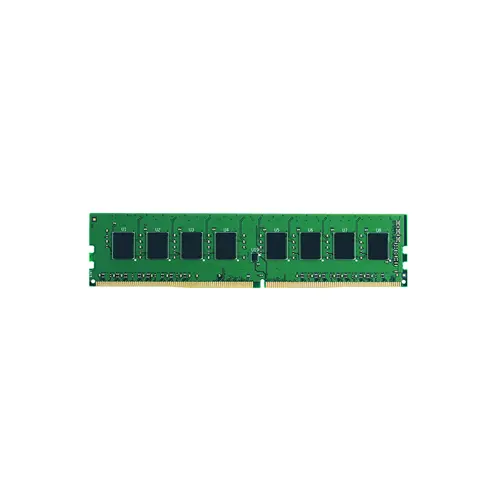
This 32GB DDR4-2933 registered ECC RDIMM (dual-rank x4, CL21) is engineered for server platforms running memory-intensive workloads such as virtualization, in-memory databases, and mission-critical enterprise applications. Its registered signal buffering ensures stable operation in high-density configurations, while ECC and dual-rank organization together enhance data integrity and memory bandwidth under heavy multi-core processing loads.
1. ECC memory actively corrects single-bit errors and detects multi-bit faults, preserving data integrity in financial transactions and mission-critical databases where even silent corruption is unacceptable.
2. Registered signal buffering stabilizes command and address lines under heavy load, enabling dense memory configurations essential for large-scale virtualization without compromising server reliability.
3. Dual Rank x4 organization interlocks access across two rank groups, keeping memory channels fully saturated to sustain high throughput during concurrent VM operations.
4. The 32 GB capacity per module significantly increases consolidation ratios, allowing hypervisors to host more virtual machines per node and reducing hardware footprint in enterprise data centers.
5. High-speed 2933 MHz frequency accelerates in-memory caching and query response times, directly boosting the performance of real-time analytics and OLTP workloads.
When you select the Micron MTA18ASF4G72PZ-2G9E1, you are not just purchasing a module; you are investing in server-grade reliability that defines your infrastructure’s uptime. This is a registered ECC DDR4-2933 RDIMM, purpose-built for enterprise servers. Its four critical attributes directly solve the pain points of IT administrators managing virtualized clusters and memory-intensive databases.
The ECC engine silently detects and corrects single-bit memory errors in real time. In a dense VMware or Hyper-V cluster, cosmic radiation can flip a bit, silently corrupting a virtual machine’s state or crashing a transaction. With ECC, that risk is neutralized, protecting financial records or customer data without the application ever noticing. Meanwhile, the Registered protocol buffers command and address signals, enabling the motherboard to support far greater total capacity without signal degradation. This means you can populate all 24 DIMM slots in a 2U rack server with confidence, achieving the massive memory footprint that SAP HANA or Redis in-memory datasets demand.
Paired with its 32GB dual-rank x4 organization, the module further interleaves memory banks to boost bandwidth under concurrent access. When dozens of VMs contend for resources, that interleaving reduces latency and keeps CPU pipelines fed. The 2933MHz speed ensures the data bus remains unblocked during peak OLTP loads. In practice, this translates to faster virtual machine live migration, consistent in-memory database query response, and fewer silent hardware errors that trigger costly late-night alerts. For the server admin, it means a platform they can rely on when every transaction and every second of uptime counts.
General Virtualization
For a typical hypervisor hosting mixed workloads, populate at least four of these 32 GB RDIMMs (128 GB total) to balance VM density and memory bandwidth. Use a symmetrical multi-channel configuration—one DIMM per channel across the server’s memory controller—to avoid performance penalties from unbalanced ranks. This setup supports 20–30 average VMs with room for NUMA-aware placement on dual-socket systems.
In-Memory Database
In-memory databases like Redis or SAP HANA thrive on capacity and low latency, so target 256 GB–512 GB using eight to sixteen modules. Fill all channels with identical dual-rank x4 RDIMMs to sustain high throughput under parallel query loads. Complement the ECC protection with mirroring or sparing modes if the platform supports it, safeguarding against uncorrectable errors in mission-critical datasets.
High-Performance Computing (HPC)
HPC clusters demand maximum memory bandwidth per node; install one DIMM per channel on every populated socket, matching the CPU’s memory interleaving granularity. For dual-socket nodes, a base configuration of 12–16 modules (384 GB–512 GB) delivers the channel parallelism needed for dense linear algebra and simulation codes. Scale further by adding identical DIMMs to maintain uniform DIMM-per-channel ratios, and ensure cooling permits sustained 2933 MT/s operation without throttling.
Rigorously tested, compatible with Dell PowerEdge R750, HPE ProLiant DL380 Gen10, Lenovo ThinkSystem SR650, and more.
Q: Can I mix this MTA18ASF4G72PZ-2G9E1 with other memory modules of different brands or speeds?
A: Mixing with different brands or speeds is not recommended for RDIMM servers. It may cause POST failures or instability. Always use identical modules with the same Micron part number, rank, and CAS latency for guaranteed compatibility.
Q: Is this memory compatible with my system? I'm using an Intel/AMD server platform.
A: This 32GB DDR4-2933 ECC RDIMM is designed for Intel Xeon Scalable (2nd Gen+) and AMD EPYC 7002/7003 series platforms. Compatibility also depends on motherboard BIOS and QVL; verify that your board supports PC4-23400 Registered DIMMs at 1.2V.
Q: What is the recommended DIMM population order for optimal performance?
A: Follow your server motherboard's manual for balanced channel configuration. Typically, populate identical DIMMs sequentially per CPU memory channel starting from the farthest slot. For dual-rank modules, fill all channels evenly to maximize throughput and minimize latency.
Q: Does this module support overclocking or XMP profiles?
A: No. This ECC Registered DIMM operates at JEDEC-standard DDR4-2933 with fixed CL21 timing. Overclocking and XMP are not supported on server-class memory, as reliability and data integrity take priority over frequency adjustments.
Q: What warranty and typical failure rate can I expect?
A: This module comes with a 1-year warranty. Micron RDIMMs demonstrate exceptionally low annualized failure rates in enterprise environments, typically under 0.2%, due to stringent testing and screening for 24/7 operation under thermal stress.