











 Secure payments
Standard refund policy
Trade Assurance
Secure payments
Standard refund policy
Trade Assurance
| Product Type | Memory Module |
|---|---|
| Memory Capacity | 32 GB |
| Memory Technology | DDR4 |
| Product Voltage | 1.2V |
| RAM Speed | 2933MHz |
| RAM Standard | DDR4-2933/PC4-23400 |
| Error Identifying | ECC |
| Signal Type | Registered |
| Column Access Strobe (CAS) | CL21 |
| Rank | Single Rank x4 |
| Quantity of Pins | 288-pin |
| RAM Genre | VLP RDIMM |
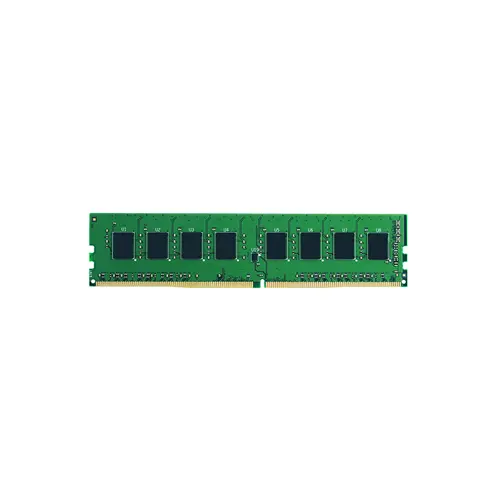
This 32GB DDR4-2933 VLP RDIMM with ECC and Registered signaling is engineered for density-constrained server platforms, where its single-rank x4 organization and very low-profile form factor reduce electrical loading and improve thermal clearance in 1U and blade chassis. It is ideally suited for memory-intensive workloads such as virtualization, in-memory databases, and mission-critical applications that demand robust data integrity and stable operation under sustained load.
1. Registered signal buffering stabilizes command and address lines across densely populated server boards, preventing signal degradation and ensuring reliable operation under heavy memory loads.
2. ECC error correction detects and corrects single-bit memory faults in real time, protecting virtualized workloads and critical databases from silent data corruption.
3. The 2933 MT/s data rate elevates memory bandwidth per channel, reducing latency in high-frequency trading or in-memory analytics and improving VM responsiveness under consolidation.
4. A 32 GB module capacity allows dense memory configurations, maximizing the number of virtual machines per server node and supporting larger working sets for enterprise applications.
5. VLP RDIMM form factor lowers module height for improved airflow and thermal clearance in 1U and blade server chassis, reducing cooling costs and enhancing long-term component reliability.
The Micron MTA18ADF4G72PZ-2G9 is a 32GB DDR4-2933 VLP RDIMM engineered for the modern data center, and its four defining characteristics translate directly into operational resilience where you need it most. In a dense virtualization cluster hosting dozens of VMs, the registered signal buffer stabilizes command and address lines across high-capacity memory channels, preventing signal degradation that can silently corrupt guest states. Simultaneously, the ECC engine continuously corrects single-bit errors—an absolute necessity when cosmic-ray-induced bit flips could otherwise crash an in-memory database like SAP HANA that keeps mission-critical transactional data live in DRAM.
Equally important, this module’s single-rank x4 organization at 2933MHz delivers robust bandwidth and low latency interleaving, allowing a Redis or Memcached caching layer to serve millions of key lookups per second without channel bottlenecks. The very-low-profile form factor becomes decisive in dense 1U and blade servers, where airflow is precious and standard-height modules would block cooling or conflict with adjacent components. With a low 1.2V draw and 32GB of registered ECC capacity per stick, you maximize memory density per node, reduce thermal stress, and keep your virtualized workloads and latency-sensitive analytics engines stable under continuous, 24/7 load.
General Virtualization
For general virtualization hosts, populate memory channels symmetrically to maximize throughput. Using this 32 GB Registered VLP RDIMM, a common configuration is 8 to 12 identical modules per dual-socket server (256–384 GB total), distributing DIMMs evenly across all CPU memory channels. This balanced layout ensures consistent NUMA performance and leaves room for future VM density increases while keeping power and heat manageable.
In-Memory Database
In-memory databases demand large, low-latency footprints and absolute data integrity. Deploy the maximum supported DIMMs per channel, frequently 12 or 16 modules of 32 GB (384–512 GB) per socket, to deliver the required capacity for datasets like Redis or SAP HANA. The Registered ECC design and 1.2 V operation maintain signal stability and reliability under full load, while the VLP form factor aids cooling in densely packed chassis.
High-Performance Computing (HPC)
HPC clusters prioritize memory bandwidth and error resilience. A recommended node setup uses a fully balanced population, such as 12 × 32 GB RDIMMs (384 GB) across all six memory channels of a modern server processor. This configuration sustains triple-channel or wider interleaving, minimizes latency, and provides the ECC protection essential for long-running simulations. For extremely memory-intensive workloads, scaling to 16 or 24 modules per node preserves balanced access while avoiding costly swapping.
Rigorously tested, this 32GB DDR4-2933 VLP RDIMM is compatible with Dell PowerEdge R760, HPE ProLiant DL380 Gen11, Lenovo ThinkSystem SR650 V3, and similar servers.
Q: Can I mix this MTA18ADF4G72PZ-2G9 with other memory modules of different brands or speeds?
A: Mixing RDIMMs of different brands or speeds is strongly discouraged. It can cause signal integrity issues, force all modules to run at the slowest common JEDEC speed, and compromise server reliability. Use identical modules for validated consistency.
Q: Is this memory compatible with my Intel Xeon Scalable or AMD EPYC server platform?
A: This DDR4-2933 Registered ECC VLP RDIMM is compatible with systems using Intel C620-series or AMD EPYC 7002/7003 chipsets that support 288-pin 2933MT/s RDIMMs. Always verify your motherboard’s qualified vendor list (QVL) for specific integration.
Q: What is the recommended DIMM population order for optimal performance?
A: For dual-socket servers, balance DIMMs symmetrically across memory channels. Populate equal-capacity modules per channel and follow your server manual’s slot numbering—often filling all channels first (1 DIMM per channel) maximizes bandwidth and minimizes latency.
Q: Does this module support overclocking or XMP profiles?
A: No. This is a server-grade Registered ECC DIMM designed strictly for JEDEC-standard operation at 2933MT/s. It does not support overclocking, XMP, or any non-standard timing modifications, as data integrity and stability are prioritized over performance tweaking.
Q: Is this VLP RDIMM suitable for 1U or space-constrained servers?
A: Yes. The Very Low Profile (VLP) form factor reduces module height for superior airflow and clearance in tight chassis like 1U/2U servers, blade systems, or edge appliances, where standard RDIMMs may not physically fit or would impede cooling.