











 Secure payments
Standard refund policy
Trade Assurance
Secure payments
Standard refund policy
Trade Assurance
| Product Type | Memory Module |
|---|---|
| Memory Capacity | 32 GB |
| Memory Technology | DDR4 |
| Product Voltage | 1.2 V |
| RAM Speed | 3200 MHz |
| RAM Standard | DDR4-3200/PC4-25600 |
| Error Identifying | ECC |
| Signal Type | Registered |
| Column Access Strobe (CAS) | CL22 |
| Rank | Single Rank x4 |
| Quantity of Pins | 288-pin |
| RAM Genre | RDIMM |
This RDIMM module, with its registered signal topology and ECC, ensures robust signal integrity and data reliability for mission-critical server workloads such as virtualization and in-memory databases. Its single-rank x4 organization at DDR4-3200 delivers optimized memory bandwidth and latency, maximizing throughput in dense multi-DIMM configurations.
1. ECC protection silently detects and corrects single-bit memory errors in real time, eliminating silent data corruption for financial ledgers and virtualized workloads where data accuracy is non-negotiable.
2. Registered signal buffering stabilizes command and address buses under heavy loading, making it feasible to fully populate server memory slots without sacrificing signal integrity across large node clusters.
3. Generous module density packs ample capacity into a single DIMM slot, allowing hypervisors to run more virtual machines per chassis and keeping in-memory databases responsive under multi-tenant pressure.
4. High-speed operation dramatically raises memory bandwidth, shrinking query times in real-time analytics and ensuring smooth throughput for compute-heavy enterprise applications.
5. Single Rank x4 organization uses sixteen x4 DRAM chips to strike an optimal balance between parallel access and bus load, delivering predictable bandwidth saturation under sustained multi-threaded server workloads.
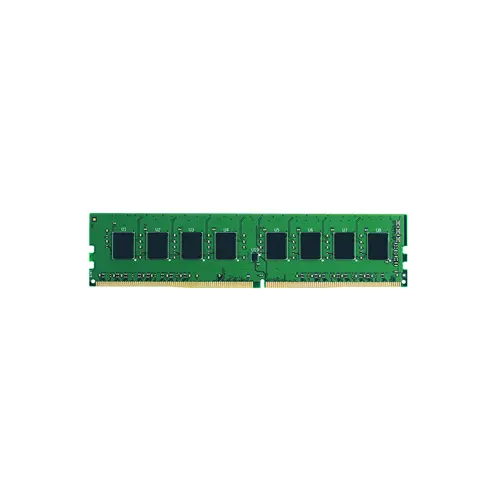
Engineered for the data center, the Micron MTA18ASF4G72PZ-3G2E1R is a 32GB DDR4-3200 RDIMM built to eliminate the silent threats that erode server uptime and data fidelity. In a dense virtualization cluster hosting dozens of VMs per node, a single undetected bit flip in memory can corrupt a hypervisor state or a financial transaction, cascading into catastrophic downtime. The module’s ECC technology actively scans and corrects these errors in real time, preserving integrity across every tenant and workload. When you scale to six or eight memory channels fully populated, registered buffering takes over: it stabilizes the command and address bus so the signal remains crisp even under maximum load, directly enabling you to pack more VMs onto a single host without instability. This becomes equally decisive for in‑memory databases like SAP HANA or Redis, where the entire dataset lives in RAM. The single‑rank x4 organization optimizes bank‑level parallelism and lowers access latency, feeding the CPU a clean, high‑bandwidth pipeline so analytics queries and real‑time recommendations complete predictably. At 1.2V, it also reins in thermal overhead, allowing sustained 3200 MT/s performance across a fleet without throttling—translating to fewer cooling dollars and longer hardware life. For the infrastructure operator, this DIMM is not just a component; it is a resiliency upgrade that safeguards virtualized services and accelerates the data‑heavy applications that define modern business.
This 32GB DDR4-3200 RDIMM with ECC is designed for servers. Below are capacity planning recommendations for typical workloads.
General Virtualization
Populate all memory channels symmetrically to achieve maximum bandwidth and capacity. A common approach is installing 4 or 8 identical 32GB DIMMs per CPU socket (128–256GB). This configuration handles moderate virtualization loads and maintains balanced performance.
In-Memory Database
In-memory databases demand that the entire working set resides in RAM with strong error correction. Start with 8 × 32GB (256GB) per processor, scaling to 12 or 16 DIMMs for growing datasets. Single-rank modules like this unit sustain 3200 MT/s even when fully populating channels, ensuring low latency and data integrity.
High-Performance Computing
HPC applications require high bandwidth and consistent latency. Install one 32GB DIMM per memory channel (often 8 per socket) to avoid channel under-utilization. For dual-socket nodes, 16 × 32GB delivers 512GB total, and the registered design maintains stable 1.2V operation at full speed, ideal for tightly coupled simulations.
Rigorously tested server RDIMM. Compatible with Dell PowerEdge R750, HPE ProLiant DL380 Gen10 Plus, Lenovo ThinkSystem SR650 V2, and more.
Q: Can I mix this MTA18ASF4G72PZ-3G2E1R with other memory modules of different brands or speeds?
A: Mixing is strongly discouraged for RDIMMs. Mismatched ECC, rank, or speed may cause system instability or failure to POST. Always install identical modules with the same Micron part number for guaranteed reliability.
Q: Is this memory compatible with my Intel or AMD server platform?
A: It is compatible with platforms supporting DDR4 ECC Registered DIMMs, such as Intel Xeon Scalable (1st/2nd Gen) and AMD EPYC 7000 series. Please verify your server board's qualified vendor list for this specific 32GB RDIMM.
Q: What is the recommended DIMM population order for optimal performance on a server board?
A: Typically, populate the farthest DIMM slot from the CPU per channel first, balancing across all memory channels. For exact population sequences, always consult your motherboard or system manufacturer’s service manual to avoid degraded performance.
Q: Does this RDIMM module support overclocking or XMP profiles?
A: No. As a server-grade ECC Registered DIMM, it strictly adheres to JEDEC DDR4-3200 standards. It does not support overclocking or XMP, prioritizing data integrity and 24/7 operational stability over peak frequency.
Q: What warranty and typical failure rate can I expect with this Micron server memory?
A: This module includes a 1-year warranty. Micron RDIMMs typically exhibit an annualized failure rate (AFR) below 0.5%, built to enterprise-class reliability standards for mission-critical environments.