











 Secure payments
Standard refund policy
Trade Assurance
Secure payments
Standard refund policy
Trade Assurance
| Product Type | Memory Module |
|---|---|
| Memory Capacity | 4 GB |
| Memory Technology | DDR3 |
| Product Voltage | 1.5V |
| RAM Speed | 1600MHz |
| RAM Standard | DDR3-1600/PC3-12800 |
| Error Identifying | ECC |
| Signal Type | Registered |
| Column Access Strobe (CAS) | CL11 |
| Rank | Single Rank x8 |
| Quantity of Pins | 240-pin |
| RAM Genre | RDIMM |
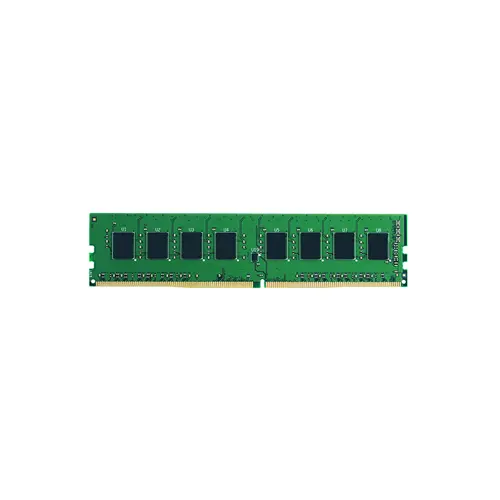
Designed for legacy server platforms, this 4GB DDR3-1600 RDIMM combines ECC error correction with registered signal buffering to ensure data integrity and signal stability in dense memory configurations. Its single-rank x8 organization and CL11 timing make it well-suited for virtualization hosts and light in-memory databases where consistent, low-latency access and reliable operation are critical.
1. Registered signal buffering relieves electrical loading on the memory bus, enabling servers to populate all DIMM slots reliably for maximum virtualization density and long-term uptime.
2. ECC protection transparently detects and corrects single-bit errors in real time, preserving data integrity in transactional databases and financial workloads where silent corruption is unacceptable.
3. Single Rank x8 organization minimizes rank scheduling conflicts under heavy memory access patterns, delivering more predictable latency for latency-sensitive enterprise applications.
4. A moderate 4 GB capacity per stick allows dense 1U and 2U server builds to reach optimal memory footprints for light hypervisor hosts or memory-constrained microservices without wasting budget on overprovisioning.
5. DDR3-1600 transfer rate balances throughput and power envelope, sustaining steady bandwidth for concurrent virtual machines while staying within the thermal limits of tightly packed rack enclosures.
This Micron MT9JDZF51272PF1Z-1G6 is a 4GB DDR3-1600 Registered ECC DIMM, purpose-built for servers and workstations where stability defines uptime. Its four defining characteristics directly address the realities of data-critical environments. First, the ECC (Error Correcting Code) functionality continuously detects and corrects single-bit memory errors caused by background radiation or electrical noise. In a virtualization cluster hosting dozens of VMs, an uncorrected bit flip silently corrupts a database file, leading to cascading failures; ECC prevents this, ensuring transactional integrity. Second, the Registered signal buffer enables you to populate all memory channels densely without degrading signal quality. When you need to expand capacity for a growing virtual desktop infrastructure, registered logic keeps 1600MHz speeds rock-solid even with three DIMMs per channel, avoiding the downclocking that unregistered modules would force. Third, the single-rank x8 organization reduces electrical loading, which is essential for maintaining that 1600MHz speed across fully loaded servers; faster memory bandwidth directly accelerates hypervisor responsiveness and live-migration tasks. Finally, in an in-memory database like Redis where microsecond latency matters, the CL11 timing at this frequency delivers deterministic, predictable access. A sudden latency spike from command-bus congestion isn’t just slow, it loses real-time user sessions. Together, these features translate to uncompromised data fidelity, consistent low-latency performance, and the reliability you need to keep database transactions and virtualized services continuously available.
General Virtualization
For hypervisor hosts running multiple VMs, capacity is key. Populate all memory channels symmetrically with identical 4GB RDIMMs to maximize bandwidth and ensure stable NUMA performance; a typical mid-range host benefits from 12–16 modules (48–64GB) to avoid ballooning and swapping under moderate overcommitment.
In-Memory Database
In-memory engines like Redis or SAP HANA demand low latency and absolute data integrity—ECC Registered DIMMs are mandatory. Favor single-rank x8 modules for reduced electrical loading on the memory bus, and deploy them in balanced channel configurations; plan for at least 128GB by installing 32 modules across all available slots to keep entire datasets resident.
High-Performance Computing
HPC workloads are often memory-bandwidth-bound. Use a fully populated configuration with one 4GB RDIMM per channel to achieve peak throughput, as leaving channels empty cuts bandwidth significantly. For compute nodes running large MPI jobs, a baseline of 64–96GB lets you scale problem sizes while keeping power and thermals within rack limits.
Rigorously tested, compatible with Dell PowerEdge R720, R620, HP DL380p Gen8, IBM x3650 M4, and similar DDR3 RDIMM servers.
Q: Can I mix this MT9JDZF51272PF1Z-1G6 with other memory modules of different brands or speeds?
A: Mixing is not recommended. Registered ECC modules should match in speed, rank, and organization to ensure signal integrity and avoid system instability. Always populate identical part numbers when possible.
Q: Is this memory compatible with my Intel or AMD server platform?
A: Compatibility depends on your motherboard's support for DDR3 registered ECC (RDIMM) at 1600MT/s. Verify that your server chipset and CPU officially support 1.5V RDIMMs and single rank x8 configurations.
Q: What is the recommended DIMM population order for optimal performance?
A: Follow your server board's manual—typically populate identical DIMMs per channel, starting with the farthest slot from the CPU. Keep channels balanced for interleaving and maximum memory bandwidth.
Q: Does this module support overclocking or XMP profiles?
A: No. This is a JEDEC-compliant server RDIMM designed for stability at 1600MHz CL11. It does not support XMP, overclocking, or voltage adjustments. Mission-critical environments require standard operating conditions.
Q: What warranty and typical failure rate can I expect?
A: This module includes a 1-year warranty. Enterprise RDIMMs have extremely low annualized failure rates under normal operation, typically below 0.2%, when run within specified voltage and thermal limits.