











 Secure payments
Standard refund policy
Trade Assurance
Secure payments
Standard refund policy
Trade Assurance
| Product Type | Memory Module |
|---|---|
| Compliance Standards | RoHS |
| Memory Capacity | 4 GB |
| Memory Technology | DDR4 |
| Product Voltage | 1.2V |
| RAM Speed | 2400MHz |
| RAM Standard | DDR4-2400/PC4-19200 |
| Error Identifying | Non-ECC |
| Signal Type | Unbuffered |
| Column Access Strobe (CAS) | CL17 |
| Rank | Single Rank x16 |
| Quantity of Pins | 288-pin |
| RAM Genre | UDIMM |
This DDR4-2400 UDIMM with a single-rank x16 organization and unbuffered signaling is ideal for mainstream desktop platforms, delivering stable performance for gaming, content creation, and productivity workloads. Its CL17 latency and non-ECC design keep access times predictable while minimizing overhead, ensuring broad compatibility with consumer motherboards and straightforward plug-and-play operation.
1. Entry-level capacity handles everyday productivity and media streaming with ease, preventing swap thrashing so office multitasking remains fluid throughout the workday.
2. The tuned frequency delivers smooth frame delivery in popular e-sports titles, keeping visual stutter at bay without overloading the platform’s memory controller.
3. Tight column access latency sharpens command execution, shaving milliseconds off reaction-critical moments that competitive gamers rely on for a decisive edge.
4. Low-voltage operation curbs thermal output inside the case, sustaining stable boost clocks during prolonged rendering or CPU-intensive creative workloads.
5. Single-rank, wide-bus layout reduces stress on the processor's memory controller, providing generous overclocking flexibility on mainstream desktop boards.
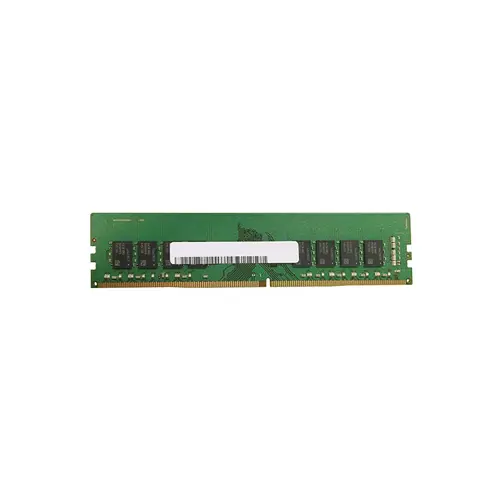
When building or upgrading a desktop system for competitive gaming and demanding content creation, every component choice directly impacts your real-world experience. The Micron MTA4ATF51264AZ-2G3B1 is a 4GB DDR4 UDIMM engineered to eliminate the micro-stutter and sluggishness that frustrate users. Its 2400MHz speed and PC4-19200 bandwidth ensure that in a AAA title, large texture packs stream from memory to the GPU without hitching, giving you the split-second reaction advantage; during a 4K video render or a 3D modeling session, that same throughput keeps timeline scrubbing buttery smooth even with multiple assets loaded. The CL17 latency takes this further: lower Column Access Strobe delay means the CPU spends less time waiting for data, which translates directly into higher minimum frame rates when the on-screen action becomes chaotic, and faster preview generation in Adobe Premiere or Blender. Running at a cool, efficient 1.2V, this single-rank x16 module reduces thermal stress on the memory VRM and improves signal integrity across the 288-pin interface. This lower electrical load enhances compatibility across a wider range of motherboards and allows for tighter command timing, so you can maintain aggressive memory profiles without sacrificing stability during overnight encodes or marathon gaming sessions. It is unbuffered and non-ECC by design, removing any added latency layer between the CPU and your data, so the pathway stays direct and instantaneous. Whether you are chasing a leaderboard ranking or meeting a client deadline, this memory means uncompromising responsiveness and a system that feels as fast as you need it to be.
Gaming Build
A single 4GB DDR4 UDIMM is suited for entry-level gaming only. Pair two identical modules in dual-channel for an 8GB kit, which handles esports titles comfortably. For a smoother 16GB experience, install four of these modules to populate all DIMM slots—though upgrading to 8GB sticks is more future-proof. Avoid attempting 32GB with these 4GB units, as an 8-DIMM configuration exceeds typical consumer motherboards.
Content Creation
Video editing and 3D rendering demand large capacity, and a 4GB module falls short. Start with four sticks for a 16GB dual-channel setup to run lightweight projects. For a 64GB workstation, these modules are impractical; instead, use four 16GB or two 32GB UDIMMs to leave room for expansion. Relying on 4GB units in high-capacity builds quickly exhausts slots and hurts long-term scalability.
General Productivity
For office multitasking and web work, a single 4GB module offers a basic, cost-effective start. A dual-channel pair (8GB total) sharply improves responsiveness during heavy browsing and document handling. This balanced 8GB configuration delivers the best price-to-performance ratio without overspending on capacity that typical productivity loads won’t utilize.
Rigorously tested desktop memory — verified compatible with Dell OptiPlex 3050, HP EliteDesk 800 G3, Lenovo ThinkCentre M710.
Q: Can I mix this MTA4ATF51264AZ-2G3B1 with other memory modules of different brands or speeds?
A: Mixing is possible, but the system will default to the slowest module's speed and timings. For stable dual-channel operation, identical modules are strongly recommended to avoid potential compatibility issues.
Q: Is this memory compatible with my desktop system? Which motherboard chipset should I check?
A: This is a standard 288-pin UDIMM for DDR4 desktops. It supports Intel 100/200/300 series and AMD AM4 platforms. Verify your motherboard supports non-ECC, unbuffered DDR4 memory and a 1.2V DIMM slot.
Q: What is the recommended DIMM population order for optimal performance on a dual-channel desktop board?
A: Install this single-rank module in the slot farthest from the CPU, typically DIMM_A2. For dual-channel, pair it with an identical module in DIMM_B2. Always consult your motherboard manual for specific slot numbering.
Q: Does this module support overclocking or XMP profiles?
A: No. This module follows JEDEC-standard DDR4-2400 timings at 1.2V and does not contain an XMP profile. It runs at its native speed without overclocking features, ensuring plug-and-play stability.
Q: What warranty and typical failure rate can I expect?
A: This memory comes with a 1-year warranty. The typical annualized failure rate (AFR) for JEDEC-compliant modules is under 0.2%, reflecting high reliability under normal operating conditions within specified voltage and temperature ranges.