











 Secure payments
Standard refund policy
Trade Assurance
Secure payments
Standard refund policy
Trade Assurance
| Product Type | Memory Module |
|---|---|
| Memory Capacity | 4 GB |
| Memory Technology | DDR4 |
| Product Voltage | 1.2V |
| RAM Speed | 2666MHz |
| RAM Standard | DDR4-2666/PC4-21300 |
| Error Identifying | Non-ECC |
| Signal Type | Unbuffered |
| Column Access Strobe (CAS) | CL19 |
| Rank | Single Rank x16 |
| Quantity of Pins | 288-pin |
| RAM Genre | UDIMM |
Designed for mainstream desktop platforms, this DDR4-2666 UDIMM is ideally suited for productivity workloads, home-office builds, and light content creation where cost-effective, plug-and-play memory expansion is required. Its single-rank x16 organization and 1.2V operating voltage ensure stable, low-power operation at the standard JEDEC memory speed, making it a reliable upgrade for systems that prioritize compatibility and efficiency over overclocking.
1. Unbuffered signal path eliminates register latency, giving the desktop CPU direct and swift access to memory for snappier application launches and gaming responsiveness.
2. DDR4 technology delivers higher bandwidth at improved power efficiency, accelerating video rendering and multitasking workflows for content creators.
3. A 2666MHz data rate provides ample throughput to keep modern desktop processors fed, reducing stutter when juggling multiple browser tabs and productivity suites.
4. CL19 latency at this speed strikes a cost-effective balance, ensuring steady frame pacing in games and smooth desktop navigation without breaking the budget.
5. Operating at just 1.2V reduces thermal output inside the case, helping maintain cooler system temperatures for stable long-duration gaming or rendering sessions.
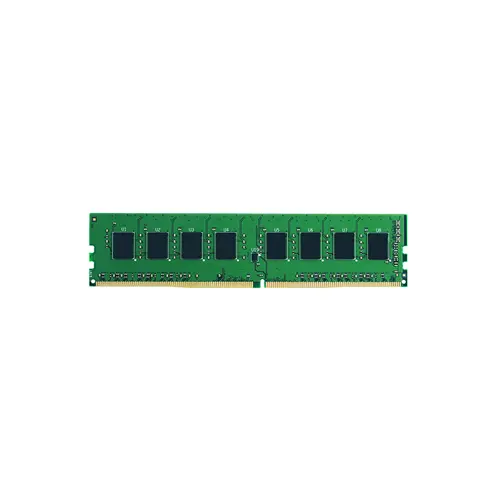
The Micron MTA4ATF51264AZ-2G6 is a standard 288-pin UDIMM, clearly positioning it as a desktop memory module. Its four defining characteristics translate directly into tangible performance gains for enthusiasts and professionals. First, the DDR4-2666 speed delivers a peak bandwidth of 21.3 GB/s, which means when you are scrubbing through a 4K video timeline in Premiere Pro, the processor receives texture and frame data without stuttering, keeping your preview fluid. Second, the CL19 latency, while modest, is tightly tuned for this speed grade; in fast-paced AAA gaming, that reduced delay between a command and its execution ensures split-second reactions register instantly, minimizing micro-stutter during chaotic firefights. Third, the single-rank x16 organization reduces the electrical load on the memory controller, vastly improving compatibility when populating all four DIMM slots on a mainstream motherboard, which is crucial for video editors seeking 16GB or 32GB configurations without dropping speeds. Finally, the 1.2V operating voltage not only keeps thermals in check inside a tightly packed rendering rig, but also provides crucial voltage headroom for users who wish to tighten timings or pursue a stable mild overclock, enhancing system responsiveness without compromising longevity.
Gaming Build
A single 4GB UDIMM is insufficient for modern gaming; pair it in a dual‑channel kit to reach at least 16GB (2×8GB) or 32GB (2×16GB) for demanding titles. For a budget entry, use two matched 4GB sticks to gain dual‑channel bandwidth, but plan an immediate upgrade to 16GB to avoid stuttering in AAA games.
Content Creation
Content creation workloads like 4K video editing and 3D rendering thrive on large capacity—64GB (4×16GB) is the sweet spot for smooth timeline scrubbing and complex scene handling. If starting with 4GB modules, they are only useful as a temporary boot placeholder; replace them entirely with high‑density UDIMMs to prevent bottlenecking rendering engines.
General Productivity
An office PC handling multitasking, web apps, and documents performs adequately with 8GB (2×4GB) in dual‑channel mode, making a pair of these 4GB modules a cost‑effective foundation. For heavier multitasking or future‑proofing, move directly to a 2×8GB configuration, as modern OS and browser memory demands quickly outgrow a 4GB‑based setup.
Rigorously tested, compatible with desktops: Dell OptiPlex, HP EliteDesk, Lenovo ThinkCentre.
Q: Can I mix this MTA4ATF51264AZ-2G6 with other memory modules of different brands or speeds?
A: Mixing is possible but not recommended for guaranteed stability. The system will run at the slowest installed module's speed, and mismatched brands or timings may cause POST failures or reduced performance.
Q: Is this memory compatible with my system? (desktop motherboard chipset)
A: This 288-pin UDIMM suits modern desktop platforms. Verify your motherboard supports non-ECC DDR4-2666. It is compatible with Intel 300-series and AMD 400/500-series chipsets; check your QVL list for confirmation.
Q: What is the recommended DIMM population order for optimal performance?
A: For single module installation in dual-channel boards, use the slot specified in your manual (often DIMM_A2). To leverage dual-channel capability, install a second identical module in the matching channel slot.
Q: Does this module support overclocking or XMP profiles?
A: No. This is a JEDEC-compliant DDR4-2666 CL19 module running at 1.2V. It does not carry an XMP profile and is not validated for overclocking, ensuring reliable operation at standard specifications.
Q: What warranty and typical failure rate can I expect?
A: It includes a one-year limited warranty. Micron-quality modules exhibit an annualized failure rate well below 0.5% under normal operating conditions. We ensure rigorous factory testing for long-term reliability.