











 Secure payments
Standard refund policy
Trade Assurance
Secure payments
Standard refund policy
Trade Assurance
| Product Type | Memory Module |
|---|---|
| Memory Capacity | 4 GB |
| Memory Technology | DDR4 |
| Product Voltage | 1.2V |
| RAM Speed | 2666MHz |
| RAM Standard | DDR4-2666/PC4-21300 |
| Error Identifying | Non-ECC |
| Signal Type | Unbuffered |
| Column Access Strobe (CAS) | CL19 |
| Rank | Single Rank x16 |
| Quantity of Pins | 288-pin |
| RAM Genre | UDIMM |
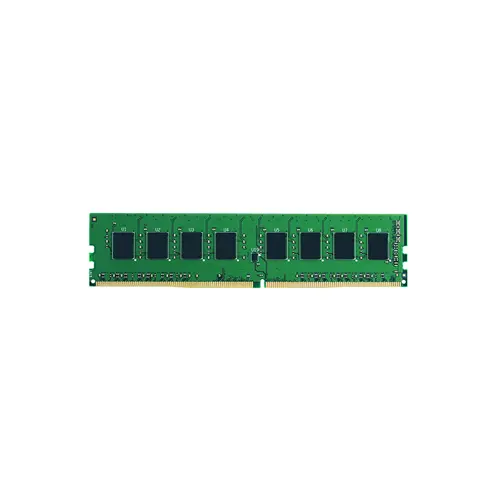
Designed as a standard desktop UDIMM, this 4GB DDR4-2666 module is ideally suited for mainstream productivity and light content-creation workloads where stable single-rank operation ensures broad motherboard compatibility. Its single-rank x16 organization and CL19 timing deliver a balanced combination of low latency and efficient 1.2V power consumption, enabling consistent performance in office PCs and entry-level gaming rigs alike.
1. DDR4 memory technology provides the foundational bandwidth and efficiency uplift over previous generations, enabling smoother multitasking and faster content creation workflows on modern desktop platforms.
2. 2666MHz operating speed delivers a tangible boost in frame pacing for gaming and reduces rendering queue times, keeping the CPU fed with data during intensive desktop tasks.
3. CL19 column access strobe latency strikes a cost-effective balance, ensuring responsive system feel in everyday applications without compromising compatibility across a wide range of motherboards.
4. 4 GB module capacity serves as an accessible entry point for basic productivity builds or as a dedicated diagnostic stick, allowing quick boot-up validation and light multitasking without excess overhead.
5. 1.2V ultra-low voltage reduces thermal output inside the chassis, which helps maintain cooler VRM and ambient temperatures during extended gaming or rendering sessions.
Judging by its 288-pin UDIMM form factor, unbuffered signal type, and non-ECC design, the Micron MTA4ATF51264AZ-2G6J1 is a desktop-class memory module built for mainstream consumer platforms. Its feature set directly answers the demands of gamers, content creators, and everyday users who cannot afford system slowdowns or compatibility headaches.
The 2666MHz frequency provides a high-speed data highway, and when paired with the single-rank x16 organization, it allows the memory controller to address the module efficiently, reducing electrical loading and improving signal integrity. For competitive gaming, this translates into faster level loads, smoother frame delivery, and minimal micro-stuttering during chaotic multiplayer matches. In a video editing workflow, scrubbing through a 1080p timeline benefits from the responsive burst bandwidth, cutting down the frustration of choppy previews. The CL19 latency, while a standard JEDEC value, is tightly validated to deliver predictable, plug-and-play stability across a vast range of motherboards—meaning you spend less time troubleshooting BIOS settings and more time being productive or immersed in your AAA title. Meanwhile, the 1.2V operating voltage keeps thermal output remarkably low, which preserves system coolers’ headroom during prolonged rendering marathon or extended gaming session. Upgrading with this module is a straightforward path to reviving an older desktop or completing a budget build, offering a tangible and immediate improvement in multitasking responsiveness and overall system fluidity without any complex overclocking.
Gaming Build
For a modern gaming system using these 4GB DDR4-2666 UDIMMs, dual-channel operation is essential to prevent memory bottlenecks. Install a matched pair (2x4GB) for 8GB as a minimum, but ideally deploy four identical modules (4x4GB) to reach 16GB while retaining dual-channel symmetry. If your budget allows, consider selling these modules and moving to a 2x8GB or 2x16GB kit for higher frequencies and lower latency, as single-rank x16 configurations can limit peak frame rates.
Content Creation
Video editing, 3D rendering, and complex compositing demand large capacity and bandwidth. Using these 4GB sticks, you can populate four DIMM slots on a mainstream platform to achieve 64GB (4x16GB would be preferable, but with these modules you would need 16 identical units, which is impractical). A realistic scenario is building a 32GB workspace by installing four modules across two dual-channel pairs (4x4GB on one channel, matching set on the other), though this still falls short for 4K timelines. For serious workloads, transition to high-density 32GB or 64GB kits and reserve these for a secondary test bench.
General Productivity
For everyday office tasks, web browsing, and multitasking, a single 4GB module is insufficient—modern operating systems quickly exhaust that capacity. The most cost-effective upgrade is to add a second identical 4GB module for an 8GB dual-channel configuration, which dramatically improves responsiveness. On a budget system with two DIMM slots, populate both with these modules; if you have four slots, start with a 2x4GB dual-channel pair and leave room for future expansion. This approach balances low cost with smooth multitasking for standard productivity suites.
Rigorously tested, compatible with Dell OptiPlex 7060, HP EliteDesk 800 G4, Lenovo ThinkCentre M720.
Q: Can I mix this MTA4ATF51264AZ-2G6J1 with other memory modules of different brands or speeds?
A: Mixing is not recommended. Even identical specs from different brands can cause instability. For optimal reliability, install identical modules in matched kits. The system defaults to the slowest module’s speed.
Q: Is this memory compatible with my system?
A: This UDIMM is designed for desktop platforms using DDR4. It requires a motherboard with 288-pin DDR4 slots and chipset support for non-ECC unbuffered memory at 2666MHz. Please verify your board’s QVL list.
Q: What is the recommended DIMM population order for optimal performance?
A: On dual-channel desktop boards, install pairs in the same-colored slots (typically A2/B2 first). This single-rank x16 module enables dual-channel mode when two identical units are used, maximizing memory bandwidth.
Q: Does this module support overclocking or XMP profiles?
A: No, this is a JEDEC-compliant standard module running at DDR4-2666 CL19 1.2V. It does not include XMP profiles or support voltage-based overclocking. Operation is guaranteed only at rated specifications.
Q: What warranty and typical failure rate can I expect?
A: This module is covered by a 1-year warranty. It is built with high-quality components and undergoes rigorous testing, resulting in an extremely low annualized failure rate (AFR) under normal operating conditions.