











 Secure payments
Standard refund policy
Trade Assurance
Secure payments
Standard refund policy
Trade Assurance
| Product Type | Memory Module |
|---|---|
| Memory Capacity | 64 GB |
| Memory Technology | DDR4 |
| Product Voltage | 1.2V |
| RAM Speed | 2400MHz |
| RAM Standard | DDR4-2400/PC4-19200 |
| Error Identifying | ECC |
| Signal Type | Registered |
| Column Access Strobe (CAS) | CL17 |
| Rank | Quad Rank x4 |
| Quantity of Pins | 288-pin |
| RAM Genre | RDIMM |
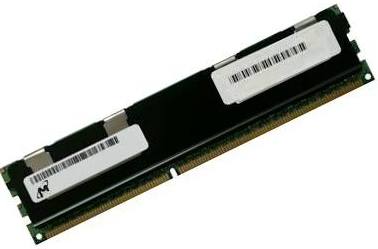
This 64 GB DDR4-2400 Registered ECC RDIMM is engineered for server platforms handling memory-intensive workloads such as virtualization and in-memory databases. Its Quad Rank x4 configuration enables high-density memory scalability, while the registered signal type and ECC ensure superior signal integrity and data reliability under heavy load.
1. The 64 GB capacity per module enables significantly higher virtual machine density per host, directly reducing hardware sprawl and operational costs in large-scale virtualization farms.
2. ECC protection continuously detects and corrects single-bit errors, eliminating silent data corruption risks that are unacceptable in financial transaction processing and critical database operations.
3. The registered buffer isolates the memory controller from the DRAM chips, preserving signal integrity across fully populated channels and ensuring stable operation in multi-socket server platforms.
4. Quad Rank x4 organization allows four independent sets of DRAM ranks on a single RDIMM, maximizing rank interleaving capabilities that keep data pipelines saturated under heavy OLAP workloads.
5. A 2400 MHz clock speed supplies the sustained bandwidth essential for feeding high core-count CPUs, accelerating throughput in memory-bound analytics and in-memory caching applications.
Designed for mission-critical enterprise environments, the Micron MTA72ASS8G72LZ-2G3B2MG is a 64GB DDR4-2400 Registered DIMM that directly addresses the real-world pain points of data center operators. Its 1.2V low-power design reduces thermal load across dense server racks, while the ECC technology silently corrects single-bit memory errors before they can corrupt transactional data—an absolute necessity when a flipped bit in an in-memory database like SAP HANA could mean a failed financial reconciliation.
The registered signal buffer is what makes a 64GB quad-rank module stable under heavy load. Without it, the electrical strain of populating all memory channels in a virtualization host would cause signal degradation and unpredictable crashes across dozens of virtual machines. With this RDIMM, you can confidently allocate massive memory pools to hypervisors like VMware ESXi, knowing that memory access remains clean even as CPU utilization spikes.
Quad-rank x4 organization further multiplies the number of internal banks, enabling simultaneous row activations that keep the data pipeline full during sustained large-block transfers. In a virtualized SQL Server cluster, this translates to measurably lower latency on cache lookups and faster database index rebuilds. Every feature here removes a failure point, delivering the uptime and predictable performance your service-level agreements demand.
General Virtualization
For dense virtualization hosts, install six of these 64 GB RDIMMs per CPU (one per channel) to achieve 384 GB per socket while preserving balanced memory bandwidth. This configuration supports a high VM density and leaves half the DIMM slots free for future expansion without sacrificing 2400 MT/s speed. Avoid mixing different ranks or capacities to maintain stable performance under NUMA-aware hypervisors.
In-Memory Database
Maximize capacity by fully populating all memory channels, for example using twelve 64 GB modules in a dual‑socket server for 768 GB total, which allows large in‑memory datasets such as Redis or SAP HANA to reside entirely in RAM. If the platform supports two DIMMs per channel at a slightly reduced speed, a 24‑module layout reaches 1.5 TB. Match all modules with identical part numbers to guarantee reliable ECC operation at scale.
High-Performance Computing (HPC)
In HPC clusters, prioritize bandwidth and uniform latency by installing one 64 GB Quad‑Rank RDIMM per channel—typically six or eight modules per node. This yields 384–512 GB per node, sufficient for most simulation and MPI workloads, while keeping the memory controller at the rated 2400 MHz. The single‑DIMM‑per‑channel arrangement avoids rank‑loading penalties and ensures reproducible floating‑point throughput across the cluster.
Rigorously tested 64GB DDR4-2400 ECC RDIMM, compatible with Dell PowerEdge R740, HPE ProLiant DL380 Gen10, and Lenovo ThinkSystem SR650.
Q: Can I mix this MTA72ASS8G72LZ-2G3B2MG with other memory modules of different brands or speeds?
A: Mixing brands or speeds is not recommended for registered server memory. Different specs can cause instability. For guaranteed reliability, populate only with identical modules.
Q: Is this memory compatible with my system?
A: It fits servers supporting DDR4-2400 RDIMMs with ECC. Check your board’s QVL for Intel Xeon Scalable or AMD EPYC platforms to confirm compatibility with 64GB quad-rank x4 modules.
Q: What is the recommended DIMM population order for optimal performance?
A: Follow your server manual’s population guide. Typically, install identical modules per channel, starting from the furthest slot. This 64GB quad-rank RDIMM may limit maximum speed when fully populated.
Q: Does this module support overclocking or XMP profiles?
A: No. This is a JEDEC-compliant server RDIMM focused on stability. It does not support overclocking, XMP, or voltage adjustments beyond the standard 1.2V.
Q: What warranty and typical failure rate can I expect?
A: This module includes a one-year warranty. RDIMMs like this typically exhibit an annualized failure rate (AFR) well below 0.5% under proper operating conditions.