











 Secure payments
Standard refund policy
Trade Assurance
Secure payments
Standard refund policy
Trade Assurance
| Product Type | Memory Module |
|---|---|
| Memory Capacity | 64 GB |
| Memory Technology | DDR4 |
| Product Voltage | 1.2V |
| RAM Speed | 2933MHz |
| RAM Standard | DDR4-2933/PC4-23400 |
| Error Identifying | ECC |
| Signal Type | Registered |
| Column Access Strobe (CAS) | CL21 |
| Rank | Dual Rank |
| Quantity of Pins | 288-pin |
| RAM Genre | RDIMM |
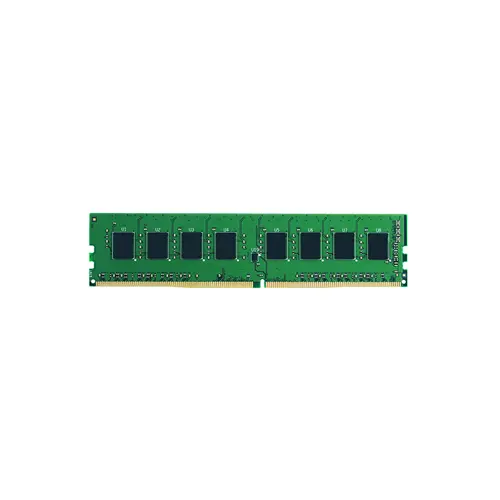
This 64GB DDR4-2933 Registered ECC RDIMM is engineered for enterprise server platforms, delivering critical data integrity and stability for memory-intensive workloads such as virtualization and in-memory databases. Its dual-rank configuration optimizes interleaving to maximize throughput, while the CL21 CAS latency and registered signal type ensure reliable operation under sustained high-density memory loads.
1. High-density module enables massive in-memory datasets and dense virtualization, letting enterprise hypervisors pack more tenants per node without dipping into storage.
2. Integrated error correction continuously detects and repairs single-bit flips, preserving transactional integrity in databases and financial computation under continuous uptime.
3. Buffered signaling decouples address and command lines from the memory bus, stabilizing signal integrity when populating all channels in large-scale rack configurations.
4. Dual-rank organization leverages rank interleaving to keep the memory pipeline busy, smoothing response-time variance during simultaneous analytic and VM workloads.
5. This transfer rate provides the bandwidth headroom to feed multi-core server CPUs, accelerating in-memory caches and real-time streaming pipelines under concurrent access.
Based on its registered architecture, ECC support, and 288-pin RDIMM form factor, the Micron MTA36ASF8G72PZ-2G9B1VI is unequivocally server-class memory, purpose-built for mission-critical enterprise environments. In a dense virtualization cluster hosting dozens of mixed-workload VMs, its 64 GB capacity and registered signal buffering are essential — the buffer chip stabilizes the electrical load on the memory bus, allowing fully populated servers to run without signal degradation. This means your hypervisor can safely allocate more memory per socket, driving higher VM density and protecting consolidation investments. At the same time, ECC continuously corrects single-bit and detects multi-bit errors, which directly prevents silent data corruption in financial transaction logs or customer databases — a single undetected bit flip could cascade into a failed audit or a corrupted backup. When running an in-memory database like SAP HANA or Redis, the dual-rank design and 2933 MT/s speed become equally critical. Dual rank organization interleaves accesses across internal banks, raising effective bandwidth and delivering the consistent low-latency throughput required for real-time analytics under heavy concurrency. Together, ECC, registered buffering, high density, and dual-rank performance transform this module from a component into an insurance policy for data integrity and application uptime.
This 64GB DDR4-2933 ECC Registered RDIMM is engineered for server platforms. Below are capacity planning guidelines for typical enterprise workloads.
General Virtualization
Populate at least one 64GB module per memory channel to enable interleaving and maximize throughput. A 12-DIMM configuration (768GB) comfortably handles high-density VM consolidation, and the Dual Rank design improves bank-level parallelism under mixed workloads.
In-Memory Database
Install one 64GB RDIMM in every memory channel to maintain the full 2933 MT/s speed and lowest latency. For larger datasets, add a second DIMM per channel, accepting a slight frequency drop, but always keep population symmetric for predictable access times. ECC is mandatory for data integrity.
High Performance Computing
Maximize bandwidth by fully populating all memory channels with a single 64GB Dual Rank module each, sustaining rated speed for simulation and modeling codes. Only add extra modules when node-level capacity demands exceed the single-DIMM-per-channel ceiling, carefully evaluating the bandwidth versus capacity trade-off.
This rigorously tested server memory ensures compatibility with systems such as Dell PowerEdge R740, HPE ProLiant DL380 Gen10, Lenovo ThinkSystem SR650.
Q: Can I mix this MTA36ASF8G72PZ-2G9B1VI with other memory modules of different brands or speeds?
A: Mixing is strongly discouraged. For registered ECC memory, populate all channels with identical modules (same MPN, rank, and speed) to maintain signal integrity and avoid stability issues in server environments.
Q: Is this memory compatible with my system?
A: This RDIMM requires a server platform supporting DDR4-2933 Registered ECC memory, typically Intel Xeon Scalable, Xeon E5/E7 v4, or AMD EPYC 7000/7002 series. Verify your motherboard's qualified vendor list (QVL).
Q: What is the recommended DIMM population order for optimal performance?
A: Install identical DIMMs in sets following your server board's balanced population guide, typically filling the first slot of each memory channel (e.g., A1, B1, C1) for symmetric multi-channel operation and maximum throughput.
Q: Does this module support overclocking or XMP profiles?
A: No. This is a JEDEC-compliant registered ECC module built for data integrity and stability. Overclocking and XMP are not supported; it runs strictly at its rated 2933MHz (PC4-23400) with CL21 timing.
Q: What warranty and typical failure rate can I expect?
A: This module includes a 1-year warranty. As enterprise-grade RDIMM, it undergoes rigorous testing and exhibits a very low annualized failure rate (AFR), typically under 0.5% under normal server operating conditions.