











 Secure payments
Standard refund policy
Trade Assurance
Secure payments
Standard refund policy
Trade Assurance
| Product Type | Memory Module |
|---|---|
| Memory Capacity | 64 GB |
| Memory Technology | DDR4 |
| Product Voltage | 1.2 V |
| RAM Speed | 3200 MHz |
| RAM Standard | DDR4-3200/PC4-25600 |
| Error Identifying | ECC |
| Signal Type | Registered |
| Column Access Strobe (CAS) | CL22 |
| Rank | Dual Rank x4 |
| Quantity of Pins | 288-pin |
| RAM Genre | RDIMM |
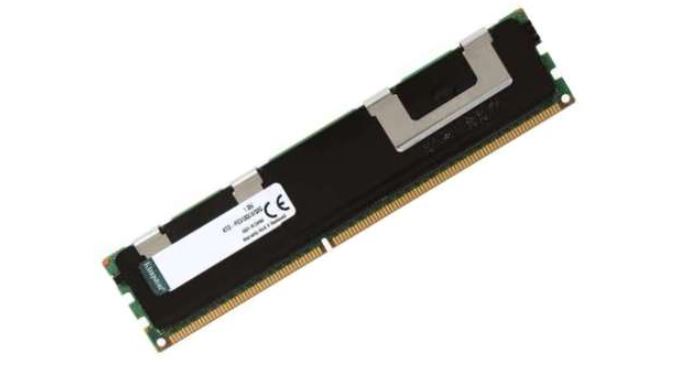
This 64 GB DDR4-3200 Registered ECC RDIMM leverages a dual-rank x4 organization to maximize memory bandwidth and interleaving efficiency, making it particularly well-suited for dense virtualization clusters and in-memory database workloads where data integrity under heavy load is critical. The registered signal buffering and full ECC protection at 1.2 V combine to deliver outstanding reliability and stable operation across multi-socket server platforms, ensuring consistent 22-22-22 latency even in fully populated memory channels.
1. ECC protection detects and corrects single-bit memory errors in real time, safeguarding transactional data integrity for mission-critical enterprise workloads.
2. Registered signal type buffers command and address lines, enabling stable operation across high-density memory configurations essential for large-scale virtualization hosts.
3. Dual Rank x4 organization doubles the bank count to maximize memory-level parallelism, sustaining throughput during heavy database query concurrency.
4. 64 GB capacity per module allows dense server population with ample headroom for in-memory analytics and growing virtual machine fleets per physical node.
5. DDR4-3200 speed delivers high memory bandwidth that reduces data starvation on multi-core server CPUs, accelerating scientific simulations and real-time processing.
Based on the provided specifications, the RDIMM form factor and ECC technology unmistakably identify this as server-grade memory, purpose-built for enterprise environments where uptime and data integrity are non-negotiable. In a virtualization cluster hosting dozens of critical VMs, the 64 GB dual-rank x4 design directly translates to higher density per server and improved memory interleaving, allowing your hypervisor to pack more workloads onto fewer nodes without sacrificing performance. Meanwhile, the registered signal type lends essential electrical stability at this scale, preventing signal degradation that would otherwise cause random lockups under heavy simultaneous access. That reliability is reinforced by ECC, which silently corrects single-bit errors before they can corrupt financial transactions or customer records in an in-memory database like Redis or SAP HANA. With a 3200 MT/s speed and CL22 latency, memory-bound analytics queries return faster, while the 1.2 V power envelope helps control thermal and energy costs across a full rack. For any IT director tired of unexplained midnight reboots or gradual data corruption, this module delivers the stability that turns servers into trustworthy workhorses.
This 64GB DDR4-3200 module is an ECC Registered RDIMM (288‑pin, dual‑rank x4, CL22) designed exclusively for servers. Its high capacity and data‑integrity features demand a thoughtful population strategy for reliable performance. Below are capacity‑planning recommendations for common server workloads.
General Virtualization
In a dual‑socket server, install one identical 64GB RDIMM in every memory channel – typically eight modules per CPU – to achieve a balanced 512GB footprint. This uniform configuration prevents NUMA imbalances and supplies sufficient headroom for high VM density without memory overcommitment. ECC and registration maintain stability during continuous consolidation.
In‑Memory Database
Fill all channels symmetrically with these dual‑rank x4 DIMMs to maximize interleaving and sustain low, predictable latency. A fully populated set of 64GB RDIMMs delivers the large uniform capacity that in‑memory engines like Redis or SAP HANA require, while the consistent access pattern eliminates bottlenecks under heavy transactional loads.
HPC
For peak 3200 MT/s bandwidth, adopt a one‑DIMM‑per‑channel layout; this keeps signal integrity at maximum speed for floating‑point‑intensive simulations. If your workload demands higher capacity, a two‑DIMM‑per‑channel plan can double memory to 1TB or more per node but typically negotiates speed down to 2933 MT/s — match the topology to your job’s bandwidth‑sensitivity. Always keep ranks balanced across channels to minimise jitter and sustain stable throughput.
Rigorously tested and validated for Dell PowerEdge R750, HPE ProLiant DL380 Gen10 Plus, Lenovo ThinkSystem SR650 V2.
Q: Can I mix this MTA36ASF8G72PZ-3G2E1 with other memory modules of different brands or speeds?
A: Mixing is not recommended for server environments. Mismatched ranks, speeds, or brands may cause instability, force lower speeds, or disable ECC functions. Use identical modules to maintain validated reliability and performance.
Q: Is this memory compatible with my Intel Xeon or AMD EPYC server platform?
A: Yes, this DDR4-3200 ECC RDIMM is validated for mainstream Intel Xeon Scalable and AMD EPYC 7002/7003 series platforms. Verify motherboard support for 64GB dual-rank RDIMMs at 3200 MHz for full compatibility.
Q: What is the recommended DIMM population order for optimal performance?
A: Follow the server motherboard's population guide, typically filling matching DIMM slots per memory channel starting farthest from the CPU. For dual-rank x4 RDIMMs, observe per-channel limits to sustain 3200 MT/s.
Q: Does this module support overclocking or XMP profiles?
A: No. This is a JEDEC-compliant DDR4-3200 server RDIMM (PC4-25600, CL22). It does not support XMP or overclocking, as stability and error-free ECC operation are prioritized over enthusiast tuning.
Q: What warranty and typical failure rate can I expect?
A: We provide a one-year warranty. Enterprise RDIMMs have an extremely low annualized failure rate (AFR), typically below 0.5% under validated server operating conditions, ensuring mission-critical reliability.