











 Secure payments
Standard refund policy
Trade Assurance
Secure payments
Standard refund policy
Trade Assurance
| Product Type | Memory Module |
|---|---|
| Memory Capacity | 8 GB |
| Memory Technology | DDR4 |
| Product Voltage | 1.2V |
| RAM Speed | 2133MHz |
| RAM Standard | DDR4-2133/PC4-17000 |
| Error Identifying | ECC |
| Signal Type | Registered |
| Column Access Strobe (CAS) | CL15 |
| Rank | Dual Rank x8 |
| Quantity of Pins | 288-pin |
| RAM Genre | RDIMM |
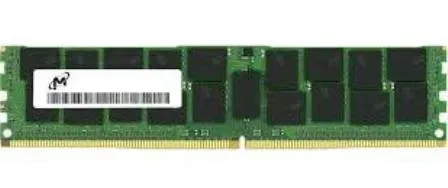
This 8GB DDR4-2133 Registered ECC DIMM (RDIMM) is engineered for server platforms handling virtualization, in-memory databases, and other mission‑critical workloads where data integrity is paramount. Its Dual Rank x8 organization and registered signal type improve memory bus stability and bandwidth efficiency under heavy load, while the integrated ECC reliably detects and corrects single‑bit errors in real time.
1. Registered signal buffering decouples the electrical load from the memory controller, enabling large-scale deployments with dozens of DIMMs per server without compromising signal integrity.
2. ECC protection silently corrects single-bit errors in real time, preventing silent data corruption in transactional databases and long-running analytical workloads.
3. DDR4 technology doubles the transfer rate over its predecessor while operating at a lower voltage, boosting throughput for virtualized environments and reducing power consumption across entire rack deployments.
4. The eight-gigabyte module density strikes an optimal balance between cost and capacity, allowing fine-grained memory provisioning for midsize virtual machines and container hosts.
5. Dual Rank x8 organization interleaves access across two internal ranks, elevating sustained bandwidth and reducing latency under concurrent multi-tenant access patterns common in cloud infrastructure.
Designed for mission-critical server environments, the Micron MTA18ASF1G72PDZ-2G1B1QG RDIMM directly addresses the challenges that keep IT managers awake at night. Its ECC technology continuously detects and corrects single-bit memory errors, which can be triggered by background radiation. In a virtualized cluster running dozens of VMs on a single host, one uncorrected bit flip can silently corrupt a financial transaction or crash a hypervisor, leading to costly downtime. This module eliminates that risk, ensuring data integrity without performance penalties.
The registered interface buffers command and address signals, allowing the platform to support up to three DIMMs per channel without sacrificing signal quality. For memory-intensive databases like SAP HANA or Redis, this means you can populate all memory channels to build a high-capacity, stable footprint that keeps terabytes of hot data close to the processor, slashing latency for real-time analytics. Paired with a dual-rank x8 architecture, the module interleaves access across internal banks, boosting bandwidth under heavy parallel workloads. Even with a dense memory configuration, the 1.2V DDR4 voltage keeps power consumption in check, reducing thermal stress and OPEX in large-scale data centers. Together, these features translate directly into fewer service interruptions, predictable latency, and a lower total cost of ownership for your enterprise infrastructure.
General Virtualization
For general virtualization hosts, populate memory channels symmetrically to maximize bandwidth. With 8 GB RDIMMs, start with six identical modules per CPU (one per channel) to yield 48 GB, sufficient for moderate VM density. Scale by adding a second DIMM per channel (2DPC) to reach 96 GB per socket while retaining balanced performance, but be aware that speed may drop at 2DPC with these 2133 MHz modules.
In-Memory Database
In-memory databases demand the largest possible capacity at low latency. Using dual-rank 8 GB RDIMMs, fill all DIMM slots of a two-socket server—for example, 24 modules totaling 192 GB—to serve medium-sized datasets entirely in RAM. This configuration leverages the registered ECC reliability crucial for data integrity and supports memory interleaving across ranks for improved throughput.
High-Performance Computing (HPC)
HPC workloads favor consistent latency and high bandwidth. Install one 8 GB RDIMM per channel across all memory channels to create a balanced, fully-populated configuration that avoids the performance penalty of mixed DIMM types. For capacity-bound simulations, move to a larger number of identical DIMMs (e.g., 12 x 8 GB for 96 GB per node) while maintaining uniform rank and timing settings to ensure predictable parallel I/O performance.
Rigorously tested. Compatible with Dell PowerEdge R740, HPE ProLiant DL380 Gen10, Lenovo ThinkSystem SR650, and similar DDR4 servers.
Q: Can I mix this MTA18ASF1G72PDZ-2G1B1QG with other memory modules of different brands or speeds?
A: We strongly advise against mixing different brands or speeds in server platforms. Mismatched Registered DIMMs may cause instability, signal conflicts, or prevent booting. Homogeneous memory configurations ensure seamless co-validation and reliable 24/7 operation.
Q: Is this memory compatible with my Intel Xeon E5-2600 v4 server board?
A: Yes, it is compatible with platforms supporting DDR4-2133 ECC Registered DIMMs, such as Intel Xeon E5-2600 v3/v4 series. Please verify your motherboard's Qualified Vendor List or chipset documentation to confirm RDIMM support and maximum capacity.
Q: What is the recommended DIMM population order for optimal performance?
A: Optimal population follows your server motherboard manual. Generally, populate identical DIMMs per channel starting with slots furthest from the CPU (e.g., A1, B1) to balance memory channels and maintain interleaving. Refer to your platform's specific slot numbering guide.
Q: Does this module support overclocking or XMP profiles?
A: No. This is a JEDEC-compliant server-grade Registered DIMM built for reliability at 2133MHz. It does not include XMP profiles nor support overclocking. Any attempt to operate beyond JEDEC timings may compromise data integrity and system stability.
Q: What warranty and typical failure rate can I expect?
A: This Micron memory module includes a 1-year warranty against defects. Enterprise-class RDIMMs exhibit extremely low annualized failure rates under nominal conditions. We provide advance replacement to minimize downtime in critical environments where high reliability is paramount.