











 Secure payments
Standard refund policy
Trade Assurance
Secure payments
Standard refund policy
Trade Assurance
| Product Type | Memory Module |
|---|---|
| Memory Capacity | 8 GB |
| Memory Technology | DDR3 |
| Product Voltage | 1.5V |
| RAM Speed | 1066MHz |
| RAM Standard | DDR3-1066/PC3-8500 |
| Error Identifying | ECC |
| Signal Type | Registered |
| Column Access Strobe (CAS) | CL7 |
| Rank | Quad Rank x8 |
| Quantity of Pins | 240-pin |
| RAM Genre | VLP RDIMM |
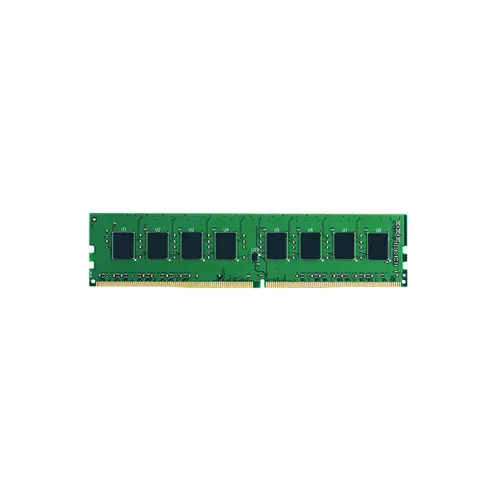
Ideal for space-constrained 1U servers and blade enclosures, this 8GB DDR3-1066 VLP RDIMM leverages its ECC and registered signal type to ensure uncompromising data integrity in memory-intensive virtualization and in-memory database workloads. Its Quad Rank x8 configuration maximizes per-channel density while the low CL7 latency and 1.5V operation deliver a stable, power-efficient foundation for demanding enterprise environments.
1. ECC: On-the-fly error correction prevents silent data corruption, a non-negotiable requirement for financial and healthcare transaction processing.
2. Registered: Buffered command delivery preserves signal cleanliness under maximal DIMM counts, allowing IT to fully populate memory slots without compromising uptime.
3. VLP RDIMM: The very low profile design clears critical airflow pathways in high-density server chassis, directly translating to lower fan speeds and higher platform reliability.
4. Quad Rank x8: Quad rank packing per module grants double the capacity per slot, empowering dense virtualization nodes to host more guests per rack unit.
5. RAM Speed: Standardized clock speed ensures validated compatibility and consistent latency across all memory channels, keeping enterprise applications responsive under steady loads.
The Micron MT36JDZS1G72PDZ-1G1D1 is a server-grade DDR3 VLP RDIMM, engineered for relentless enterprise environments. Its four defining characteristics translate directly into mission-critical reliability. First, ECC proactively detects and corrects single-bit memory errors—silent disruptors that can crash virtual machines or corrupt financial transactions. For a virtualization cluster hosting dozens of VMs, this means sustained uptime without mysterious instability. Second, the registered architecture re-drives address and command signals, enabling stable population of all DIMM slots on the board; it is what allows a hypervisor to scale system memory to 256GB or more for dense VM consolidation. Third, the Quad Rank x8 configuration delivers 8GB via four internal ranks that interleave to boost effective bandwidth. In an in-memory database like Redis, this interleaving accelerates high-concurrency read/write operations while the high rank count supports deeper datasets. Finally, the Very Low Profile form factor is purpose-built for 1U and blade servers, improving airflow and reducing thermal stress. This ensures that memory-intensive services, from virtualized workloads to real-time analytics, stay cool and dependable around the clock.
General Virtualization
Populate all memory channels symmetrically with identical 8GB Quad Rank registered DIMMs to maximize interleaving and bandwidth. A typical balanced configuration uses 12 or 16 modules (96 GB or 128 GB) per server, providing ample capacity for dozens of moderate virtual machines. Always install the same RDIMMs in every channel to preserve the 1066 MHz clock and ensure full ECC protection.
In-Memory Database
Maximize capacity by filling every available DIMM slot while respecting the platform’s per‑channel rank limits; a dual‑socket server can often reach 256 GB or more. Follow the vendor’s population order strictly to maintain lockstep memory mode and data integrity. Use exclusively identical Quad Rank modules—mixing ranks may force the memory bus down to 800 MHz and degrade performance critical for large datasets.
High-Performance Computing
For peak bandwidth, install just one DIMM per memory channel to sustain the rated 1066 MHz speed. If larger capacity is required, populate the second slot of each channel only with matching Quad Rank RDIMMs, understanding that fully loaded channels frequently drop to 800 MHz. The very low‑profile design improves airflow in dense nodes, and registered ECC memory safeguards long‑running computations against silent data corruption.
Rigorously tested for compatibility with servers including Dell PowerEdge R710, HP ProLiant DL380 G7, and IBM System x3650 M3.
Q: Can I mix this MT36JDZS1G72PDZ-1G1D1 with other memory modules of different brands or speeds?
A: Mixing is not recommended. This is an ECC Registered server DIMM, and mixing unbuffered or non-ECC modules can cause instability or prevent POST. Always use identical part numbers for reliable operation.
Q: Is this memory compatible with my system? Which Intel or AMD platforms are supported?
A: It is designed for servers supporting DDR3-1066 Registered ECC memory, such as Intel Xeon 5500/5600 series or AMD Opteron 6100 platforms. Verify your motherboard's RDIMM support for 8GB quad-rank modules.
Q: What is the recommended DIMM population order for optimal performance?
A: Populate identical quad-rank RDIMMs in matched sets per memory channel, starting with the slots farthest from the CPU. Consult your server board's guide; quad-rank modules often limit the maximum DIMMs per channel.
Q: Does this module support overclocking or XMP profiles?
A: No, this enterprise-grade registered ECC memory does not support overclocking or XMP. It runs strictly at JEDEC standard DDR3-1066 with CL7 timings to guarantee data integrity on server platforms.
Q: What warranty and typical failure rate can I expect?
A: This module comes with a one-year warranty. Its ECC and registered design ensures very low failure rates in compliant servers; anticipate an annualized failure rate well under 0.5% under normal operating conditions.