











 Secure payments
Standard refund policy
Trade Assurance
Secure payments
Standard refund policy
Trade Assurance
| Product Type | Memory Module |
|---|---|
| Memory Capacity | 8 GB |
| Memory Technology | DDR3 |
| Product Voltage | 1.35V |
| RAM Speed | 1333MHz |
| RAM Standard | DDR3-1333/PC3-10600 |
| Error Identifying | ECC |
| Signal Type | Registered |
| Column Access Strobe (CAS) | CL9 |
| Rank | Quad Rank x8 |
| Quantity of Pins | 240-pin |
| RAM Genre | RDIMM |
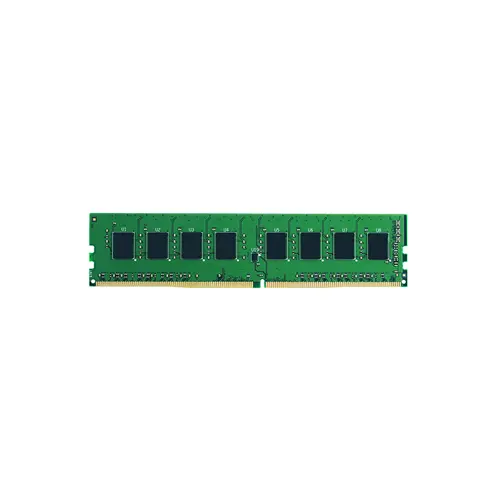
This 8GB DDR3-1333 RDIMM operating at 1.35V with ECC and registered signaling is purpose-built for server platforms running memory-intensive workloads such as virtualization and in-memory databases, where registered logic stabilizes multi-DIMM channels and ECC safeguards data integrity. Its quad-rank x8 organization maximizes capacity density per channel while the low-voltage operation reduces thermal load, making it an optimal choice for dense, power-constrained rack servers.
1. Integrated ECC automatically corrects single-bit errors in real time, preserving the integrity of financial transactions and database records where even silent data corruption is unacceptable.
2. The registered buffer isolates the memory controller from heavy DRAM loads, stabilizing signal integrity so your server can fully populate all channels without risking operational instability.
3. Quad rank x8 organization maximizes the number of DRAM dies per module, allowing a server to reach higher total memory capacity for dense virtualization and in-memory analytics.
4. An eight-gigabyte capacity per DIMM provides ample headroom for moderate virtual machine densities, caching tiers, and multi-tenant web hosting on legacy enterprise platforms.
5. 1.35V ultra-low operating voltage slashes power draw and cooling costs across rack-scale deployments, directly improving the data center’s overall energy efficiency and TCO.
The MT36KSZF1G72LDZ-1G4M1 is a server-grade RDIMM, engineered for environments where downtime is unacceptable and data integrity must be absolute. Its four core attributes directly address the real-world demands of enterprise IT.
First, ECC error correction actively detects and corrects single-bit memory errors. In a dense virtualization cluster running dozens of VMs, a single flipped bit can silently corrupt a database transaction or crash a hypervisor. ECC transforms that risk into a non-event, safeguarding business continuity. Second, the registered signal buffer decouples the memory controller from the electrical load of the DRAM chips. This enables you to populate all 24 DIMM slots in a dual-socket server without signal degradation, which is non-negotiable when you need to maximize capacity for a memory-hungry in-memory database like SAP HANA. Third, the Quad Rank x8 organization delivers high-density granularity, allowing 8GB in a single slot while leaving room for future expansion. This matters when every gigabyte counts for a Redis cache cluster where evictions due to memory pressure directly degrade application response times. Finally, the 1.35V low-voltage operation lowers power consumption per stick, dramatically reducing cumulative thermal load and energy costs across a fleet of servers running 24/7. Together, these features deliver rock-solid stability, predictable performance, and a lower total cost of ownership for your mission-critical workloads.
This capacity planning guide addresses an 8 GB DDR3-1333 Registered ECC RDIMM (1.35 V, Quad Rank) designed for server platforms.
General Virtualization
Populate all memory channels with identical 8 GB modules to enable balanced channel interleaving and consistent VM performance. A dual‑socket server with 12 DIMM slots can accommodate 96 GB (12×8 GB) to host dozens of light virtual machines, while the 1.35 V operation reduces power draw in always‑on hosts. For higher consolidation ratios, consider filling every available slot within platform limits.
In‑Memory Database
Maximize capacity by fully populating DIMM slots with these 8 GB Registered ECC modules, creating a reliable up to 192 GB pool in a 24‑slot server. Quad‑rank DIMMs may cap the number of modules per channel—verify platform guidelines—but aim for at least one DIMM per channel to maintain adequate bandwidth. ECC and registered signaling safeguard data integrity for latency‑sensitive, in‑memory data sets.
High‑Performance Computing (HPC)
Install one Quad‑Rank DIMM per memory channel to preserve the full 1333 MT/s data rate and reduce electrical loading. A dual‑socket system with four channels per CPU achieves a balanced 64 GB (8×8 GB) footprint with optimal aggregated bandwidth. The 1.35 V low‑voltage specification also helps manage thermals in dense cluster nodes.
Rigorously tested for compatibility with Dell PowerEdge R720, HP DL380p Gen8, IBM x3650 M4, and more.
Q: Can I mix this MT36KSZF1G72LDZ-1G4M1 with other memory modules of different brands or speeds?
A: Mixing RDIMMs of different brands or speeds is strongly discouraged. It may cause system instability or boot failures in server platforms that require identical module characteristics and strict uniformity.
Q: Is this memory compatible with my system?
A: This DDR3-1333 Registered ECC module is compatible with select Intel Xeon E5-2600 v1/v2 and AMD Opteron 6300 platforms using C600-series chipsets. Confirm compatibility via your server board’s qualified vendor list.
Q: What is the recommended DIMM population order for optimal performance?
A: Follow your server manual; typically, populate the first slot of each memory channel (e.g., A1, B1) for balanced interleaving. Quad Rank modules may restrict the maximum DIMMs per channel, so adhere to platform guidelines.
Q: Does this module support overclocking or XMP profiles?
A: No. This Registered ECC server DIMM adheres strictly to JEDEC standards. Overclocking and XMP profiles are not supported to ensure 24/7 data integrity and enterprise reliability.
Q: What warranty and typical failure rate can I expect?
A: It includes a 1-year warranty. Enterprise-class DDR3 RDIMMs typically demonstrate an annualized failure rate below 0.5%, providing robust reliability for critical server environments.