











 Secure payments
Standard refund policy
Trade Assurance
Secure payments
Standard refund policy
Trade Assurance
| Product Type | Memory Module |
|---|---|
| Memory Capacity | 8 GB |
| Memory Technology | DDR3 |
| Product Voltage | 1.35V |
| RAM Speed | 1333MHz |
| RAM Standard | DDR3-1333/PC3-10600 |
| Error Identifying | ECC |
| Signal Type | Registered |
| Column Access Strobe (CAS) | CL9 |
| Rank | Dual Rank x4 |
| Quantity of Pins | 240-pin |
| RAM Genre | RDIMM |
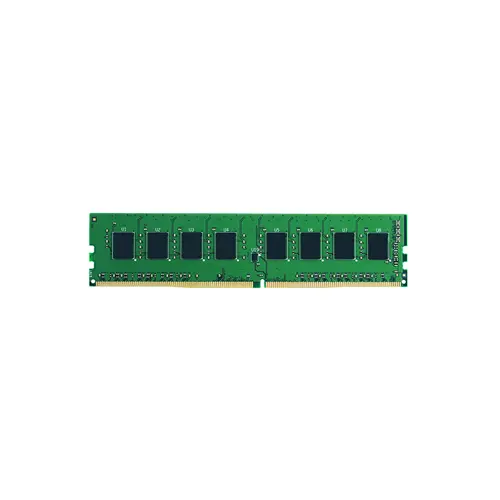
This 8GB DDR3-1333 RDIMM is engineered for server platforms running virtualization, in-memory databases, and other mission-critical workloads where data integrity is paramount. Its registered signal architecture combined with ECC and a dual-rank x4 configuration ensures stable operation at 1.35V low voltage while leveraging rank interleaving to boost memory bandwidth in multi-DIMM deployments.
1. ECC protection detects and corrects single-bit memory errors, safeguarding transactional data integrity in 24/7 server operations.
2. Registered buffering stabilizes command signals across high-density memory configurations, enabling reliable population of all DIMM slots in large-scale servers.
3. Dual Rank x4 organization maximizes interleaving benefits, sustaining high bandwidth for memory-intensive virtualization and database workloads.
4. 8GB per module provides the balanced capacity necessary for moderate virtual machine density without exceeding budget-conscious server upgrade plans.
5. Low 1.35V operation reduces energy consumption and thermal output in densely packed rack servers, lowering total cost of ownership over deployment lifetime.
Designed specifically for enterprise servers, the Micron MT36KSZF1G72LZ-1G4 is an 8GB DDR3 RDIMM that addresses the real-world demands of data center infrastructure through four critical characteristics. The ECC technology continuously detects and corrects single-bit memory errors, which is essential for financial transaction databases or virtualized environments where even a silent bit flip could corrupt a running virtual machine or lead to inaccurate revenue reporting. Its registered architecture places a buffer between the memory controller and the DRAM modules, stabilizing signal integrity when populating a server with dozens of DIMMs; this lets you confidently scale a VMware cluster to several hundred gigabytes of RAM without boot failures or intermittent crashes under load. Operating at just 1.35V, this module reduces power consumption and thermal output per socket, a tangible advantage in a 24/7 co-location facility where every watt saved lowers cooling costs and shrinks your carbon footprint. Finally, the dual-rank x4 organization increases bank-level parallelism, meaning an in-memory database like SAP HANA or a Redis caching layer can sustain higher transactions per second because the memory controller can interleave accesses more efficiently, shrinking latency during peak query storms. For the IT manager, this translates directly into fewer downtime risks, denser consolidation ratios, and predictable performance under mission-critical workloads.
General Virtualization
For general virtualization hosts using DDR3-era servers, populate all available memory channels symmetrically to maximize total addressable RAM. A common sweet spot is installing two 8GB RDIMMs per channel on a dual-socket system, yielding 96GB to 144GB depending on channel count, enabling dozens of light-to-medium VMs. Leverage the 1.35V low-voltage design to reduce power and cooling costs in dense rack deployments.
In-Memory Database
In-memory databases demand the largest possible memory footprint and sustained low latency. Fill every memory slot with identical 8GB Dual Rank x4 RDIMMs to reach the platform’s maximum supported capacity—often 384GB or more on older quad-channel servers. Avoid mixing different ranks or speeds, and configure memory in a balanced, multi-channel interleave to eliminate bottlenecks during large dataset loads and real-time analytics.
High-Performance Computing
For HPC workloads sensitive to memory bandwidth, populate at least one DIMM per channel on each socket to ensure all memory controllers are active and delivering peak aggregate throughput. Where capacity is secondary to speed, install exactly one 8GB RDIMM per channel to maintain DDR3-1333 without downclocking. For mixed needs, use two modules per channel but verify that the system sustains target frequency; dual-rank x4 modules offer a good compromise between capacity and command rate efficiency.
Rigorously tested, this 8GB DDR3L RDIMM is compatible with Dell PowerEdge R720, R620, HP DL380p Gen8, Lenovo x3650 M4.
Q: Can I mix this MT36KSZF1G72LZ-1G4 with other memory modules of different brands or speeds?
A: Mixing this RDIMM with different brands or speeds is not recommended. It can cause signal integrity issues, ECC errors, or forced downclocking. For reliable operation, always populate all channels with identical modules.
Q: Is this memory compatible with my Intel or AMD server platform?
A: This DDR3-1333 ECC Registered DIMM works with platforms supporting 1.35V RDIMMs. Verify your server board and CPU support DDR3 RDIMMs and check the Qualified Vendor List (QVL) to ensure full compatibility with your specific model.
Q: What is the recommended DIMM population order for optimal performance?
A: Follow your server manual. Generally, install identical DIMMs in sets across memory channels, starting with the primary slots (e.g., DIMM_A1, DIMM_B1). This dual-rank x4 RDIMM benefits from balanced channel populations for maximum interleaving.
Q: Does this module support overclocking or XMP profiles?
A: No, this server-grade registered DIMM does not support overclocking or XMP profiles. It runs at JEDEC standard DDR3-1333 CL9 timings, prioritizing error-free stability and data integrity for 24/7 enterprise workloads.
Q: What warranty and typical failure rate can I expect?
A: This memory comes with a 1-year warranty. Enterprise RDIMMs like this are built for ultra-high reliability, typically exhibiting annualized failure rates well below 0.1% under normal data center operating conditions.