











 Secure payments
Standard refund policy
Trade Assurance
Secure payments
Standard refund policy
Trade Assurance
| Product Type | Memory Module |
|---|---|
| Compliance Standards | RoHS |
| Memory Capacity | 8 GB |
| Memory Technology | DDR3 |
| RAM Speed | 1600MHz |
| RAM Standard | DDR3-1600/PC3-12800 |
| Error Identifying | Non-ECC |
| Signal Type | Unbuffered |
| Column Access Strobe (CAS) | CL11 |
| Rank | Dual Rank x8 |
| Quantity of Pins | 240-pin |
| RAM Genre | UDIMM |
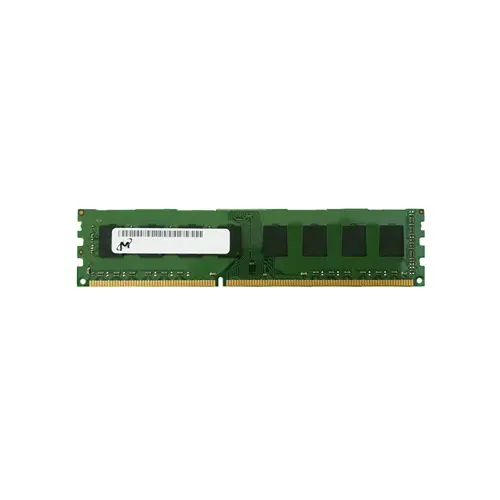
This non-ECC, unbuffered DDR3-1600 UDIMM is a desktop-class module tailored for mainstream productivity, gaming, and content creation platforms that demand reliable throughput. Its dual-rank x8 organization boosts memory interleaving for higher effective bandwidth, and the CL11 timing delivers stable 1600MHz operation without requiring complex tuning.
1. An 8-gigabyte footprint accommodates demanding multitasking workloads, letting creators smoothly switch between high-resolution assets without paging to disk.
2. DDR3 memory delivers a proven balance of bandwidth and compatibility, ensuring stable operation on legacy platforms favored by budget-conscious gamers and system builders.
3. 1600MHz transfer rate provides enough throughput to feed modern integrated graphics, visibly reducing stutter in entry-level gaming and HD media playback.
4. CL11 timings tighten response latency, giving the system snappier command execution that benefits real-time applications like audio production and competitive gaming.
5. Dual Rank x8 organization interleaves memory banks to boost effective bandwidth, keeping frame times consistent when streaming or running background tasks alongside games.
The Micron MT16JTF1G64AZ-1G6E1 is an 8GB DDR3-1600 UDIMM engineered for desktop platforms, where raw responsiveness and predictable performance define the user experience. Its four signature characteristics translate directly into real-world advantages that gamers and creative professionals feel immediately. The Unbuffered, Non-ECC architecture eliminates the additional clock cycle that registered server modules impose, ensuring command signals reach the DRAM cells with minimal delay. When every millisecond counts in a competitive first-person shooter, this lower latency reduces the gap between your click and the on-screen action, while during timeline-intensive 4K video rendering it prevents the micro-stutter that disrupts smooth previews. The 1600MHz frequency, delivering 12.8 GB/s of bandwidth, keeps texture streaming fluid as you sprint across an open-world map, and supplies enough throughput for a compositing application to cache large layered effects without choking. A CL11 CAS latency keeps column access tight, which stabilizes frame pacing in CPU-limited physics simulations. Finally, the Dual Rank x8 configuration enables rank interleaving: while one rank executes a refresh cycle, the controller reads from the other, driving up effective bandwidth. This hidden concurrency pays off when you are simultaneously encoding video, browsing resources, and running background tasks, turning an older system into a responsive multitasking engine.
Gaming Build
For a responsive gaming rig, always install modules in matching pairs to enable dual‑channel mode and boost bandwidth. A 16 GB kit (2 × 8 GB) of this DDR3‑1600 UDIMM is the entry sweet spot for modern titles, while a 32 GB (4 × 8 GB) configuration provides headroom for streaming and background tasks without stutter.
Content Creation
Video editing, 3D rendering, and complex compositing thrive on capacity. Populate all four DIMM slots with these 8 GB modules to reach 64 GB—ideal for manipulating large timelines and high‑resolution assets without swapping to disk. Prioritize identical dual‑rank DIMMs to maintain stable interleaving and consistent render performance.
General Productivity
A budget‑conscious 8 GB single‑module setup handles email, web browsing, and office suites smoothly, leaving one slot open for a future upgrade. For users who keep dozens of browser tabs and multiple applications open, a 16 GB dual‑channel kit delivers noticeable responsiveness at minimal extra cost, making it the price‑performance recommendation for everyday multitasking.
Rigorously tested, compatible with desktops like Dell OptiPlex 7010, HP Elite 8300, and Lenovo ThinkCentre M92p.
Q: Can I mix this MT16JTF1G64AZ-1G6E1 with other memory modules of different brands or speeds?
A: Mixing is not recommended. The system will default to the slowest module’s speed and timings, which may cause instability. For reliable dual-channel operation, install identical modules.
Q: Is this memory compatible with my desktop system?
A: This DDR3 UDIMM fits motherboards with 240-pin slots and chipsets like Intel 7/8/9 Series or AMD 9 Series. Verify your board supports unbuffered, non-ECC DDR3-1600 at 1.5V.
Q: What is the recommended DIMM population order for optimal performance?
A: Install matching pairs in the same-colored slots (usually A2 and B2) to enable dual-channel mode. Refer to your motherboard manual for the optimal two-module configuration.
Q: Does this module support overclocking or XMP profiles?
A: No, this is a JEDEC-standard DDR3-1600 module with fixed CL11 timings. It does not support XMP profiles and is not designed for overclocking.
Q: What warranty and typical failure rate can I expect?
A: This Micron module includes a 1-year warranty. Its non-ECC, unbuffered design is highly reliable, with an annualized failure rate well below 0.5% under normal operating conditions.