











 Secure payments
Standard refund policy
Trade Assurance
Secure payments
Standard refund policy
Trade Assurance
| Product Type | Memory Module |
|---|---|
| Memory Capacity | 8 GB |
| Memory Technology | DDR4 |
| Product Voltage | 1.2V |
| RAM Standard | DDR4-2133/PC4-17000 |
| Error Identifying | ECC |
| Signal Type | Registered |
| Column Access Strobe (CAS) | CL15 |
| Rank | Single Rank x4 |
| Quantity of Pins | 288-pin |
| RAM Genre | NVDIMM |
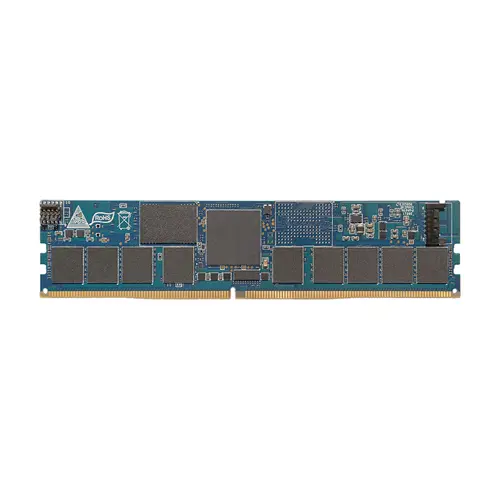
Designed for enterprise servers, this 8GB DDR4-2133 NVDIMM with ECC and a registered signal type excels in memory-intensive workloads like virtualization and in-memory databases, where its non-volatile architecture instantly preserves critical data during power failures. The single-rank x4 configuration and CL15 CAS latency ensure low-latency access and robust signal integrity, enabling reliable, high-performance operation in mission-critical environments.
1. Persistent memory architecture retains data through unexpected power loss, enabling instant recovery for in-memory databases and transaction logs.
2. Advanced error correction safeguards data integrity in long-running analytics, preventing costly silent corruption across large memory arrays.
3. Registered buffer doubles addressable capacity per channel, supporting higher VM density and stable operation under mixed workload stress.
4. Single-rank configuration with wide x4 chips minimizes bus contention, delivering predictable low latency for latency-sensitive workloads.
5. Energy-efficient low-voltage design reduces per-node power consumption, directly shrinking datacenter cooling overhead and operational costs.
Designed for enterprise servers, the Micron MTA18ASF1G72PF1Z-2G1Y1 combines DDR4 speed with NVDIMM persistence, ECC, and registered buffering. In virtualized clusters hosting multiple VMs, its ECC silently corrects single-bit errors from cosmic rays or power noise, preventing silent data corruption in financial transactions and hypervisor states. The registered buffer decouples the memory controller from DRAM loads, stabilizing bus signals and supporting dense 256 GB+ configurations—crucial for in-memory databases like SAP HANA, where every access latency spike impacts real-time queries. The NVDIMM feature instantly saves active memory contents to NAND flash during a power loss; when power returns, databases and caching platforms such as Redis restart from memory state in seconds, avoiding hours of disk rebuild. As a single-rank x4 module with CL15 timings, it delivers balanced throughput and low latency, maximizing VM consolidation ratios while satisfying latency-sensitive workloads like algorithmic trading and real-time fraud detection. In short, this module addresses the three biggest server memory risks: silent corruption, signal instability during high-density scaling, and power-loss data loss.
General Virtualization
Deploy these 8 GB NVDIMM-N modules as a persistent memory tier in your virtualized clusters. For a typical dual-socket server, install 16 to 24 modules (128–192 GB total) to comfortably host several dozen VMs while enabling hypervisor-assisted fast suspend/resume and zero-storage live migration. Populate one module per memory channel to preserve balanced bandwidth and keep latency low.
In-Memory Database
Plan for a dedicated persistent pool using at least 12 modules per socket (96 GB per CPU) in App Direct mode; this holds indexes, logs, and in-memory tables with full durability and DRAM-class latency. Combine the NVDIMM capacity with traditional high-density RDIMMs to create a tiered memory architecture—hot writes go directly to the persistent tier, eliminating storage I/O stalls and radically reducing recovery time after power loss.
High-Performance Computing
Leverage the non-volatile nature of these modules for local checkpoint/restart operations. Equip each compute node with 4 to 8 units (32–64 GB) dedicated exclusively to checkpointing, placing one module per channel to maximize write throughput. This setup captures application state in milliseconds, drastically cuts the overhead of periodic saves, and allows more wall-clock time for actual computation compared to network-storage-based approaches.
Rigorously tested server NVDIMM; compatible with Dell PowerEdge R740/R640, HPE DL380 Gen10, Lenovo SR650.
Q: Can I mix this MTA18ASF1G72PF1Z-2G1Y1 with other memory modules of different brands or speeds?
A: Mixing is not recommended. Registered ECC NVDIMMs require identical specifications for signal integrity and persistence features, preventing unexpected errors or data loss in server environments.
Q: Is this memory compatible with my Intel Xeon or AMD EPYC server?
A: It is compatible with platforms supporting DDR4-2133 Registered ECC NVDIMMs, such as select Intel Xeon Scalable (Purley) and AMD EPYC 7000 series systems. Verify your board's qualified vendor list.
Q: What is the recommended DIMM population order for optimal performance?
A: Follow your server manual. Typically, populate identical DIMMs per channel starting with the farthest slot. For NVDIMMs, interleave with standard RDIMMs as required by platform persistent memory rules.
Q: Does this module support overclocking or XMP profiles?
A: No, it adheres to JEDEC DDR4-2133 standard timings. Registered NVDIMMs prioritize data integrity and persistent storage reliability over overclocking.
Q: What warranty and typical failure rate can I expect?
A: This Micron NVDIMM includes a 1-year warranty. It offers very high reliability with an AFR typically below 0.5%, validated by extensive server-grade testing for 24/7 operation.