











 Secure payments
Standard refund policy
Trade Assurance
Secure payments
Standard refund policy
Trade Assurance
| Product Type | Memory Module |
|---|---|
| Memory Capacity | 8 GB |
| Memory Technology | DDR4 |
| Product Voltage | 1.2V |
| RAM Speed | 2133MHz |
| RAM Standard | DDR4-2133/PC4-17000 |
| Error Identifying | ECC |
| Signal Type | Registered |
| Column Access Strobe (CAS) | CL15 |
| Rank | Dual Rank x8 |
| Quantity of Pins | 288-pin |
| RAM Genre | RDIMM |
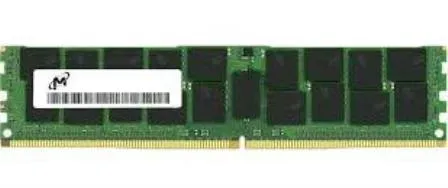
This 8GB DDR4-2133 RDIMM, with ECC and a registered signal type, is purpose-built for server platforms that demand uncompromising data integrity, such as virtualization hosts and in-memory databases. Its dual-rank x8 configuration enhances memory interleaving for improved bandwidth efficiency, while the registered architecture stabilizes high-capacity signal loads in dense multi-DIMM deployments.
1. Error correction capability silences single-bit memory faults invisibly, preserving transactional integrity in databases and financial applications that cannot tolerate silent data corruption.
2. Registered buffer circuitry decouples the electrical load from the memory controller, enabling stable population of all DIMM slots per channel for maximum virtual machine density.
3. Modest capacity per module strikes an optimal balance between guest memory provisioning and cost in scale-out virtualization clusters running light to medium instances.
4. Entry-level DDR4 frequency provides predictable, energy-efficient bandwidth for general-purpose hosting and file-serving workloads without needless thermal overhead.
5. Dual-rank organization leverages interleaved access across internal banks, raising sustained throughput under heavy concurrent reads and writes typical of multi-tenant environments.
When you are running a virtualized cluster hosting dozens of mission-critical workloads or an in-memory database where every transaction must be flawlessly consistent, memory errors are not an inconvenience—they are a direct threat to business continuity. The Micron MTA18ASF1G72PDZ-2G1A1HK is engineered for precisely these environments. As a DDR4-2133 Registered DIMM with ECC, it detects and corrects single-bit flips on the fly, preventing silent data corruption that could cascade across your entire hypervisor stack or poison a real-time analytics dataset. Its registered signal buffering means you can populate all channels of a dual-socket server without sacrificing signal integrity, delivering rock-solid stability when you scale to hundreds of gigabytes for heavy virtualization or database caching. The dual-rank x8 organization further boosts throughput via rank interleaving, allowing faster access patterns under concurrent load—critical for reducing latency spikes during peak OLTP transactions. At a low 1.2V operating voltage, it also trims aggregate power draw across a rack, lowering both cooling overheads and operational expense. For infrastructure teams that measure downtime in lost revenue, this module translates directly into resilient performance and a safeguard for data integrity at scale.
General Virtualization
A single 8GB RDIMM is undersized for modern hypervisors; populate multiple channels with identical modules to reach at least 64GB total. For light VM density (10–15 VMs), deploy four modules in balanced channels to maintain memory interleaving and throughput. Always plan for 20–30% headroom to absorb failover and memory overcommit spikes.
In-Memory Database
This module’s registered ECC and dual-rank design improve reliability, but 8GB capacity is too small for most in-memory datasets. Use the maximum supported DIMMs per channel (e.g., 8 or 12 modules) to hit 64–96GB as a minimum entry point. Opt for 2DPC (two DIMMs per channel) configurations to leverage rank interleaving while keeping latency predictable.
High-Performance Computing
Bandwidth-sensitive HPC workloads benefit from populating all memory channels symmetrically. Combine at least eight of these DDR4-2133 RDIMMs for 64GB total to feed dual-socket nodes evenly. For node-count scaling, standardize on this module across your fleet, but consider stepping to a higher frequency if CPU memory bandwidth becomes a bottleneck.
Rigorously tested, fully compatible with Dell PowerEdge R740, HPE DL380 Gen10, Lenovo SR650.
Q: Can I mix this MTA18ASF1G72PDZ-2G1A1HK with other memory modules of different brands or speeds?
A: Mixing RDIMM modules with differing brands, speeds, or ranks is not recommended. Mixing can lead to signal integrity issues and system instability, potentially causing unbootable configurations on server platforms.
Q: Is this memory compatible with my system?
A: This DDR4-2133 ECC Registered RDIMM is designed for Intel Xeon E5-2600 v3/v4 and similar platforms using C612 chipsets. Verify your server board supports 1.2 V registered DIMMs with dual-rank x8 organization.
Q: What is the recommended DIMM population order for optimal performance?
A: Populate identical DIMMs per memory channel starting from the farthest slot from the CPU. For dual-processor boards, balance capacity across both sockets. Refer to your system's service guide for exact slot numbering.
Q: Does this module support overclocking or XMP profiles?
A: No. This is a JEDEC-compliant ECC Registered DIMM intended for server reliability. It does not feature XMP profiles nor is it validated for overclocking; it runs at a fixed 2133 MHz with CL15 latency.
Q: What warranty and typical failure rate can I expect?
A: This module includes a 1-year warranty. Typical annualized failure rates for server-grade ECC RDIMMs are below 0.5%, reflecting rigorous screening and burn-in testing for 24/7 data center environments.