











 Secure payments
Standard refund policy
Trade Assurance
Secure payments
Standard refund policy
Trade Assurance
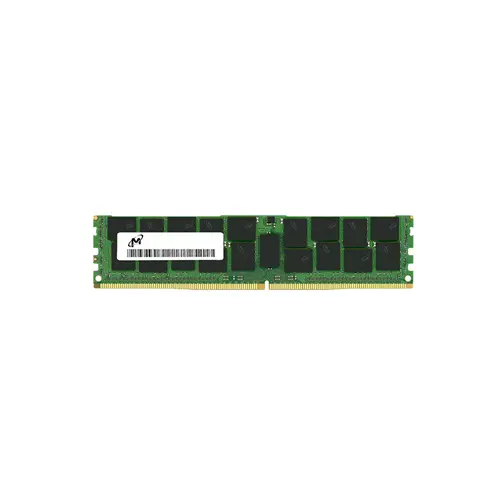
| Product Type | Memory Module |
|---|---|
| Memory Capacity | 8 GB |
| Memory Technology | DDR4 |
| Product Voltage | 1.2V |
| RAM Speed | 2400MHz |
| RAM Standard | DDR4-2400/PC4-19200 |
| Error Identifying | ECC |
| Signal Type | Registered |
| Column Access Strobe (CAS) | CL17 |
| Rank | Single Rank x4 |
| Quantity of Pins | 288-pin |
| RAM Genre | RDIMM |
Designed for server platforms running memory-intensive workloads such as virtualization and in-memory databases, this 8GB DDR4-2400 RDIMM leverages ECC and registered signaling to ensure critical data integrity and signal stability under sustained load. The single-rank x4 organization with CL17 latency optimizes memory controller efficiency, allowing for higher density deployments without sacrificing command rates.
1. ECC protection silently detects and corrects single-bit memory errors in real time, preserving transactional accuracy and uptime in virtualized SQL clusters and dense container deployments.
2. Registered signal buffering decouples the memory controller from raw DRAM loads, enabling stable multi-DIMM channels that sustain enterprise reliability under fully populated 24/7 operation.
3. 2400 MT/s per‑channel bandwidth ensures consistent data throughput to multiple CPU cores, preventing memory bottlenecks when hosting moderate‑scale SaaS applications and business logic VMs.
4. An 8 GB module footprint serves as an optimal building block for right‑sizing hypervisor hosts, delivering sufficient headroom for lightweight guest fleets without stranding idle capacity.
5. Single‑rank x4 organization reduces per‑rank electrical load on the memory bus, allowing servers to populate all slots at rated speed and maximize total addressable memory without sacrificing signal integrity.
The MTA18ASF1G72PZ-2G3A3 is an 8GB DDR4-2400 Registered DIMM purpose-built for server environments where every bit of uptime and data accuracy counts. Its four defining features directly address the real-world pain points of IT infrastructure teams. For a virtualization cluster running dozens of VMs on a single host, ECC error correction is non-negotiable—it silently detects and corrects single-bit memory errors caused by background radiation, preventing the silent data corruption that can gradually poison guest file systems and lead to unexplained crashes. The registered signal type buffers command and address lines, enabling the fully loaded 288-pin modules to maintain rock-solid signal integrity even when all memory channels are populated, so you can scale to 512GB or more per node without stability compromises. That capacity headroom becomes vital for an in-memory database like Redis or SAP HANA, where the single-rank x4 organization balances bandwidth and latency to handle millions of transactions per second without stalling. Meanwhile, the 1.2V low-voltage operation cuts power draw across a server farm, directly lowering cooling costs and extending hardware lifespan. Together, these characteristics translate into fewer 3 a.m. pages, ensured transactional consistency, and the confidence to consolidate workloads knowing your memory subsystem is engineered for fault resilience, not just basic speed.
General Virtualization
For moderate consolidation of virtual machines, populate at least four of these 8 GB RDIMMs (32 GB total) across all memory channels to maintain balanced memory bandwidth. Deploying matched modules in a 2‑DIMM‑per‑channel configuration is acceptable, but avoid mixing ranks within a channel to prevent performance penalties. Scale to 64 GB or higher when hosting memory‑hungry VMs, always using identical RDIMMs to guarantee reliable ECC operation.
In‑Memory Database
In‑memory databases demand both high capacity and fault tolerance, so install six or eight of these 8 GB Registered ECC modules (48–64 GB) across all memory channels to maximize bandwidth. Configure sparing or mirroring modes if your platform requires extra resiliency, as the single‑rank design reduces electrical loading and allows denser population. Validate that the 2400 MT/s speed is sufficient for your dataset access patterns and consider fully populating all DIMM slots if capacity outpaces latency needs.
High‑Performance Computing (HPC)
For compute‑intensive HPC workloads, install one 8 GB RDIMM per memory channel (for example, eight modules on an eight‑channel platform) to deliver the highest sustained bandwidth and lowest latency per core. The single‑rank x4 organization suits tightly coupled simulations because it stresses the memory controller less than dual‑rank modules, enabling higher stable frequencies. Align total capacity to the working set of each node—scale horizontally with additional nodes rather than over‑provisioning RAM inside a single server.
Rigorously tested for compatibility: Dell R730, R630, T630; HPE DL380 Gen9, DL360 Gen9; Lenovo x3650 M5.
Q: Can I mix this MTA18ASF1G72PZ-2G3A3 with other memory modules of different brands or speeds?
A: Mixing RDIMMs of different brands or speeds is not recommended. It may cause signal integrity issues, unexpected POST failures, or system instability, especially in mission-critical server environments.
Q: Is this memory compatible with my system?
A: This DDR4-2400 ECC registered module is designed for Intel Xeon E5-2600 v3/v4 and select Xeon Scalable platforms. Please verify your server board’s qualified vendor list (QVL) for exact compatibility.
Q: What is the recommended DIMM population order for optimal performance?
A: Follow the server motherboard manual. Typically, populate identical DIMMs per channel, starting with the farthest slot from the CPU (blue/black slots). Balance capacity across all memory channels for best throughput.
Q: Does this module support overclocking or XMP profiles?
A: No. This is a JEDEC-compliant registered ECC module designed for reliable, stable operation at 2400MHz. It does not support overclocking or Intel XMP profiles, prioritizing data integrity in server workloads.