











 Secure payments
Standard refund policy
Trade Assurance
Secure payments
Standard refund policy
Trade Assurance
| Model | MTA18ADF1G72PZ-2G3B1 |
|---|---|
| Product Type | Memory Module |
| Compliance Standards | RoHS |
| Memory Capacity | 8 GB |
| Memory Technology | DDR4 |
| Product Voltage | 1.2V |
| RAM Speed | 2400MHz |
| RAM Standard | DDR4-2400/PC4-19200 |
| Error Identifying | ECC |
| Signal Type | Registered |
| Column Access Strobe (CAS) | CL17 |
| Rank | Single Rank x4 |
| Quantity of Pins | 288-pin |
| RAM Genre | VLP RDIMM |
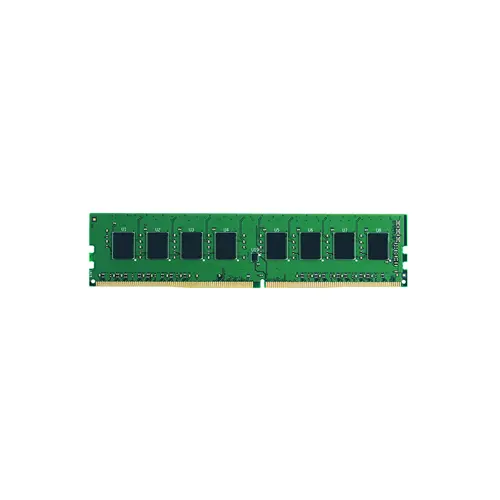
This Micron VLP RDIMM is a server-class DDR4 module engineered for dense virtualization and in-memory database workloads where data integrity is paramount. Its single-rank x4 organization with ECC and registered signaling ensures stable, low-latency operation at CL17, while the very low profile (VLP) form factor enables optimal airflow in 1U rack servers and blade enclosures.
1. ECC protection automatically corrects single-bit memory errors, preserving financial transaction integrity and preventing silent data corruption in always-on enterprise databases.
2. Registered signal buffering stabilizes command and address lines under heavy loads, enabling dense multi-DIMM configurations without compromising server uptime.
3. The VLP RDIMM form factor minimizes vertical clearance inside 1U rack servers, improving airflow and permitting tighter component stacking for hyper-converged infrastructure.
4. Single Rank x4 organization optimizes memory channel utilization and reduces access conflicts, delivering predictable low-latency performance for virtualized workloads.
5. Ultra-low 1.2V operation drives down energy consumption per node, directly lowering power and cooling costs in large-scale data center deployments.
In a data center, every bit matters. This Micron 8GB DDR4-2400 VLP RDIMM is engineered for servers where reliability and density are non-negotiable. Its four defining characteristics directly answer the pain points of enterprise workloads.
First, ECC error correction continuously detects and corrects single-bit memory errors, preventing silent data corruption that can crash a virtual machine fleet or poison an in-memory database. Second, the registered buffer isolates the memory controller from the electrical load of multiple DIMMs; this means you can fully populate all 24 slots in a dual-socket server without signal degradation, sustaining rock-steady operation under heavy transactional pressure. Third, the very-low-profile design frees up airflow in dense 1U and blade enclosures, dramatically reducing thermal throttling risk so your Redis or SAP HANA instances run fast with no surprises. Fourth, 1.2V operation and single-rank x4 organization lower overall power draw while delivering consistent bandwidth for virtualized clusters. Together, these features translate directly into fewer crashes, longer uptime, and higher consolidation ratios, turning a modest 8 GB module into a cornerstone of dependable infrastructure.
This is a DDR4-2400 ECC Registered VLP RDIMM, clearly a server-class memory module. Capacity planning must leverage its reliability, low profile, and registered signaling for enterprise workloads.
General Virtualization
Populate memory channels identically to enable balanced interleaving and avoid NUMA bottlenecks. For typical dual-socket hypervisors, install at least one DIMM per channel—starting with six or eight 8 GB modules per CPU yields 96–128 GB, comfortably supporting 20–30 medium VMs. Scale by adding identical 8 GB RDIMMs across all channels, keeping population symmetrical. The VLP form factor aids dense 1U node cooling.
In-Memory Database
Maximize capacity and maintain data integrity by fully populating all memory channels with identical single-rank 8 GB RDIMMs. A two-socket server with 16 channels can reach 128 GB, while larger platforms easily scale to 512 GB or more. Never mix ranks or capacities; uniform x4 single-rank DIMMs minimize electrical loading, preserving 2400 MT/s speed and CL17 latency. Registered ECC guards against bit errors critical for SAP HANA or Redis clusters.
High-Performance Computing (HPC)
Bandwidth-starved codes demand one DIMM per channel to sustain peak memory throughput. Deploy a single 8 GB RDIMM in every channel of each socket (e.g., 8 DIMMs per CPU for 64 GB/socket) to avoid clock speed penalties. When total memory must exceed per-channel capacity, add a second rank-identical DIMM per channel, understanding that dual-DIMM configurations may reduce speed. The very low profile is ideal for air-flow-restricted GPU-accelerated nodes.
Rigorously tested server memory compatible with Dell PowerEdge R760, R750, R740, and HPE ProLiant DL380 Gen10.
Q: Can I mix this MTA18ADF1G72PZ-2G3B1 with other memory modules of different brands or speeds?
A: Mixing is not recommended. Registered ECC modules must be identical in speed, rank, and timings to ensure signal integrity. Different modules may cause boot failures or data corruption in server environments.
Q: Is this memory compatible with my Intel Xeon or AMD EPYC server platform?
A: It is compatible with any server board supporting DDR4-2400 Registered ECC RDIMMs, such as those with Intel C612/C232 or AMD SP3 chipsets. Verify that your CPU and BIOS support VLP RDIMMs.
Q: What is the recommended DIMM population order for optimal performance?
A: Follow your server motherboard manual. Generally, populate identical modules per channel, starting with the DIMM1 slots farthest from the CPU, to balance memory channels and achieve symmetrical multi-channel performance.
Q: Does this module support overclocking or XMP profiles?
A: No. This server-grade Registered ECC DIMM runs at JEDEC standard DDR4-2400 with fixed CL17 timings. It does not support overclocking or XMP, which are targeted at desktop platforms.
Q: What warranty and typical failure rate can I expect?
A: This module includes a 1-year warranty. As a rigorously tested enterprise server component, it exhibits a very low annualized failure rate typical of 24/7 operation under rated conditions.