











 Secure payments
Standard refund policy
Trade Assurance
Secure payments
Standard refund policy
Trade Assurance
| Product Type | Memory Module |
|---|---|
| Memory Capacity | 8 GB |
| Memory Technology | DDR4 |
| Product Voltage | 1.2V |
| RAM Speed | 2933MHz |
| RAM Standard | DDR4-2933/PC4-23400 |
| Error Identifying | ECC |
| Signal Type | Registered |
| Column Access Strobe (CAS) | CL21 |
| Rank | Single Rank x8 |
| Quantity of Pins | 288-pin |
| RAM Genre | RDIMM |
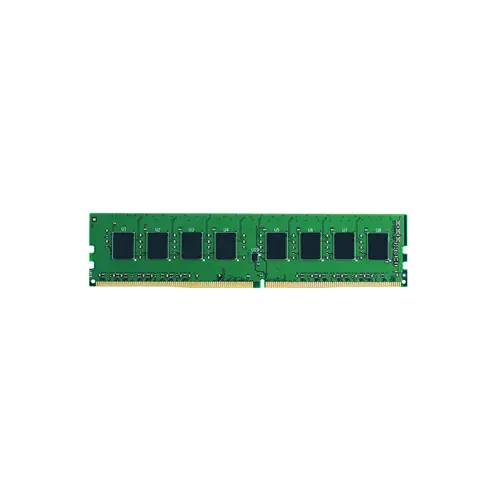
This 8GB DDR4-2933 registered ECC memory module is purpose-built for server platforms running memory-intensive workloads such as virtualization, in-memory databases, and mission-critical enterprise applications. Its registered signal topology and single-rank x8 design reduce bus loading and enhance signal integrity, while ECC and a 1.2V operating voltage deliver data reliability and energy efficiency under continuous 24/7 operation.
1. End-to-end error correction safeguards data integrity in mission-critical databases, virtually eliminating silent memory corruption that could crash financial transactions or compromise patient records.
2. Registered buffering stabilizes command-and-address signals across heavily loaded server channels, allowing dense memory populations essential for large-scale virtualization and in-memory analytics clusters.
3. High-throughput operation saturates memory bandwidth under concurrent query loads, dramatically reducing response times for real-time business intelligence and transactional processing.
4. A balanced per-module capacity enables cost-effective scaling in multi-slot servers, giving cloud operators the flexibility to fine-tune memory allocations for containerized microservices without stranding resources.
5. Single-rank x8 organization minimizes electrical loading on the memory controller, sustaining full transfer rates and deterministic latency that high-frequency trading and AI inference platforms depend on.
Designed explicitly for enterprise servers, the Micron MTA9ASF1G72PZ-2G9E1UI is an 8GB DDR4-2933 Registered DIMM that turns four architectural features into direct operational advantages for your data center. Its ECC technology continuously detects and corrects single-bit memory errors, which is non-negotiable when a flipped bit in a virtualized cluster or an in-memory database like Redis can silently corrupt financial transactions or customer records. The registered signal buffer stabilizes the command and address buses across fully populated 24-DIMM platforms, allowing you to scale capacity confidently without sacrificing signal integrity or provoking unexpected reboots during peak loads. Operating at 2933MHz with a single-rank x8 organization, this module delivers high bandwidth and low latency precisely where it matters—accelerating concurrent virtual machine migrations and real-time analytics queries. When every millisecond of downtime impacts revenue, ECC protection means transactional certainty, registered buffering ensures multi-terabyte stability, and the balanced rank design unlocks predictable, low-jitter performance for latency-sensitive workloads. This memory module translates into fewer silent data corruptions, denser server consolidation, and a genuinely resilient infrastructure.
This Micron 8GB DDR4-2933 ECC Registered DIMM (MTA9ASF1G72PZ-2G9E1UI) is a server-grade memory module. Its RDIMM architecture, ECC, and 1.2V operation ensure data integrity in multi-socket platforms. Below are capacity planning guidelines for three typical enterprise workloads.
General Virtualization
Balance DIMMs across all memory channels for optimal NUMA performance. Using these 8GB modules, aim for 128–256GB (16–32 modules) per dual-socket server to comfortably host 20–40 VMs. Reserve one slot per channel for future expansion, and ensure identical ranks per channel to avoid latency penalties.
In-Memory Database
Low-latency databases like Redis or SAP HANA demand large, reliable memory pools. Combine multiple 8GB RDIMMs to reach 256–512GB per node, populating all memory channels. ECC guards against silent data corruption; configure memory sparing or mirroring in the BIOS for high resilience.
High Performance Computing
HPC workloads are bandwidth-starved. Install one DIMM per channel to maximize throughput, filling 8–16 slots per socket to achieve 128–256GB across dual sockets. Since these are single-rank, populating two DIMMs per channel is often possible with minimal speed reduction, fully leveraging the 2933MT/s frequency for memory-bound applications.
Rigorously tested server memory, compatible with Dell PowerEdge R740, HPE ProLiant DL380 Gen10, Lenovo ThinkSystem SR650, and more.
Q: Q: Can I mix this MTA9ASF1G72PZ-2G9E1UI with other memory modules of different brands or speeds?
A: Mixing with different brands or speeds is not recommended for registered ECC server memory. It can cause compatibility issues, signal integrity problems, and system instability. Always use identical modules to ensure reliable 24/7 operation.
Q: Q: Is this memory compatible with my server platform, such as Intel Xeon Scalable or AMD EPYC?
A: This DDR4-2933 ECC RDIMM complies with industry-standard JEDEC specifications and supports mainstream Intel Xeon Scalable (Cascade Lake) and AMD EPYC 7002/7003 series servers. Always verify your motherboard's QVL list for specific model compatibility.
Q: Q: What is the recommended DIMM population order for optimal performance?
A: For optimal performance on dual-processor servers, populate identical DIMMs evenly across all memory channels. Typically, install the first DIMM in the slot farthest from the CPU (DIMM1) per channel, following your server motherboard’s population guide diligently.
Q: Q: Does this module support overclocking or XMP profiles?
A: No. This is an enterprise-grade registered ECC DIMM designed for stability. It does not support overclocking or Intel XMP profiles and operates strictly at the JEDEC standard speed of 2933 MT/s with a fixed CL21 latency.
Q: Q: What warranty and typical failure rate can I expect?
A: This Micron module includes a 1-year warranty. Engineered for mission-critical workloads, enterprise DDR4 ECC RDIMMs exhibit an extremely low annualized failure rate (AFR), typically below 0.5%, ensuring superior long-term reliability in server environments.