











 Secure payments
Standard refund policy
Trade Assurance
Secure payments
Standard refund policy
Trade Assurance
| Product Type | Memory Module |
|---|---|
| Memory Capacity | 8 GB |
| Memory Technology | DDR4 |
| Product Voltage | 1.2V |
| RAM Speed | 2933MHz |
| RAM Standard | DDR4-2933/PC4-23400 |
| Error Identifying | ECC |
| Signal Type | Registered |
| Column Access Strobe (CAS) | CL21 |
| Rank | Single Rank x8 |
| Quantity of Pins | 288-pin |
| RAM Genre | RDIMM |
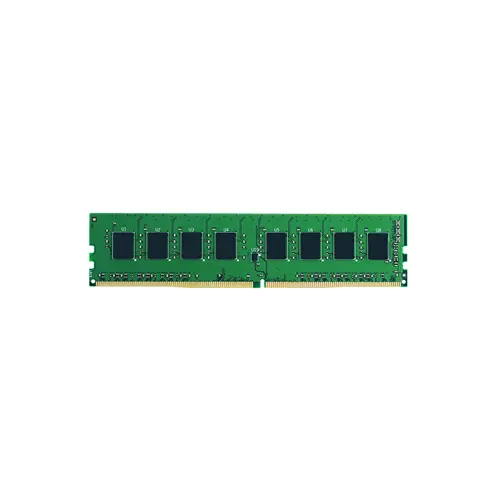
Designed as a server-grade RDIMM with ECC error correction and registered signal buffering, this 8GB DDR4-2933 module ensures data integrity and signal stability under heavy memory loads, making it ideal for virtualization platforms and in-memory database applications. Its single-rank x8 organization paired with CL21 latency allows efficient command scheduling and reduced electrical loading, enabling consistent performance in dense multi-DIMM server configurations.
1. ECC eliminates silent data corruption, safeguarding transactional integrity in databases and financial services where even a single-bit error is unacceptable.
2. Registered signal buffering decouples the memory controller from direct load, enabling large-capacity configurations across multiple DIMMs without compromising stability under high virtualization density.
3. 2933 MHz frequency boosts throughput for in-memory analytics and heavy consolidation workloads, shrinking response times when hosted environments spike.
4. Single Rank x8 organization reduces electrical strain on the server memory controller, preserving signal integrity at elevated clocks for latency-critical enterprise applications.
5. 1.2V operation cuts datacenter power draw and lowers thermal stress, directly improving server longevity and reducing cooling overhead in densely packed racks.
Engineered for enterprise reliability, the Micron MTA9ASF1G72PZ-2G9E1TI is a DDR4-2933 Registered DIMM that directly addresses the most critical pain points in server infrastructure. As an 8GB RDIMM with ECC, it actively detects and corrects single-bit memory errors caused by cosmic radiation or electrical interference. In a dense virtualization cluster hosting dozens of VMs, even a single uncorrected bit-flip can cascade into data corruption or hypervisor failure—this module turns that risk into a non-issue, preserving uptime for your entire service stack.
The registered buffer chip is equally vital. Without it, the memory controller would have to drive every DRAM chip directly, limiting the number of modules you can install before signal integrity collapses. The register redrives address and command signals, enabling you to populate all available channels stably when scaling an in-memory database like Redis or SAP HANA. Combined with a single-rank x8 organization and 2933MT/s bandwidth, this module delivers low-latency throughput without excessive rank loading. The practical outcome: faster query responses during peak transaction periods and the headroom to expand capacity without sacrificing reliability, making it an ideal building block for business-critical workloads.
General Virtualization
For virtualized environments hosting numerous VMs, memory is typically the first resource to become constrained. Deploy these 8GB RDIMMs in balanced quantities across all memory channels—aim for 8 or 16 identical modules per host to achieve 64GB or 128GB totals while maximizing bandwidth. Registered ECC ensures data integrity during memory overcommit and live migration operations.
In-Memory Database
In-memory databases demand large, contiguous memory footprints and uncompromising fault tolerance. These single-rank x8 RDIMMs provide excellent latency characteristics; populate them symmetrically across channels to reach 256GB or higher, enabling full dataset caching. Always observe identical module part numbers per memory bank to maintain stable interleaving and avoid NUMA penalties.
High-Performance Computing
HPC workloads are extremely sensitive to memory bandwidth and channel balance. Install one 8GB RDIMM per channel across all available channels (typically 8 modules per dual-socket node) to saturate the 2933MT/s interface. For capacity-bound simulations, scale to two DIMMs per channel using identical kits, but never mix ranks or speeds, as this would downclock the entire memory subsystem.
Rigorously tested server memory, compatible with Dell PowerEdge R760, HPE ProLiant DL380 Gen11, and Lenovo ThinkSystem SR650.
Q: Can I mix this MTA9ASF1G72PZ-2G9E1TI with other memory modules of different brands or speeds?
A: Mixing modules is not recommended. This is a registered ECC DIMM. Combining it with non-ECC, unbuffered, or different speed/timing modules may cause instability, fallback to lowest common speed, or prevent boot.
Q: Is this memory compatible with my server? Which Intel or AMD platforms are supported?
A: This DDR4-2933 RDIMM is designed for servers with Intel Xeon Scalable (2nd gen and newer) or AMD EPYC 7002/7003 series processors. It requires a motherboard with 288-pin slots that supports registered ECC memory.
Q: What is the recommended DIMM population order for optimal performance?
A: Follow your server motherboard manual. Typically, populate identical DIMMs per channel starting with the slot farthest from the CPU. For single-rank x8 RDIMMs, one DIMM per channel yields optimal speed and balanced interleaving.
Q: Does this module support overclocking or XMP profiles?
A: No. This is a server-grade registered ECC DIMM operating strictly at JEDEC standard DDR4-2933 (PC4-23400, CL21). It does not support XMP or overclocking to ensure maximum data integrity and 24/7 stability.
Q: What warranty and typical failure rate can I expect?
A: This Micron module includes a 1-year warranty. Server memory generally exhibits annualized failure rates well under 1% under specified conditions, thanks to rigorous screening and ECC protection ensuring high reliability.