











 Secure payments
Standard refund policy
Trade Assurance
Secure payments
Standard refund policy
Trade Assurance
| Product Type | Memory Module |
|---|---|
| Memory Capacity | 8 GB |
| Memory Technology | DDR4 |
| Product Voltage | 1.2V |
| RAM Speed | 2933MHz |
| RAM Standard | DDR4-2933/PC4-23400 |
| Error Identifying | ECC |
| Signal Type | Registered |
| Column Access Strobe (CAS) | CL21 |
| Rank | Single Rank x8 |
| Quantity of Pins | 288-pin |
| RAM Genre | RDIMM |
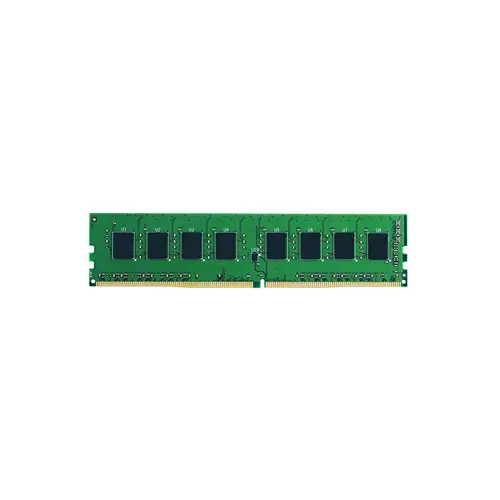
This Micron 8GB DDR4-2933 Registered ECC RDIMM is engineered for server platforms, delivering the data integrity and reliability essential for virtualization, in-memory databases, and mission-critical enterprise workloads. Its registered signal type ensures stable operation in high-density memory configurations, while the single-rank x8 organization and CL21 latency optimize memory controller efficiency and thermal performance.
1. ECC memory proactively detects and corrects single-bit errors in real time, preventing silent data corruption in virtualized database clusters and financial transaction logs.
2. Registered signal buffering stabilizes electrical loads across fully populated memory channels, enabling massive VM density without compromising host-level reliability.
3. The 2933 MT/s data rate boosts memory bandwidth per core, accelerating concurrent containerized workloads and in-memory analytics under heavy multi-tenant pressure.
4. Single Rank x8 organization minimizes bus contention and thermal strain, allowing a full bank of DIMMs to maintain peak frequency for predictable latency in software-defined storage nodes.
5. A CAS latency of 21 clock cycles keeps initial access times tightly controlled, sharpening the responsiveness of cache-coherent applications like real-time bidding engines.
The Micron MTA9ASF1G72PZ-2G9E1TK is engineered as a server-grade RDIMM, and its four defining characteristics directly resolve the most critical pain points in enterprise infrastructure. Its ECC capability actively detects and corrects single-bit memory errors, shielding virtualized clusters from silent data corruption that could silently crash multiple guest machines or poison a real-time financial database. The Registered buffer stabilizes command and address signals across fully populated memory channels, so you can densely pack DIMMs for large-scale virtualization farms without signal degradation or unexpected system halts under heavy load. Built as a Single Rank x8 module, the lower electrical loading yields tighter latencies and consistent bandwidth, directly accelerating in-memory databases like SAP HANA where every additional nanosecond of access latency erodes the throughput of transactional queries. Finally, the 2933MHz speed on a lean 1.2V platform feeds the high data rate demanded by concurrent analytics workloads, ensuring the memory tier never starves the CPU in consolidated, mission-critical environments. This combination transforms raw specs into tangible business continuity, giving IT managers a predictable, worry-free foundation that keeps virtual machines responsive and database transactions flowing without compromise.
General Virtualization
For a typical hypervisor host running multiple VMs, populate all memory channels with identical 8GB RDIMMs to maximize bandwidth and maintain balanced NUMA domains. A dual-socket server with 16 DIMM slots can deliver 128GB total using these modules, which comfortably supports 20–30 moderate virtual machines. Pair with a Xeon Scalable or EPYC processor that natively handles DDR4-2933 registered ECC memory to avoid throttling under sustained load.
In-Memory Database
In-memory databases like Redis or SAP HANA demand absolute data integrity, making ECC registered DIMMs essential. Deploy these 8GB RDIMMs in a fully populated configuration across all channels to provide the lowest latency and highest throughput, scaling total capacity linearly; for a 256GB dataset, fill 32 slots across two sockets. The single-rank x8 design aids command rate efficiency, ensuring predictable access times even at 2933MT/s CL21.
High-Performance Computing
HPC clusters benefit from the reliability of registered ECC memory during multi-day simulation runs where a single bit-flip could invalidate results. Fill every DIMM slot per node to achieve maximum memory bandwidth while keeping per-core capacity within the 2–4GB sweet spot for most scientific workloads. The 1.2V operating voltage reduces thermal output in dense rack deployments, allowing tighter node packing without exceeding power budgets.
Rigorously tested server memory compatible with Dell PowerEdge R750, HPE ProLiant DL380 Gen10, and Lenovo SR650 V2.
Q: Can I mix this MTA9ASF1G72PZ-2G9E1TK with other memory modules of different brands or speeds?
A: Mixing RDIMMs with different brands, speeds, or ranks is strongly discouraged. Mismatched modules may cause boot failures or silent data corruption, negating ECC protection. Always populate identically matched Micron-certified DIMMs for full reliability.
Q: Is this memory compatible with my system?
A: This DDR4-2933 ECC Registered DIMM is designed for Intel Xeon Scalable and AMD EPYC platforms. Verify your server board supports 288-pin RDIMMs at 2933 MT/s via its Qualified Vendor List. Single-rank x8 configuration is broadly supported.
Q: What is the recommended DIMM population order for optimal performance?
A: Always follow your server motherboard’s population guide. Typically, populate the farthest slot from the CPU in each channel first, ensuring balanced channel interleaving. For single-rank DIMMs, filling all channels symmetrically maximizes memory bandwidth.
Q: Does this module support overclocking or XMP profiles?
A: No. This is a JEDEC-standard server DIMM operating at fixed 2933 MT/s CL21. Registered ECC modules do not support overclocking or XMP. They are tuned for strict signal integrity and platform-managed power, never enthusiast timing profiles.
Q: What warranty and typical failure rate can I expect?
A: This Micron module carries a 1-year warranty. Server-grade ECC DRAM typically demonstrates an annualized failure rate well below 1% under specified temperature and voltage conditions, ensuring long-term data center reliability.