











 Secure payments
Standard refund policy
Trade Assurance
Secure payments
Standard refund policy
Trade Assurance
| Product Type | Memory Module |
|---|---|
| Memory Capacity | 8 GB |
| Memory Technology | DDR4 |
| Product Voltage | 1.2V |
| RAM Speed | 2933MHz |
| RAM Standard | DDR4-2933/PC4-23400 |
| Error Identifying | ECC |
| Signal Type | Registered |
| Column Access Strobe (CAS) | CL21 |
| Rank | Single Rank x8 |
| Quantity of Pins | 288-pin |
| RAM Genre | RDIMM |
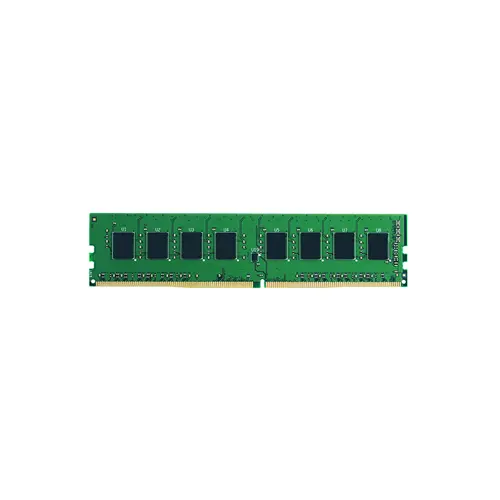
Designed as a server-class DDR4-2933 Registered ECC module, this 8GB RDIMM is ideally suited for virtualization hosts, in-memory databases, and mission-critical enterprise workloads where data integrity and uptime are paramount. Its single-rank x8 organization combined with ECC and the registered signal path delivers robust electrical stability and lower latency at CL21, ensuring reliable performance across dense memory configurations.
1. ECC protection instantly detects and corrects memory errors, preserving data integrity for virtualization hosts and financial transaction systems where even a single bit flip could be catastrophic.
2. Registered signal buffering stabilizes high-capacity memory channels, enabling seamless scaling up to maximum DIMM populations in dense rack servers without compromising reliability.
3. 2933 MT/s throughput supplies the memory bandwidth needed for concurrent virtual machine execution and real-time database caching, preventing slowdowns under heavy consolidation.
4. 1.2 V ultra-low voltage reduces per-DIMM power consumption, directly lowering energy bills and cooling demands in thermally constrained data center environments.
5. Single rank x8 organization maintains cleaner signal integrity at elevated speeds, ensuring non-stop operational stability in mission-critical enterprise deployments.
The Micron MTA9ASF1G72PZ-2G9 is an 8GB DDR4-2933 registered RDIMM engineered for server platforms, and its four defining characteristics directly address the critical pain points of data center operators. ECC error correction is your silent guardian against single-bit memory flips caused by cosmic rays or electrical noise: in a virtualized cluster hosting dozens of VMs, an undetected bit error can corrupt hypervisor state or silently flip a transactional database entry, leading to application crashes or financial discrepancies that take hours to trace. Registered signal buffering, combined with single-rank x8 organization, ensures stable operation when all DIMM slots are populated—meaning your investment in high-density memory configurations for a memory database like Redis or SAP HANA won’t be undermined by signal degradation under load. The 2933MHz speed delivers a sweet spot of bandwidth, allowing a database engine to serve millions of key lookups per second with lower latency, while the 1.2V operating voltage directly translates into reduced power consumption and thermal load across a rack of servers, lowering your TCO without compromising reliability. This isn’t just a memory stick; it’s the foundation that keeps your business-critical services consistent, responsive, and cost-efficient around the clock.
This 8GB DDR4-2933 RDIMM is an ECC Registered server memory module, designed for data integrity and stability in multi-socket platforms. Capacity planning must align with workload demands and server memory channel population rules.
General Virtualization
Populate one DIMM per channel to balance density and bandwidth. Using eight identical modules (64 GB) across eight channels supports 20–30 light VMs comfortably. Extend to twelve modules (96 GB) for higher consolidation ratios while maintaining 2933 MT/s speed and balanced NUMA access.
In-Memory Database
Maximize capacity by filling all slots at two DIMMs per channel (2DPC). A 16‑slot server then yields 128 GB, keeping the entire working set in DRAM for Redis or SAP HANA. Accept the slight speed drop to 2666 MT/s under 2DPC; the larger memory footprint far outweighs the minor bandwidth reduction.
High-Performance Computing
Maintain peak 2933 MHz bandwidth with a strict 1DPC configuration. Install exactly one module per populated channel—typically 8 or 12 identical sticks for 64–96 GB—to avoid memory controller clock-down. This symmetric setup delivers the lowest latency and highest sustained throughput for computational fluid dynamics and molecular modeling.
Proven compatible with servers: Dell PowerEdge R740, HPE ProLiant DL380 Gen10, Lenovo ThinkSystem SR650.
Q: Can I mix this MTA9ASF1G72PZ-2G9 with other memory modules of different brands or speeds?
A: Mixing is not recommended. Registered ECC modules require identical specifications to maintain signal integrity. Mixed speeds or ranks may cause POST failures or stability issues in server platforms.
Q: Is this memory compatible with my Intel or AMD server platform?
A: It is compatible with Intel Xeon Scalable (2nd Gen+) and AMD EPYC 7002/7003 processors, using chipsets like C620, provided the board has 288-pin DDR4 slots and supports 1.2V RDIMMs.
Q: What is the recommended DIMM population order for optimal performance?
A: Populate identically matched DIMMs per channel, starting with the first slot in each channel (often blue). Balance across all memory channels to maximize bandwidth, following the server vendor’s specific population guide.
Q: Does this module support overclocking or XMP profiles?
A: No. This JEDEC-compliant RDIMM runs at fixed 2933MHz with CL21 timings. It does not support XMP or overclocking, prioritizing signal integrity and uptime over performance tuning.
Q: What warranty and typical failure rate can I expect?
A: It includes a one-year warranty. Enterprise RDIMMs exhibit very low annualized failure rates (typically under 0.5%), supported by stringent testing and ECC protection for continuous operation.