











 Secure payments
Standard refund policy
Trade Assurance
Secure payments
Standard refund policy
Trade Assurance
| Product Type | Memory Module |
|---|---|
| Memory Capacity | 8 GB |
| Memory Technology | DDR4 |
| Product Voltage | 1.2V |
| RAM Speed | 2933MHz |
| RAM Standard | DDR4-2933/PC4-23400 |
| Error Identifying | ECC |
| Signal Type | Registered |
| Column Access Strobe (CAS) | CL21 |
| Rank | Single Rank x8 |
| Quantity of Pins | 288-pin |
| RAM Genre | RDIMM |
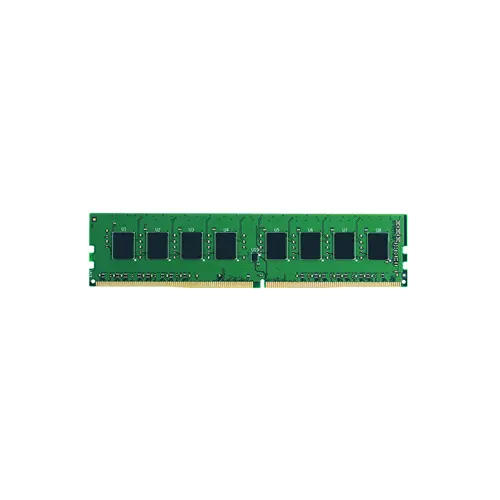
This is a server-grade DDR4-2933 Registered DIMM with ECC, specifically engineered for enterprise platforms running memory-intensive workloads such as virtualization and in-memory databases. Its single-rank x8 configuration and CL21 latency, combined with 1.2V low-power operation and registered signal buffering, ensure reliable data integrity and stable performance in dense multi-DIMM server deployments.
1. An 8GB capacity per module enables dense memory configurations in virtualized environments without exceeding power and cooling budgets, making it ideal for lightweight virtual machines and containerized microservices.
2. 2933 MT/s speed delivers higher memory bandwidth to accelerate in-memory databases, caching layers, and real-time analytics workloads under heavy concurrent access.
3. ECC protection transparently detects and corrects single-bit errors, preserving data integrity for mission-critical enterprise applications that demand 24/7 uptime and silent corruption prevention.
4. Registered DIMM architecture buffers command and address lines to maintain signal integrity across high-capacity memory channels, essential for scaling server memory without sacrificing stability.
5. A 1.2V operating voltage minimizes energy consumption and thermal output per DIMM, directly lowering electricity and cooling costs in large-scale data center deployments.
The Micron MTA9ASF1G72PZ-2G9R is a server-grade DDR4 RDIMM engineered for mission-critical enterprise environments, and its four core attributes directly address the real-world pain points of IT infrastructure teams.
First, ECC error correction actively detects and corrects single-bit memory errors caused by background radiation, a silent threat that would otherwise corrupt transactional databases or lead to unexplained application crashes. This means your financial records and customer data retain absolute integrity around the clock. Second, the registered signal buffer isolates the memory controller from the electrical load of multiple DIMMs, allowing you to populate all channels at full speed without signal degradation. In a virtualized cluster running dozens of VMs per host, this stability directly translates to higher VM density and fewer unexpected hypervisor failures. Third, the DDR4-2933 speed combined with single-rank x8 organization delivers consistent, low-latency bandwidth ideal for in-memory computing. An in-memory database like Redis or SAP HANA can process queries with predictable sub-millisecond response times, accelerating real-time analytics and user-facing dashboards. Finally, the 1.2V operating voltage slashes power consumption across a rack full of servers, reducing both your cooling bills and carbon footprint while preserving the headroom needed for 24/7 operation. These are not mere specifications; they are guarantees that your virtualization farm and data-intensive applications remain fast, reliable, and cost-efficient.
This 8 GB DDR4-2933 Registered ECC RDIMM targets server workloads. Below are capacity planning recommendations per scenario.
General Virtualization
Populate one DIMM per memory channel to achieve balanced bandwidth and capacity. In a dual‑socket server with 16 channels, 16 modules provide 128 GB, comfortably hosting many light to medium virtual machines. A fully symmetric configuration maximizes memory interleaving and reliable ECC operation.
In-Memory Database
Maximize in‑RAM capacity by filling every available DIMM slot with these 8 GB modules. A typical 2U server with 24 slots delivers 192 GB, allowing large datasets to reside entirely in memory. Always use identical Registered ECC parts to ensure data integrity under heavy transactional loads.
High-Performance Computing (HPC)
For bandwidth‑bound simulations, install one DIMM per channel to sustain the full 2933 MT/s speed; 16 modules yield 128 GB without clock penalties. When capacity must scale, two DIMMs per channel double the memory but may drop the frequency to 2666 MT/s. A fully loaded quad‑socket system with 48 modules supplies 384 GB for large parallel workloads.
Strictly tested for servers; compatible with Dell PowerEdge R740, HPE ProLiant DL380 Gen10, Lenovo ThinkSystem SR650, and more.
Q: Can I mix this MTA9ASF1G72PZ-2G9R with other memory modules of different brands or speeds?
A: Mixing registered ECC modules with different brands or speeds is not recommended. All DIMMs should match in speed, rank, and timings. Mismatched configurations may cause boot failures or reduced reliability in server environments.
Q: Is this memory compatible with my system?
A: This 288-pin DDR4-2933 RDIMM requires a server board with an Intel Xeon Scalable or AMD EPYC processor that supports registered ECC memory. Verify your motherboard’s qualified vendor list and ensure ECC RDIMM support.
Q: What is the recommended DIMM population order for optimal performance?
A: Follow your server motherboard manual. Typically, populate identical DIMMs per memory channel, starting with the slot farthest from the CPU. Balance capacity across all populated channels for maximum bandwidth and memory interleaving.
Q: Does this module support overclocking or XMP profiles?
A: No. This is an enterprise registered ECC module running at standard JEDEC DDR4-2933 timings (CL21). Overclocking and XMP are not supported to ensure 24/7 data integrity and stability in server operations.
Q: What warranty and typical failure rate can I expect?
A: This module includes a 1-year warranty. Enterprise DDR4 RDIMMs exhibit an extremely low annual failure rate, typically below 0.5%, due to rigorous screening and stringent quality controls for server workloads.