

 Secure payments
Standard refund policy
Trade Assurance
Secure payments
Standard refund policy
Trade Assurance
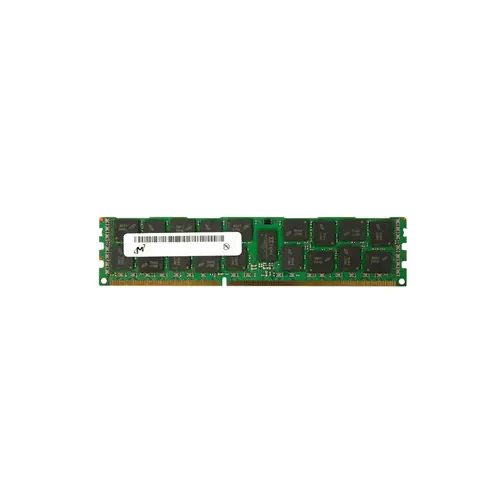
| Product Type | Memory Module |
|---|---|
| Memory Capacity | 8 GB |
| Memory Technology | DDR3 |
| Product Voltage | 1.5V |
| RAM Standard | DDR3-1333/PC3-10600 |
| Error Identifying | ECC |
| Signal Type | Registered |
| Column Access Strobe (CAS) | CL9 |
| Rank | Dual Rank x4 |
| Quantity of Pins | 240-pin |
| RAM Genre | RDIMM |
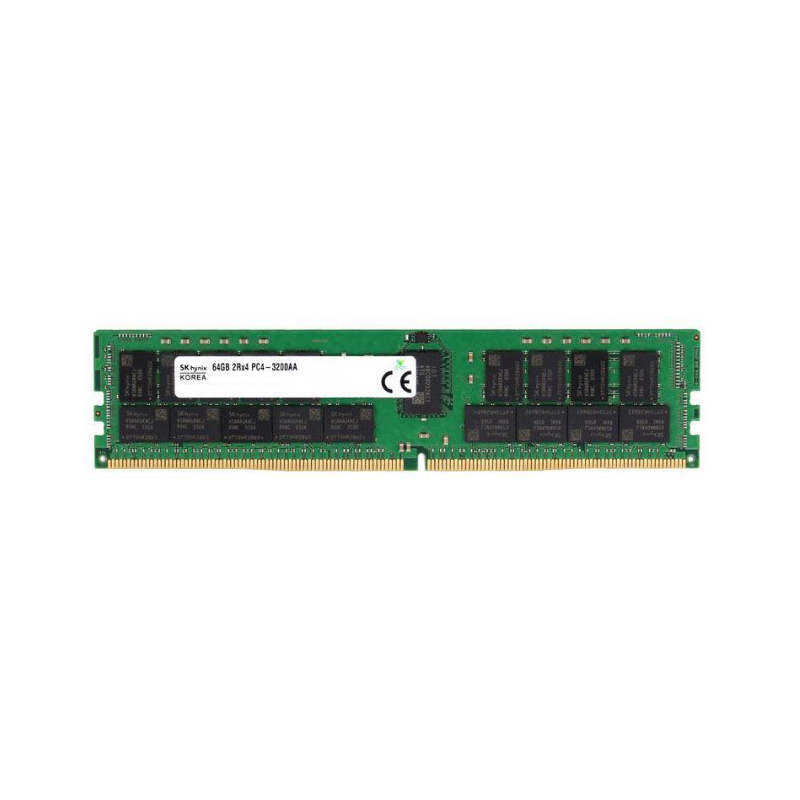
This 8GB DDR3-1333 RDIMM is a server-grade memory module ideally suited for virtualization platforms and in-memory databases where data integrity and uptime are paramount. Its registered signal architecture, ECC error correction, and dual-rank x4 organization ensure stable operation under heavy, multi-module loads while maintaining balanced latency and reliable throughput.
1. ECC error correction continuously guards against single-bit data corruption, ensuring transactional integrity in mission-critical databases and financial computing workloads.
2. Registered signal buffering enables stable operation across fully loaded memory channels, which is essential for high-density server deployments that demand maximum capacity without signal degradation.
3. Dual Rank x4 organization maximizes bandwidth utilization by interleaving access across ranks, sustaining consistent throughput during virtualized environments with heavy simultaneous I/O.
4. DDR3-1333 speed delivers reliable, balanced data transfer for legacy enterprise applications and cost-efficient cloud infrastructure that prioritize operational continuity over peak benchmark figures.
5. The module capacity accommodates dense virtualization scenarios, allowing more active virtual machines per node and reducing the footprint of memory-constrained hosting environments.
The MT36JSF1G72PZ-1G4K1HF is an 8GB DDR3-1333 Registered ECC DIMM, purpose-built for servers where reliability and scalability are non-negotiable. Its four defining characteristics directly address the most critical pain points in the data center. First, ECC error correction continuously detects and corrects single-bit memory errors—silent data corruption that can crash a virtual machine or poison financial transactions. In a dense virtualization cluster hosting dozens of VMs, this means preventing hypervisor faults that would cascade into multi-tenant outages. Second, the registered signaling with an onboard buffer stabilizes the electrical load on the memory bus, allowing fully populated servers with 12 or 24 DIMM slots to operate without signal degradation. That is essential for in-memory databases like SAP HANA or Redis, where the entire dataset must reside in RAM and every DIMM must perform flawlessly under sustained pressure. Third, the dual-rank x4 organization leverages rank interleaving to overlap memory access cycles, boosting effective bandwidth by up to 10 percent for heavy, concurrent workloads—your OLTP queries return faster under peak loads. Finally, the 1333 MT/s speed at a standard 1.5V and CL9 latency provides a mature, proven balance of performance and power efficiency, ensuring seamless compatibility with a wide range of enterprise platforms while keeping cooling costs in check. For IT teams running mission-critical applications, this memory turns raw specifications into tangible uptime and responsive data delivery.
General Virtualization
For a typical hypervisor host, deploy this 8 GB RDIMM in sets of six or twelve modules across triple-channel memory controllers to reach 48 GB or 96 GB total. That capacity comfortably supports 15–25 light-to-medium VMs, balancing density with the low 1.5V power draw. Always populate identical DIMMs per channel to maintain ECC protection and avoid NUMA penalties.
In-Memory Database
When building a dedicated in-memory database node, maximize capacity by installing at least 12 of these registered ECC modules (96 GB) to hold substantial working sets entirely in RAM. The DDR3-1333 speed and CL9 latency are adequate, but leverage the dual-rank design for superior throughput under heavy concurrent reads. Scale to 18 modules (144 GB) if your platform allows, ensuring data durability with the module’s ECC scrub.
High-Performance Computing (HPC)
HPC memory-bound workloads benefit from populating all channels symmetrically—e.g., eight modules per socket delivering 64 GB at full bandwidth. The registered signal type stabilises large memory arrays required for MPI jobs, while dual-rank x4 organisation improves sustained streaming performance. Opt for the lowest 1333 MT/s speed grade in big clusters to prioritise capacity and reliability over marginal frequency gains.
Rigorously tested, compatible with Dell PowerEdge R720, HPE ProLiant DL380p Gen8, Lenovo ThinkServer RD430, and similar servers.
Q: Can I mix this MT36JSF1G72PZ-1G4K1HF with other memory modules of different brands or speeds?
A: Mixing is not recommended. All installed RDIMMs should share identical rank, speed, and ECC Registered specifications to ensure signal integrity and prevent system instability in server environments.
Q: Is this memory compatible with my system?
A: This DDR3-1333 Registered ECC module is designed for Intel Xeon 5500/5600 series or AMD Opteron 6100/6200 platforms. Verify your server board supports 1.5V, 8GB dual-rank RDIMMs with 240-pin sockets.
Q: What is the recommended DIMM population order for optimal performance?
A: Populate identically per channel, starting with the slot farthest from the CPU. Typically, fill all channel-1 blue slots first, then channel-2 black slots, balancing ranks across memory controllers.
Q: Does this module support overclocking or XMP profiles?
A: No. As a server-grade Registered DIMM, it adheres strictly to JEDEC DDR3-1333 CL9 standards. Overclocking or XMP is not supported, prioritizing data integrity and 24/7 reliability over tunable performance.
Q: What warranty and typical failure rate can I expect?
A: This module includes a 1-year warranty. Engineered for enterprise workloads, it delivers an extremely low annualized failure rate, typically under 0.5%, backed by rigorous component screening and burn-in testing.