











 Secure payments
Standard refund policy
Trade Assurance
Secure payments
Standard refund policy
Trade Assurance
| Model | MT36JSF2G72PZ-1G4D1 |
|---|---|
| Product Type | Memory Module |
| Compliance Standards | RoHS |
| Memory Capacity | 16 GB |
| Memory Technology | DDR3 |
| Product Voltage | 1.5V |
| RAM Speed | 1333MHz |
| RAM Standard | DDR3-1333/PC3-10600 |
| Error Identifying | ECC |
| Signal Type | Registered |
| Column Access Strobe (CAS) | CL9 |
| Rank | Dual Rank x4 |
| Quantity of Pins | 240-pin |
| RAM Genre | RDIMM |
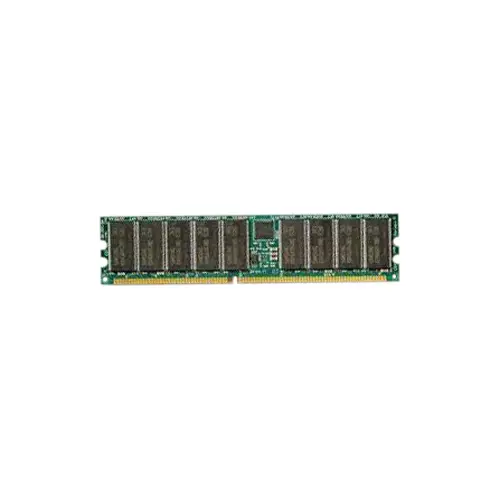
Designed for legacy server platforms, this 16GB DDR3-1333 registered ECC module is ideally suited for memory-intensive workloads such as virtualization and in-memory databases where data integrity is critical. Its dual-rank x4 organization boosts interleaving performance, while the registered signal architecture reduces electrical loading to maintain rock-solid stability in fully populated configurations, with ECC providing continuous single-bit error correction.
1. A 16GB capacity per module increases virtualization density, allowing hypervisors to run more concurrent VMs with full memory allocation and avoiding performance-sapping disk swap.
2. ECC error correction actively detects and repairs single-bit faults, safeguarding financial transactions and in-memory databases from silent data corruption.
3. Registered signal buffering stabilizes command and address lines under heavy DIMM populations, preserving reliability in fully loaded multi-channel server platforms.
4. Dual-rank x4 organization interleaves memory banks to raise effective bandwidth, sustaining consistent throughput for parallel analytics and large-scale content delivery.
5. 1333MHz operation balances ample bandwidth with a moderate thermal envelope, matching the steady I/O demands of storage servers and mid-tier enterprise workloads.
The MT36JSF2G72PZ-1G4D1 is a server-grade Registered DIMM purpose-built for reliability-driven enterprise environments, and its four defining characteristics directly translate into tangible uptime and performance gains. The 16 GB capacity per module allows you to populate a dual-socket virtualization host with enough memory to run dozens of virtual machines without costly mid-cycle server upgrades, keeping your consolidation ratio high and licensing efficient. The registered architecture buffers command and address signals, so as you scale to six or eight DIMMs per processor, the memory controller remains electrically stable—no more mysterious crashes after adding RAM, just predictable expansion for growing database workloads. ECC error correction continuously catches single-bit flips caused by background radiation or aging silicon, which in a memory-resident analytics platform or an in-memory database like SAP HANA means corrupted transactions are silently corrected before they can propagate into financial reports. The DDR3-1333 speed with CL9 latency, paired with dual-rank organization, sustains high bandwidth under concurrent access patterns, so a live virtual machine migration or a large SQL join completes without choking the memory pipeline, giving your users consistent responsiveness even during peak consolidation. In a hypervisor cluster or a business-critical database server, these features are not just specifications; they are the difference between a sleepless night and flawless data integrity under load.
General Virtualization
For a typical virtualization host, populate at least six modules for a balanced 96 GB configuration, leveraging the memory’s registered ECC to sustain dozens of mixed VMs. Start with one 16 GB RDIMM per channel (e.g., dual-socket, three channels per CPU) to maximize bandwidth while leaving slots free for expansion. Avoid mixing dual-rank x4 DIMMs in the same channel with different capacities to prevent performance penalties.
In-Memory Database
Latency-sensitive in-memory databases demand large capacity and reliability; deploy twelve modules (192 GB) across all memory channels to keep entire datasets in RAM. The CL9 timing and registered signaling ensure stable operation under sustained write pressure. Populate identical dual-rank DIMMs symmetrically to maintain uniform access times and fully utilize the memory controller’s interleaving capabilities.
High-Performance Computing
HPC workloads thrive on memory bandwidth, so install a fully balanced set—often eight or twelve modules—to populate all memory channels per node. The 1333 MHz registered ECC design prevents silent data corruption during multi-day simulation runs. Pair modules symmetrically across CPU sockets in multi-socket nodes to ensure predictable NUMA latencies and maximum aggregate throughput.
Rigorously tested server memory, compatible with Dell PowerEdge R710/R720, HP DL380p Gen8, and more.
Q: Can I mix this MT36JSF2G72PZ-1G4D1 with other memory modules of different brands or speeds?
A: Mixing RDIMMs with different brands, speeds, or ranks is not recommended. It can cause instability and nullify ECC protection. For reliable server operation, use identical modules from the same batch per channel.
Q: Is this memory compatible with my system?
A: This is a DDR3-1333 Registered ECC DIMM for servers. It is compatible with Intel Xeon E5-2400/2600 series and select AMD Opteron platforms using the C600 or equivalent chipsets, requiring 240-pin RDIMM slots.
Q: What is the recommended DIMM population order for optimal performance?
A: Populate identical DIMMs per channel, starting with the slots farthest from the CPU (usually blue or white). For dual‑rank x4 modules, fill two DIMMs per channel to maximize memory bandwidth while maintaining ECC integrity.
Q: Does this module support overclocking or XMP profiles?
A: No. This is a JEDEC‑compliant server RDIMM. Overclocking or XMP is not supported as it compromises ECC stability. The module runs at the standard DDR3‑1333 CL9 profile for 24/7 reliable operation.
Q: What warranty and typical failure rate can I expect?
A: This Micron module includes a 1‑year warranty. RDIMMs typically exhibit very low annualized failure rates (AFR) under 0.5%, ensuring high reliability for enterprise workloads when operated within specified voltage and temperature ranges.