











 Secure payments
Standard refund policy
Trade Assurance
Secure payments
Standard refund policy
Trade Assurance
| Product Type | Memory Module |
|---|---|
| Memory Capacity | 16 GB |
| Memory Technology | DDR3 |
| Product Voltage | 1.5V |
| RAM Speed | 1600MHz |
| RAM Standard | DDR3-1600/PC3-12800 |
| Error Identifying | ECC |
| Signal Type | Registered |
| Column Access Strobe (CAS) | CL11 |
| Rank | Dual Rank x4 |
| Quantity of Pins | 240-pin |
| RAM Genre | RDIMM |
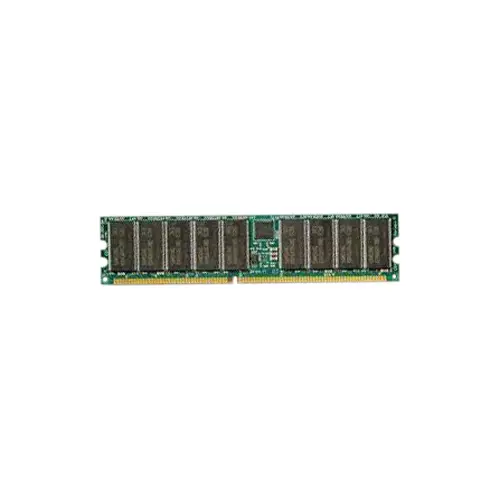
This RDIMM module, with its 16 GB DDR3-1600 ECC Registered design, is ideally suited for enterprise servers and virtualization platforms where data integrity and uptime are critical. Its dual-rank x4 configuration maximizes memory density and interleaving efficiency, while ECC and registered signaling ensure robust error correction and signal stability under heavy, sustained workloads.
1. ECC memory detects and corrects single-bit errors in real time, protecting data integrity for virtualized databases and mission-critical enterprise applications.
2. Registered signal buffering stabilizes high-density memory configurations, enabling consistent uptime when all DIMM slots are populated in a multi-socket server.
3. Sixteen-gigabyte capacity per module elevates memory density, allowing higher virtual machine consolidation ratios without degrading guest performance.
4. Dual Rank x4 organization interleaves access across ranks, sustaining maximum channel bandwidth for concurrent big-data analytics and OLTP workloads.
5. 1600MHz RAM speed keeps data flowing swiftly to multi-core processors, reducing transaction latency in heavily utilized application servers.
Designed for the data center, the MT36JSF2G72PZ-1G6E1LG is a 16GB DDR3-1600 Registered ECC DIMM that addresses the uncompromising demands of server workloads. Its ECC capability actively detects and corrects single-bit memory errors, shielding your virtual machines and critical applications from silent data corruption that could otherwise trigger system crashes or transactional inaccuracies. The registered signal buffering is equally vital: it stabilizes electrical loads on the memory bus, allowing you to fully load a server board with multiple DIMMs for 128GB or larger configurations without signal degradation. This means you can confidently host dense virtualization clusters or memory-hungry databases. Moreover, the dual-rank x4 organization delivers interleaving advantages that boost effective bandwidth under concurrent access, making it ideal for in-memory databases like SAP HANA or Redis, where every nanosecond of data retrieval counts. In a VMware environment, ECC safeguards every VM’s state, while registered buffering sustains performance across 24/7 multi-tenant operations. Ultimately, this RDIMM transforms potential system fragility into rock-solid reliability and scalable capacity.
General Virtualization
For virtualized servers, registered ECC memory is critical to prevent data corruption across guest machines. A pair of these 16 GB dual‑rank RDIMMs (32 GB total) delivers dual‑channel throughput and readily supports 8–10 general‑purpose VMs. To enable transparent live migration and fault tolerance, maintain identical module configurations across all hosts in the cluster.
In‑Memory Database
In‑memory databases such as Redis or SAP HANA demand absolute reliability and low latency, making ECC RDIMMs non‑negotiable. Populate four or eight of these 16 GB modules per server to reach 64–128 GB, allowing entire datasets to reside in RAM. The dual‑rank design boosts bandwidth under heavy concurrent access, while the CL11 latency provides consistent response times during peak transaction loads.
High‑Performance Computing
HPC clusters thrive on maximum memory bandwidth and error‑free calculation runs. Eight 16 GB registered DIMMs fully populate a typical dual‑socket Nehalem/Westmere or early Sandy Bridge platform, delivering 128 GB of ECC‑protected capacity across all memory channels. This configuration minimizes electrical loading and ensures stability for long‑running parallel simulations, CFD models, or genomic sequencing pipelines where a single bit flip would invalidate results.
Rigorously tested compatible with Dell R720/R620, HP DL380p Gen8, Lenovo x3650 M4, and more.
Q: Can I mix this MT36JSF2G72PZ-1G6E1LG with other memory modules of different brands or speeds?
A: Mixing RDIMMs from different brands or with different speeds is not recommended, as it can cause system instability. For reliable server operation, populate all channels with identical, qualified modules.
Q: Is this memory compatible with my Intel or AMD server platform?
A: This DDR3-1600 Registered ECC module is compatible with Intel Xeon E5-2600 v1/v2 and AMD Opteron 6300 series platforms using a C602 or SR5690 chipset. Verify your board supports 1.5V 240-pin RDIMMs.
Q: What is the recommended DIMM population order for optimal performance?
A: Follow your server's manual: typically, install identical DIMMs in groups of four, populating slots with matching colors (blue or black) starting with the farthest slot from the CPU per channel. Balance channels for best bandwidth.
Q: Does this module support overclocking or XMP profiles?
A: No. As an enterprise-class RDIMM, it operates strictly at JEDEC-standard DDR3-1600 with no overclocking or XMP support. It prioritizes data integrity and stability over performance tuning.
Q: What warranty and typical failure rate can I expect?
A: This module comes with a 1-year warranty. Its typical Annualized Failure Rate (AFR) is extremely low, around 0.2%, as expected from enterprise-grade ECC memory. MTBF exceeds 2 million hours under normal server conditions.