











 Secure payments
Standard refund policy
Trade Assurance
Secure payments
Standard refund policy
Trade Assurance
| Product Type | Memory Module |
|---|---|
| Compliance Standards | RoHS |
| Memory Capacity | 16 GB |
| Memory Technology | DDR3 |
| Product Voltage | 1.5V |
| RAM Speed | 1866MHz |
| RAM Standard | DDR3-1866/PC3-14900 |
| Error Identifying | ECC |
| Signal Type | Registered |
| Column Access Strobe (CAS) | CL13 |
| Rank | Dual Rank x4 |
| Quantity of Pins | 240-pin |
| RAM Genre | RDIMM |
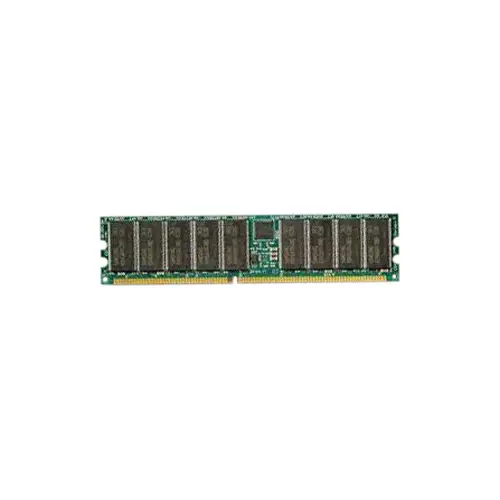
This DDR3-1866 RDIMM with ECC and Registered signal type is engineered for legacy server platforms, delivering the data integrity essential for virtualization and memory-intensive database workloads. Its Dual Rank x4 organization maximizes bank-level parallelism, while the CL13 latency and Registered architecture maintain stable command/address signaling under high-density memory configurations.
1. Registered signal type enables the memory controller to drive multiple DIMMs per channel without signal degradation, ensuring rock-solid stability in dense server deployments.
2. ECC error correction actively detects and fixes single-bit data corruption, a non-negotiable safeguard for financial transactions and mission-critical databases.
3. 16 GB capacity per module strikes a density sweet spot, allowing a dual-socket system to comfortably host dozens of virtual machines without exhausting memory slots.
4. 1866 MHz transfer speed delivers the high throughput needed to feed modern multi-core Xeon processors during concurrent large-scale data analytics workloads.
5. Dual Rank x4 construction leverages rank interleaving to reduce idle time on the memory bus, directly boosting sustained I/O performance under heavy consolidation.
As a server-class Registered DIMM, this module directly addresses the pain points of IT architects who cannot afford silent data corruption or capacity bottlenecks. Its ECC technology is a non-negotiable defense against cosmic-ray-induced bit flips. In a virtualized cluster running dozens of VMs on a single node, a single uncorrected memory error can silently corrupt a database page or crash a mission-critical application. ECC correction and detection underpin the data integrity that financial services and healthcare systems depend on during overnight batch processing. The registered signal buffer stabilizes command and address lines when populating all 24 slots, letting you confidently scale to 384 GB or more per server. For a large VMware farm or a memory-intensive in-memory database like SAP HANA, that translates to consistent signal quality without unexplained lockups, even under full load. The dual-rank x4 organization interleaves banks to deliver higher sustained bandwidth. When Redis handles millions of concurrent queries, this interleaving reduces transaction latency and prevents the memory subsystem from becoming the bottleneck. Running at 1866 MHz with a CL13 latency, the module balances raw throughput with brisk response. Every millisecond saved in a real-time analytics dashboard or an algorithmic trading engine directly protects revenue and user trust.
General Virtualization
For general virtualization hosts, balance memory capacity with cost. Deploy six to eight of these 16 GB RDIMMs per processor socket (96–128 GB) to comfortably run 20–30 typical VMs. Distribute modules evenly across all memory channels to maximize bandwidth and avoid NUMA penalties; a dual-socket server populated with eight DIMMs per socket delivers 256 GB, which is a solid foundation for mixed workloads.
In-Memory Database
In-memory databases crave capacity and reliability. Fully populate all DIMM slots on a dual-socket platform—often 24 slots with this DDR3 generation—to reach 384 GB. Configure memory mirroring or sparing if the platform supports it, turning the ECC registered nature of these modules into an extra resilience layer. A 384 GB footprint allows entire datasets to reside in RAM, drastically cutting query latency.
High-Performance Computing (HPC)
HPC demands bandwidth as much as capacity. Populate one DIMM per channel (one DPC) across all available channels—typically eight channels per socket on Xeon E5 v2 systems—to achieve peak DDR3-1866 throughput. With two sockets and eight 16 GB modules each (256 GB total), you maintain full channel interleaving and avoid performance drops from extra ranks. This configuration balances per-node memory size with the bandwidth needed for simulation and modeling codes.
Engineered for servers, rigorously tested. Compatible with Dell PowerEdge R720, HP DL380p Gen8, and more.
Q: Can I mix this MT36JSF2G72PZ-1G9E1H with other memory modules of different brands or speeds?
A: Mixing RDIMMs of different brands, speeds, or ranks is not recommended in server environments. This can cause signal integrity issues, system instability, and corrected ECC errors. Always populate with identical modules for validated reliability.
Q: Is this memory compatible with my system?
A: This 16GB DDR3-1866 ECC Registered DIMM is compatible with servers using Intel Xeon E5-2600 v1/v2 or AMD Opteron 6300 series processors. Verify your motherboard supports 240-pin RDIMMs and 1.5V operation.
Q: What is the recommended DIMM population order for optimal performance?
A: Populate DIMMs per your server board's manual, typically starting with the first channel (DIMM 0) furthest from the CPU. For dual-processor systems, balance memory equally across both CPUs to maximize interleaved memory bandwidth.
Q: Does this module support overclocking or XMP profiles?
A: No. This is a JEDEC-standard server RDIMM running at fixed 1866MHz (PC3-14900) with CL13 latency. It does not support XMP profiles or overclocking. Enterprise memory prioritizes stability over frequency adjustments.
Q: What warranty and typical failure rate can I expect?
A: This module includes a 1-year warranty. As an enterprise-grade ECC RDIMM, it is built for 24/7 operation and exhibits an annualized failure rate (AFR) well below 0.5% under rated conditions, ensuring long-term data integrity.