











 Secure payments
Standard refund policy
Trade Assurance
Secure payments
Standard refund policy
Trade Assurance
| Product Type | Memory Module |
|---|---|
| Compliance Standards | RoHS |
| Memory Capacity | 16 GB |
| Memory Technology | DDR3 |
| Product Voltage | 1.35V |
| RAM Speed | 1600MHz |
| RAM Standard | DDR3-1600/PC3-12800 |
| Error Identifying | ECC |
| Signal Type | Registered |
| Column Access Strobe (CAS) | CL11 |
| Rank | Dual Rank x4 |
| Quantity of Pins | 240-pin |
| RAM Genre | RDIMM |
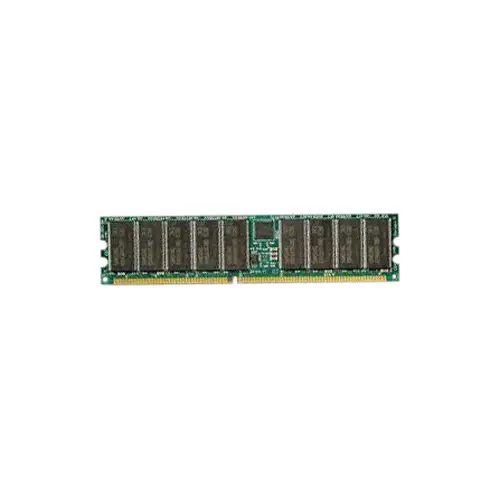
This 16GB DDR3-1600 Registered RDIMM with ECC is a server-grade memory module purpose-built for virtualization platforms, in-memory databases, and enterprise workloads that demand uncompromising data integrity. Its dual-rank x4 configuration and registered signal architecture provide enhanced electrical stability on high-density memory buses, while 1.35V operation reduces power consumption without sacrificing the error correction critical for 24/7 reliability.
1. ECC protection silently corrects single-bit memory errors in real time, preserving data integrity for financial transactions or database operations where even a single flipped bit is unacceptable.
2. Registered signal buffering stabilizes high-capacity memory configurations by reducing electrical loading on the memory controller, enabling dense server deployments without compromising uptime.
3. 16 GB module capacity boosts virtualization density, allowing more concurrent virtual machines per host while keeping memory footprints lean during heavy consolidation.
4. 1600 MHz speed delivers the necessary throughput for streaming analytics and in-memory caching, reducing latency spikes under constant multi-threaded workloads.
5. Dual Rank x4 organization interleaves memory access across two internal ranks, maximizing channel utilization and sustaining bandwidth efficiency for latency-sensitive enterprise applications.
When managing a virtualized cluster or an in-memory database, unplanned downtime and data corruption aren’t just inconveniences—they’re costly failures. The Micron MT36KSF2G72PZ-1G6E2 RDIMM directly addresses these risks. As a registered DDR3L module, its 1.35V low-voltage operation reduces power consumption per node, easing thermal strain in dense server racks while cutting energy bills. More critically, built-in ECC continuously corrects single-bit memory errors before they can silently alter transactional data or crash a hypervisor, which is non-negotiable for financial analytics or electronic health records where accuracy is paramount. The registered buffer stabilizes signal integrity when populating all memory channels, allowing you to confidently scale to 16 GB per module without boot failures from signal degradation—a frequent headache in high-density deployments. With dual-rank x4 organization and 1600 MHz speed at CL11, it sustains high bandwidth for multiple virtual machines or rapid Redis lookup operations, preventing the latency spikes that frustrate users. For your virtualization farm or business-critical database, this module translates directly into consistent uptime, reliable data fidelity, and predictable performance under concurrent workloads.
General Virtualization
For a typical dual-socket server with quad-channel architecture, install one 16 GB RDIMM per channel (eight modules total) to achieve a balanced 128 GB capacity. This configuration supplies sufficient memory headroom for moderate virtual machine density while preserving full 1600 MHz speed and 1.35 V power efficiency. It also leaves half the DIMM slots available for seamless future scaling.
In-Memory Database
Maximize capacity by populating two DIMMs per channel—for example, sixteen 16 GB modules yielding 256 GB—so large datasets reside completely in RAM. The registered, dual-rank x4 design maintains signal integrity even at high density, and ECC protection is critical for transactional accuracy. Use identical modules across every channel to prevent timing conflicts and to exploit all available registered DIMM slots.
High-Performance Computing (HPC)
Configure one 16 GB module per memory channel (eight modules on a quad-channel platform) to sustain peak DDR3-1600 bandwidth without throttling. The resulting 128 GB footprint, combined with balanced interleaving across channels, maximizes throughput for parallel simulations and modeling. The 1.35 V low-voltage operation significantly reduces thermal load in dense, power-constrained compute clusters.
Rigorously tested server memory, compatible with Dell R720, HP DL380p Gen8, Lenovo x3550 M4, Cisco UCS C220 M3.
Q: Can I mix this MT36KSF2G72PZ-1G6E2 with other memory modules of different brands or speeds?
A: Mixing RDIMMs is not recommended. Combining modules of different speeds, ranks, or vendors may cause signal integrity issues, forcing the system to fall back to the lowest common speed or resulting in POST failure.
Q: Is this memory compatible with my Intel Xeon E5-2600 v2 series server platform?
A: Yes. This DDR3-1600, 1.35V Registered ECC RDIMM is fully compatible with platforms using the Intel C600 chipset supporting Xeon E5-2600 v2 processors. Verify 240-pin DIMM slot availability and population rules in your server's manual.
Q: What is the recommended DIMM population order for optimal performance?
A: For dual-processor systems, populate identically across memory channels. Usually, start with DIMM slots furthest from the CPU, filling blue slots first, then black. Always balance capacity per channel and install matching pairs for optimal interleaving.
Q: Does this module support overclocking or XMP profiles?
A: No. As an enterprise-class Registered ECC memory manufactured to JEDEC standards, it operates strictly at 1600MHz with CL11 timing. Overclocking and XMP profiles are not supported, prioritizing data integrity and platform stability.
Q: What warranty and typical failure rate can I expect?
A: This module includes a one-year warranty against defects. RDIMMs from major OEMs typically exhibit an annualized failure rate below 0.5% under specified operating conditions when handled and installed properly in compliant systems.