











 Secure payments
Standard refund policy
Trade Assurance
Secure payments
Standard refund policy
Trade Assurance
| Product Type | Memory Module |
|---|---|
| Memory Capacity | 16 GB |
| Memory Technology | DDR3 |
| Product Voltage | 1.35V |
| RAM Speed | 1600MHz |
| RAM Standard | DDR3-1600/PC3-12800 |
| Error Identifying | ECC |
| Signal Type | Registered |
| Column Access Strobe (CAS) | CL11 |
| Rank | Dual Rank x4 |
| Quantity of Pins | 240-pin |
| RAM Genre | RDIMM |
Designed as a registered server-grade module with ECC, this 16GB DDR3-1600 RDIMM is purpose-built for virtualization platforms and in-memory databases where data integrity is non-negotiable. Its dual-rank x4 organization combined with 1.35V low-voltage operation and CL11 latency delivers stable, power-efficient throughput in dense multi-DIMM configurations, while the registered signal type ensures clean command/address signaling under heavy load.
1. Ample capacity per module maximizes virtual machine density in hyperconverged infrastructure, allowing more tenants on a single host without sacrificing performance.
2. ECC protection instantly corrects single-bit errors, preserving data integrity for mission-critical databases and preventing silent data corruption.
3. Registered signaling buffers address and command lines, enabling stable multi-DIMM configurations essential for large memory footprint servers.
4. Dual rank x4 organization interleaves accesses across banks, boosting effective bandwidth under heavy multi-threaded workloads such as in-memory analytics.
5. Ultra-low voltage operation reduces overall power consumption in dense server farms, lowering cooling overhead and operational expenses.
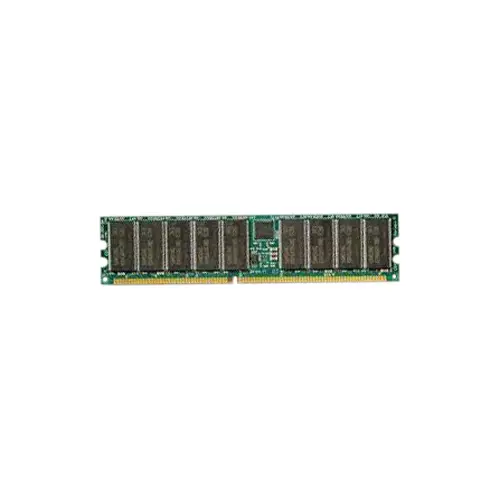
When it comes to server infrastructure, the Micron MT36KSF2G72PZ-1G6K1F 16GB DDR3L-1600 RDIMM isn’t just another module—it’s a strategic asset. Built as a registered DIMM with ECC, this memory confronts the very failure points that keep data center managers awake at night. In a dense virtualization cluster running dozens of VMs, a single bit flip in system memory can corrupt a critical workload or crash a hypervisor. The ECC engine actively detects and corrects such errors, preserving data integrity for your financial transactions or patient records without a moment’s hesitation. Meanwhile, the registered architecture buffers command and address signals, stabilizing the entire memory bus as you scale up to massive capacities—meaning you can confidently populate all channels without signal degradation, a necessity when overcommitting RAM to virtual machines.
Beyond reliability, performance cuts directly into your bottom line. Dual-rank x4 organization and 1600MHz speed unleash higher sustained bandwidth, which is transformative for memory databases like SAP HANA or Redis caching layers where latency is lost revenue. Paired with a 1.35V low-voltage design, this module substantially reduces power draw and thermal load across a populated rack. In a 24/7 data center, that translates into lower cooling costs and a greener footprint, letting you invest those savings back into scaling your real-time analytics. This isn’t just memory; it’s a foundation for always-on business continuity.
General Virtualization
For dual-socket servers, populate all memory channels symmetrically to maximize both capacity and bandwidth. A balanced configuration of one 16 GB RDIMM per channel (8 DIMMs per CPU, 128 GB per processor) delivers 256 GB total, ideal for running dozens of moderate VMs. If density is a higher priority, install two DIMMs per channel, but be aware that dual‑rank x4 modules may force the memory speed down to 1333 MHz on some platforms.
In‑Memory Database
In‑memory databases like SAP HANA or Redis demand maximum capacity and rock‑solid data integrity. Fill all available slots — up to 24 DIMMs in a typical dual‑socket server — to reach 384 GB using these 16 GB RDIMMs. The ECC and registered design ensure critical transactional data remains protected against single‑bit errors, which is non‑negotiable for production deployments.
High Performance Computing
HPC workloads are sensitive to memory bandwidth, so symmetrical channel population is essential. Install one 16 GB RDIMM in every channel (e.g., 8 DIMMs per dual‑socket node, 128 GB total) to maintain the native 1600 MHz clock without throttling. If more memory is required, scale outwards to additional nodes rather than populating a second DIMM per channel, which would degrade frequency and increase latency for tightly‑coupled parallel jobs.
Rigorously tested for server compatibility, e.g., Dell PowerEdge R720, HP ProLiant DL380p Gen8, Lenovo System x3650 M4.
Q: Can I mix this MT36KSF2G72PZ-1G6K1F with other memory modules of different brands or speeds?
A: Mixing is not recommended for server environments. Even identical specs from different vendors can cause instability. For guaranteed reliability, populate all channels with identical Micron RDIMMs of the same rank and speed.
Q: Is this memory compatible with my server system?
A: This 16GB DDR3-1600 Registered ECC module requires a server motherboard with 240-pin DDR3 slots supporting 1.35V RDIMMs. Verify your Intel Xeon E5-2400/2600 v2 or AMD Opteron 6300 platform’s QVL list for this specific part number.
Q: What is the recommended DIMM population order for optimal performance?
A: To maximize memory bandwidth, populate identical DIMMs per channel in balanced configurations. For dual-rank x4 RDIMMs, always follow your server board’s specific population guide, typically filling blue slots first to enable all memory channels.
Q: Does this module support overclocking or XMP profiles?
A: No. This is a JEDEC-compliant, enterprise-grade RDIMM built for stability and data integrity via ECC. It does not support overclocking or XMP profiles; it runs only at standard DDR3-1600 CL11 timings with 1.35V.
Q: What warranty and typical failure rate can I expect?
A: This module includes a one-year warranty. As an enterprise-class, ECC Registered DIMM built to stringent quality standards, it offers an extremely low annualized failure rate (AFR), delivering the high reliability expected in 24/7 server operations.