











 Secure payments
Standard refund policy
Trade Assurance
Secure payments
Standard refund policy
Trade Assurance
| Model | MT9JSF12872AZ-1G4F1 |
|---|---|
| Product Type | Memory Module |
| Compliance Standards | RoHS |
| Memory Capacity | 1 GB |
| Memory Technology | DDR3 |
| Product Voltage | 1.5V |
| RAM Speed | 1333MHz |
| RAM Standard | DDR3-1333/PC3-10600 |
| Error Identifying | ECC |
| Signal Type | Unbuffered |
| Column Access Strobe (CAS) | CL9 |
| Rank | Single Rank x8 |
| Quantity of Pins | 240-pin |
| RAM Genre | UDIMM |
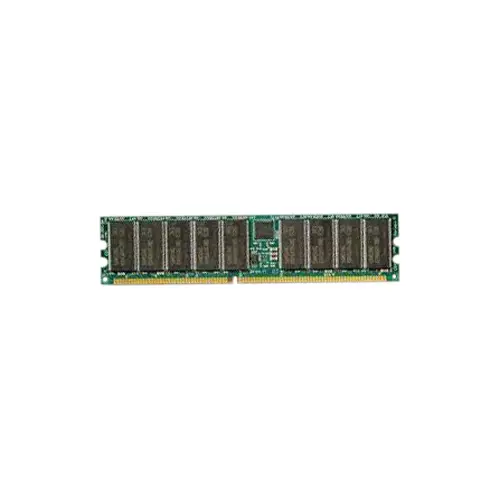
The Micron MT9JSF12872AZ-1G4F1 is a DDR3-1333 UDIMM with ECC, purpose-built for entry-level servers and single-socket workstations where data integrity is critical for applications like file storage, light virtualization, or small database hosting. Its single-rank x8 organization and unbuffered signaling ensure stable operation and lower latency on platforms that require unbuffered ECC memory, while the 1.5V standard voltage maintains broad compatibility with legacy systems.
1. ECC error correction guards against single-bit memory errors, ensuring long-running server processes and financial transactions complete without silent data corruption.
2. Unbuffered signal topology eliminates the register latency found in RDIMMs, suiting cost-sensitive single-socket servers where microseconds of response matter.
3. Single Rank x8 organization reduces electrical load on the memory controller, maintaining signal integrity in compact micro-server or NAS deployments.
4. DDR3-1333 operation delivers 10.6 GB/s per channel, providing ample throughput for lightweight virtualization hosts and web-serving workloads.
5. CAS 9 latency balances fast column access with power-on stability, delivering snappy data retrieval for entry-level database and file-sharing applications.
The Micron MT9JSF12872AZ-1G4F1 DDR3 Unbuffered ECC UDIMM is engineered for entry-level servers and always-on NAS appliances where data integrity and cost-efficiency are non-negotiable. Its four cornerstone features—ECC, unbuffered signaling, 1.5V operation, and single-rank x8 organization—directly impact your operational uptime. For a small business running a file server or a light customer database, ECC means real-time defense against silent bit-flips caused by background radiation or electrical noise; a single corrupted record could crash an application or quietly lose transaction history, and ECC corrects these errors automatically, safeguarding business continuity without manual intervention. In a virtualization microserver hosting a handful of containers or lightweight VMs, the unbuffered architecture eliminates the extra clock-cycle latency of registered memory, delivering noticeably snappier response in management consoles and faster data retrieval for critical services. The 1.5V standard voltage keeps power draw and heat generation minimal inside compact, 24/7 enclosures, reducing thermal strain and long-term cooling costs. Meanwhile, the single-rank x8 layout presents a lighter electrical load to the memory controller, guaranteeing rock-solid stability on cost-conscious server boards, so your essential workloads stay online without interruption.
General Virtualization
For lightweight hypervisors, deploy modules in matched pairs to enable dual-channel ECC. A minimum of eight identical 1GB UDIMMs provides 8GB, sufficient for a few small VMs; always reserve a 1–2GB overhead for the hypervisor and strictly scale by adding balanced sets across memory channels.
In-Memory Database
Larger capacity is essential—these 1GB sticks are best used to populate every DIMM slot for maximum density, e.g., 16 x 1GB for a 16GB dataset on dual-socket boards. Match ranks and channels to minimize latency; a single rank x8 module paired identically retains CL9 consistency, crucial for real-time caching workloads.
High-Performance Computing
Bandwidth-hungry HPC nodes demand all channels filled uniformly. Install six or eight identical modules per CPU (3 or 4 channels) to saturate memory bandwidth for parallel MPI tasks. Strictly avoid mixing capacities or ranks; the unbuffered ECC design suits node-level error correction, but total capacity will limit problem sizes, so plan compute job sizing accordingly.
Strictly tested server memory. Compatible: Dell PowerEdge R710, R610, HP ProLiant DL380 G7, DL360 G7, etc.
Q: Can I mix this MT9JSF12872AZ-1G4F1 with other memory modules of different brands or speeds?
A: Mixing is not recommended for server environments. Mismatched modules may force the system to downclock or disable ECC, compromising stability. For mission-critical uptime, use identical modules across all channels.
Q: Is this memory compatible with my system?
A: It is designed for servers and workstations with Intel Xeon E3 or AMD Opteron platforms that support DDR3 ECC Unbuffered DIMMs. Please verify your motherboard's QVL for this 1.35V/1.5V, 240-pin UDIMM.
Q: What is the recommended DIMM population order for optimal performance?
A: Populate identical DIMMs starting with the slot farthest from the CPU per channel, typically matching the blue or black slots first. Always follow your specific server board's manual to enable dual-channel and ECC correctly.
Q: Does this module support overclocking or XMP profiles?
A: No. As enterprise-class ECC memory, it adheres strictly to JEDEC DDR3-1333 standards and does not support overclocking or XMP. Its priority is absolute data integrity over performance tuning.
Q: What warranty and typical failure rate can I expect?
A: This module comes with a 1-year warranty. Built with premium ICs and strict testing for 24/7 operation, its designed annualized failure rate (AFR) is well below industry average, ensuring long-term reliability.