











 Secure payments
Standard refund policy
Trade Assurance
Secure payments
Standard refund policy
Trade Assurance
| Product Type | Memory Module |
|---|---|
| Memory Capacity | 2 GB |
| Memory Technology | DDR3 |
| Product Voltage | 1.35V |
| RAM Standard | DDR3-1600/PC3-12800 |
| Error Identifying | ECC |
| Signal Type | Registered |
| Column Access Strobe (CAS) | CL11 |
| Rank | Single Rank x8 |
| Quantity of Pins | 240-pin |
| RAM Genre | RDIMM |
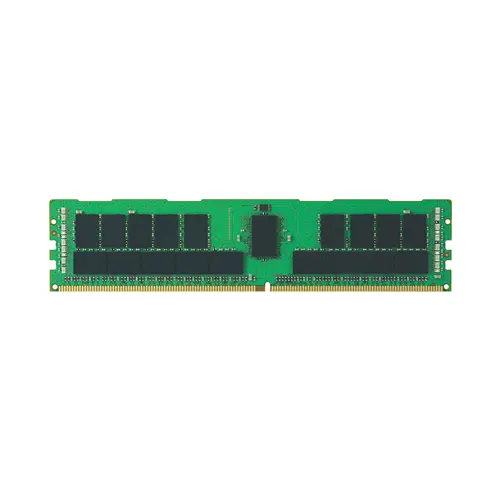
Designed as a server-grade RDIMM with ECC and a registered signal type, this 2 GB DDR3-1600 module ensures data integrity in virtualized environments and memory-intensive database applications. Its single-rank x8 configuration combined with a low 1.35 V operating voltage reduces electrical loading on the memory bus, enabling more stable 24/7 operation.
1. ECC error correction actively scrubs memory faults in real time, allowing 24/7 server workloads to avoid silent data corruption that would otherwise destabilize transactional integrity.
2. Registered buffering electrically isolates the command address bus from the DRAM array, sustaining signal cleanliness across high-capacity configurations vital for virtual machine density.
3. Low-voltage operation cuts per-DIMM power draw, aggregating into substantial energy savings and reduced thermal stress across large-scale data center installations.
4. PC3-12800 bandwidth delivers a steady twelve-point-eight gigabytes per second per channel, keeping multiple containerized services responsive without saturating the memory path.
5. Tightly bounded CAS latency accelerates predictable read cycles, supporting consistent query turnaround in database operations where every clock cycle matters.
In today’s data centers, the MT9KSF25672PZ-1G6K1FE RDIMM is engineered to solve the toughest reliability and efficiency challenges. Its ECC technology actively corrects single-bit errors in real time, which is non-negotiable for memory-intensive databases like SAP HANA—a single undetected bit flip can silently corrupt financial records or transaction logs. When virtualizing dozens of VMs on one host, the registered signal buffer ensures rock-solid stability even with fully populated memory banks, preventing signal degradation that could crash your entire cluster. The module’s low 1.35V operating voltage slashes power consumption per DIMM, and when multiplied across hundreds of servers, it translates into substantial savings on electricity and cooling. Complementing this is the DDR3-1600 speed and Single Rank x8 organization, which delivers consistent, low-latency access (CL11) ideal for virtualization overhead and rapid in-memory data retrieval. This means higher VM density without compromise, databases that run continuously, and tangible business continuity.
Server Memory Identified: This 2GB DDR3-1600 Registered ECC module (RDIMM, 1.35V) is designed for entry-level server and legacy enterprise systems. Capacity planning must account for the small density per stick and the need for population balance in registered memory channels.
General Virtualization
A single 2GB RDIMM is insufficient for modern hypervisors. For light virtualization on older platforms, populate at least six identical modules (12GB total) across all memory channels to maintain interleaved access. Larger deployments should replace these with 8GB or 16GB RDIMMs, using balanced channel populations per CPU socket to avoid performance penalties from non-uniform memory access.
In-Memory Database
In-memory databases demand capacity far beyond what 2GB DIMMs can offer. A viable minimum configuration would require fully populating all available slots with these modules, but realistic setups need 32GB or more total RAM—achieved by migrating to higher-capacity registered DIMMs. ECC ensures data integrity, yet capacity constraints make these sticks obsolete for production caching.
High-Performance Computing
HPC workloads benefit from ECC and registered signaling for cluster stability, but 2GB per module severely limits per-node memory bandwidth and working set size. Deploy these only in compute-light, high-density nodes where minimal memory per core is acceptable, and fill all channels to maximize bandwidth. For modern HPC, adopt 16GB+ RDIMMs to feed data-hungry MPI processes without excessive swapping.
Tested rigorously for seamless compatibility with servers like Dell PowerEdge R720, HPE ProLiant DL380e Gen8, Lenovo System x3650 M4.
Q: Can I mix this MT9KSF25672PZ-1G6K1FE with other memory modules of different brands or speeds?
A: Mixing is not recommended. This is an ECC Registered DDR3L module operating at 1.35V and CL11. Combining modules with differing speeds, ranks, or voltages may cause system instability or unbootable states.
Q: Is this memory compatible with my system?
A: It is designed for server platforms supporting DDR3 Registered ECC memory at 1.35V/1.5V. Compatible with Intel Xeon E5-2400/E5-2600 v1/v2 series and select AMD Opteron 6300 series chipsets. Verify board's RDIMM support list.
Q: What is the recommended DIMM population order for optimal performance?
A: Install identical DIMMs across memory channels. For this single-rank x8 RDIMM, populate the first slot of each channel (e.g., slots A1, B1). Follow your server’s platform guide regarding identical capacity and rank balancing for maximum throughput.
Q: Does this module support overclocking or XMP profiles?
A: No. As enterprise server memory, it adheres to JEDEC DDR3-1600 standards and does not support overclocking or XMP. Its design prioritizes 24/7 data integrity and error correction under rated specifications.
Q: What warranty and typical failure rate can I expect?
A: It includes a 1-year warranty. Annualized failure rate for Micron server-grade RDIMMs is typically under 0.5%, reflecting enterprise reliability far below consumer memory, especially when operated within rated environmental parameters.