











 Secure payments
Standard refund policy
Trade Assurance
Secure payments
Standard refund policy
Trade Assurance
| Product Type | Memory Module |
|---|---|
| Memory Capacity | 128 GB |
| Memory Technology | DDR4 |
| Product Voltage | 1.2V |
| RAM Speed | 2666MHz |
| RAM Standard | DDR4-2666/PC4-21300 |
| Error Identifying | ECC |
| Signal Type | Registered |
| Column Access Strobe (CAS) | CL19 |
| Rank | Octal Rank x4 |
| Quantity of Pins | 288-pin |
| RAM Genre | RDIMM |
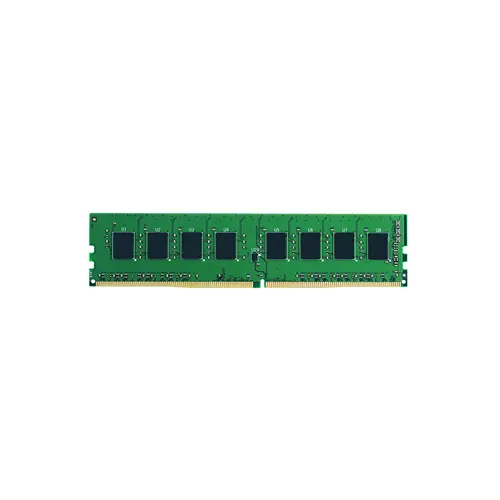
This 128GB DDR4-2666 RDIMM with ECC and Octal Rank x4 configuration is engineered for enterprise server platforms, delivering exceptional data integrity and high memory density ideal for virtualization, in-memory databases, and large-scale transactional workloads. Its registered signal type stabilizes operation across fully populated memory channels while the deep x4-based rank architecture maximizes memory interleaving for improved throughput in demanding multi-threaded environments.
1. A single 128 GB module provides expansive memory headroom, allowing dense virtualization clusters to host many more VMs per node without requiring extra DIMM slots.
2. ECC protection silently corrects single-bit errors in real time, safeguarding data integrity for financial transactions and database operations that cannot tolerate silent corruption.
3. Registered signal buffering stabilizes command and address lines across heavily populated server boards, making large-scale multi-DIMM configurations viable under continuous load.
4. Octal Rank x4 organization maximizes capacity within a single slot while maintaining sufficient bank-level parallelism, which helps sustain throughput in memory-hungry analytics and in-memory computing tasks.
5. DDR4-2666 speed supplies a reliable bandwidth foundation for concurrent workloads, efficiently feeding modern server CPUs without introducing unnecessary power draw or thermal stress.
Designed as a high-capacity RDIMM for enterprise servers, the Micron MTA144ASQ16G72LSZ-2S translates its specifications directly into mission-critical reliability where data integrity, stability, and scalability are non-negotiable. Its ECC technology is your frontline defense against single-bit errors caused by cosmic radiation or electrical noise, ensuring that a silent corruption in a financial transaction database or a virtual machine’s memory state is corrected in real time, not propagated into a costly outage. The Registered signal buffer is equally vital: in a fully populated 24-slot virtualization cluster, it isolates the memory controller from excessive electrical loading, allowing all 128GB modules to run synchronously at 2666MHz without the signal degradation that would crash an unregistered setup. This stability empowers you to deploy dozens of VMs per node with absolute confidence. Furthermore, the octal rank x4 organization maximizes interleaving, significantly boosting effective bandwidth for in-memory analytics platforms like SAP HANA, where query response times hinge on parallel data access. Operating at an efficient 1.2V, the module also helps lower thermal load across dense server racks, directly reducing your cooling overhead while sustaining peak performance for database workloads that simply cannot wait.
General Virtualization
Equip your server with two 128 GB RDIMMs (256 GB total) to support dozens of concurrent VMs while enabling dual-channel interleaving. For larger deployments, populate one DIMM per memory channel—for example, four modules for 512 GB on a quad-channel platform—to balance capacity and bandwidth without overloading the memory controller. This approach leaves expansion headroom for future scaling.
In-Memory Database
Maximize capacity by installing one 128 GB RDIMM in every channel; a six-channel system then provides 768 GB of resilient ECC memory for massive datasets. Stick to a single DIMM per channel to maintain the full 2666 MHz speed, as mixing octal-rank modules can reduce frequency and inflate latency. The registered design ensures consistent low-latency access for real-time analytics.
High-Performance Computing (HPC)
Populate all memory channels symmetrically with one 128 GB module each to achieve peak aggregate bandwidth critical for vector operations and simulations. Although octal-rank RDIMMs may necessitate a slight frequency drop, the enormous per-node capacity minimizes inter-node data transfer, often improving overall throughput. ECC protection guarantees end-to-end data integrity during long-running computations.
Rigorously tested server memory. Compatible with Dell PowerEdge R760, HPE ProLiant DL380 Gen10, Lenovo ThinkSystem SR650, and more.
Q: Can I mix this MTA144ASQ16G72LSZ-2S with other memory modules of different brands or speeds?
A: Mixing is strongly discouraged. Registered ECC modules must match speed, rank, and timings to ensure signal integrity and system stability. Mismatched DIMMs often cause POST failures or unpredictable errors in server environments.
Q: Is this memory compatible with my system?
A: This 128GB DDR4-2666 RDIMM works with server platforms supporting Registered ECC memory, such as Intel Xeon Scalable (Purley/Whitley) and AMD EPYC 7000 series. Verify your board's QVL or memory qualification list for validated compatibility.
Q: What is the recommended DIMM population order for optimal performance?
A: For octal-rank RDIMMs, populate identical DIMMs per channel beginning with the farthest slot from the CPU. Follow a balanced, symmetric configuration across all memory channels to maximize interleaving and avoid bandwidth penalties.
Q: Does this module support overclocking or XMP profiles?
A: No. This is an enterprise JEDEC-compliant Registered ECC module. XMP and overclocking are deliberately disabled to preserve data reliability and server uptime. It runs exclusively at its native 2666MHz with CL19 timings.
Q: What warranty and typical failure rate can I expect?
A: This module includes a one-year warranty. It delivers an enterprise-class annualized failure rate typically below 0.5%. Replacement is provided for defects under normal server operating conditions.