











 Secure payments
Standard refund policy
Trade Assurance
Secure payments
Standard refund policy
Trade Assurance
| Product Type | Memory Module |
|---|---|
| Memory Capacity | 16 GB |
| Memory Technology | DDR4 |
| Product Voltage | 1.2 V |
| RAM Speed | 2933 MHz |
| RAM Standard | DDR4-2933/PC4-23400 |
| Error Identifying | ECC |
| Signal Type | Registered |
| Column Access Strobe (CAS) | CL21 |
| Rank | Dual Rank x8 |
| Quantity of Pins | 288-pin |
| RAM Genre | RDIMM |
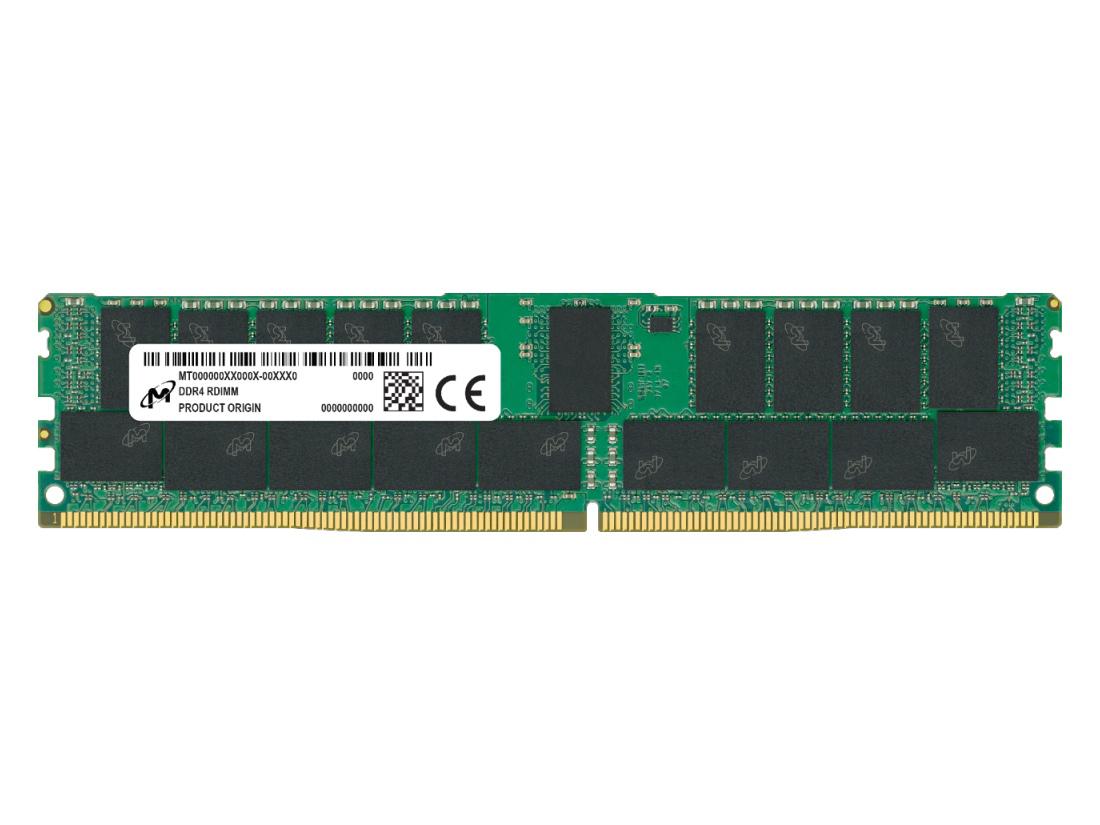
Designed for server environments, this 16GB DDR4-2933 RDIMM with ECC and registered signaling ensures data integrity and stability for demanding workloads such as virtualization and in-memory databases. Its dual-rank x8 configuration and CL21 latency optimize memory interleaving and bandwidth efficiency, making it an ideal choice for multi-socket platforms that require high reliability under sustained load.
1. ECC error correction detects and corrects single-bit faults on the fly, safeguarding data integrity in mission-critical databases and preventing silent data corruption that could compromise financial or scientific results.
2. Registered signal buffering stabilizes high-density memory configurations, enabling the server to support fully loaded DIMM slots without sacrificing reliable command and address timing.
3. Sixteen gigabyte per module capacity supplies ample headroom to pack more virtual machines or in-memory datasets per node, optimizing consolidation ratios in private cloud deployments.
4. Operating at 2933 mega-transfers per second, the module delivers the memory bandwidth needed to feed multi-core CPUs efficiently under heavy concurrent workloads, reducing transaction latency.
5. Dual rank x8 organization interleaves internal memory banks for sustained throughput, smoothing performance dips during peak virtualized workload bursts and large-block I/O operations.
The Micron MTA18ASF2G72PDZ-2G9E1R is a 16GB DDR4-2933 RDIMM purpose-built for demanding server infrastructure. For IT architects managing dense virtualization clusters, data integrity is the absolute foundation. Its ECC technology silently corrects single-bit errors, shielding your hypervisor from cosmic-ray-induced bit flips that would otherwise corrupt VM states or trigger unplanned outages. The registered design buffers command and address signals, so you can populate every memory channel to capacity without signal degradation. This means you can confidently scale up high-throughput virtual machines, eliminating the stability trade-off that accompanies maximum density. In latency-sensitive in-memory databases such as Redis or SAP HANA, the dual-rank x8 configuration interleaves operations across internal banks, which amplifies sustained bandwidth and reduces transaction stalls. When paired with the 2933 MT/s interface delivering 23.4 GB/s per channel, this module directly translates into faster analytical queries and real-time data processing. You are not simply adding DRAM; you are hardening your infrastructure against silent corruption, unlocking higher consolidation ratios, and ensuring mission-critical workloads execute with uncompromising predictability.
General Virtualization
For a balanced virtualization host, populate all memory channels symmetrically to maximize bandwidth. Using eight of these 16 GB RDIMMs in a dual-socket server yields 128 GB per node, comfortably supporting 20–30 moderate VMs. Stick to identical dual-rank x8 modules per channel to avoid performance penalties from mixed ranks.
In-Memory Database
In-memory databases demand both capacity and sustained low latency. Deploy six or eight modules per CPU to achieve 96–128 GB, targeting a 1 DIMM per channel (1DPC) configuration at 2933 MT/s for the lowest latency. Dual-rank modules increase effective capacity per channel, but keep CAS latency consistent (CL21) and avoid mixing speeds to prevent the memory controller from downclocking.
High-Performance Computing (HPC)
HPC workloads thrive on memory bandwidth, not just capacity. Install one DIMM per channel across all six or eight channels to ensure peak throughput, typically using 12 or 16 of these 16 GB RDIMMs for 192–256 GB total. The registered ECC design and dual-rank x8 organization deliver reliable, high-bandwidth data streaming essential for tightly-coupled parallel jobs.
Rigorously tested for compatibility with Dell PowerEdge R740/R750, HPE ProLiant DL380 Gen10, Lenovo ThinkSystem SR650.
Q: Can I mix this MTA18ASF2G72PDZ-2G9E1R with other memory modules of different brands or speeds?
A: Mixing different brands or speeds is not recommended for server environments. It can cause instability. For strict compatibility, use identical modules with the same Micron part number to ensure reliable ECC and registered operation.
Q: Is this memory compatible with my Intel or AMD server platform?
A: This is a DDR4-2933 ECC Registered DIMM. It is compatible with servers using Intel Xeon Scalable (2nd Gen or newer) or AMD EPYC 7002/7003 series processors that support DDR4-2933 RDIMMs. Please verify your motherboard’s memory QVL.
Q: What is the recommended DIMM population order for optimal performance?
A: For dual-socket servers, populate identical DIMMs in balanced configurations across memory channels. Typically, start with slot A1 and B1, then A2 and B2 per channel. Refer to your server vendor’s population guide for optimal NUMA and bandwidth.
Q: Does this module support overclocking or XMP profiles?
A: No, this is a server-grade ECC Registered DIMM designed for stability. It runs at JEDEC standard DDR4-2933 CL21 and does not support overclocking or XMP profiles.
Q: What warranty and typical failure rate can I expect?
A: This Micron module includes a 1-year warranty. Enterprise-class RDIMMs have very low annualized failure rates (below 0.1% AFR) under proper thermal and voltage conditions. Extended warranties may be available through your reseller.