











 Secure payments
Standard refund policy
Trade Assurance
Secure payments
Standard refund policy
Trade Assurance
| Product Type | Memory Module |
|---|---|
| Memory Capacity | 16 GB |
| Memory Technology | DDR4 |
| Product Voltage | 1.2 V |
| RAM Speed | 2933 MHz |
| RAM Standard | DDR4-2933/PC4-23400 |
| Error Identifying | ECC |
| Signal Type | Registered |
| Column Access Strobe (CAS) | CL21 |
| Rank | Dual Rank x8 |
| Quantity of Pins | 288-pin |
| RAM Genre | RDIMM |
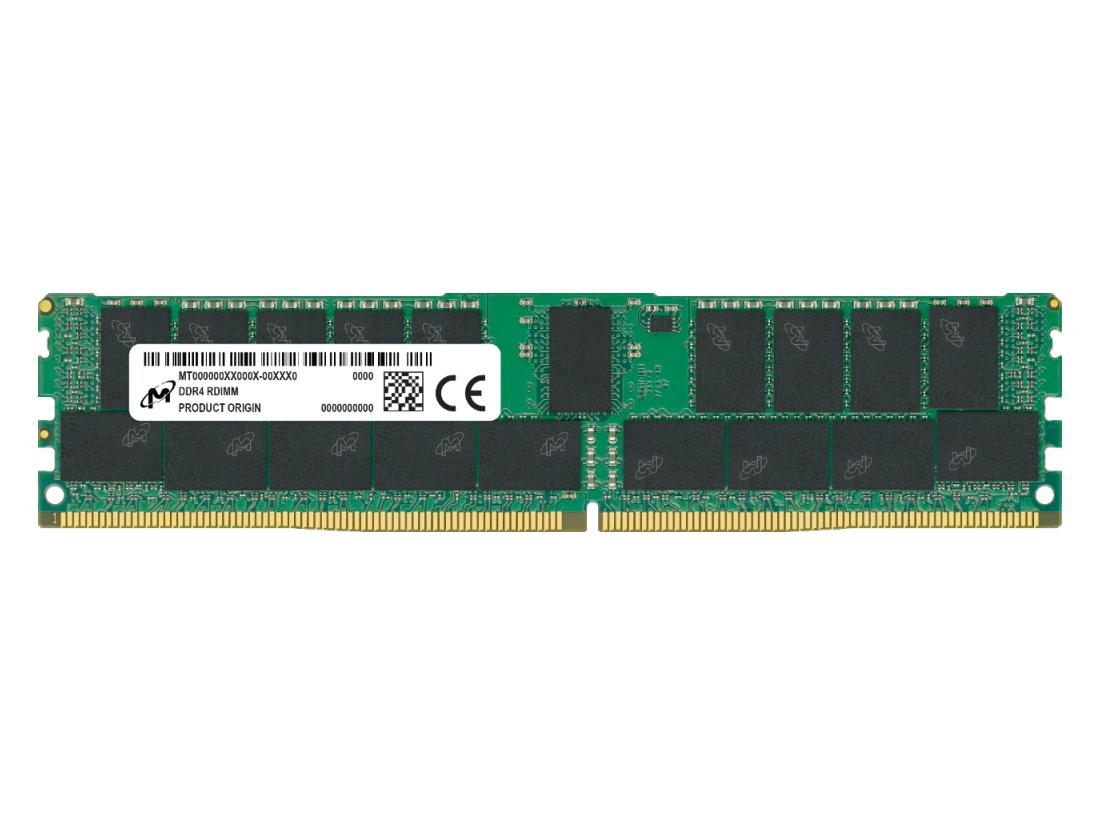
Designed as a server-class DDR4-2933 Registered DIMM with ECC, this 16 GB dual-rank x8 module ensures data integrity and stable signal integrity under heavy loads, making it ideal for virtualization clusters and in-memory database servers. Its dual-rank configuration and low CL21 latency at 1.2 V deliver efficient memory interleaving for enhanced throughput, while the 288-pin RDIMM form factor guarantees reliable operation on platforms requiring registered memory.
1. ECC error correction actively detects and repairs single-bit errors, protecting transactional data integrity in virtualization clusters and database servers.
2. Registered signal buffering stabilizes high-capacity memory arrays, enabling mission-critical uptime across multi-socket enterprise platforms.
3. 16GB capacity per module offers an optimal density floor, simplifying large memory pool expansion for dense container and VM consolidation.
4. 2933 MT/s throughput reduces latency in real-time analytics, improving response times for in-memory computing and high-frequency trading applications.
5. Dual-rank x8 organization uses interleaving to keep memory channels saturated, delivering predictable bandwidth under heavily consolidated multi-tenant workloads.
When you are running a virtualized cluster hosting dozens of mission-critical VMs, a single undetected bit flip in memory can corrupt a database transaction or silently crash a node. This Micron 16 GB DDR4-2933 RDIMM, part number MTA18ASF2G72PDZ-2G9R, addresses exactly that risk with ECC error correction, continuously detecting and repairing single-bit errors to safeguard data integrity in always-on environments. Its Registered signal buffer is equally vital: by isolating the memory controller from the electrical load of high-density DIMMs, it lets you populate all channels fully without signal degradation, so your platform scales reliably under heavy memory capacity demands. The dual-rank x8 organization further boosts real-world throughput through rank interleaving, allowing the memory controller to initiate a new access on one rank while the other is busy, which directly accelerates memory database lookups and simultaneous VM page-in operations. Across a VMware farm or an in-memory analytics engine like SAP HANA, these features translate into fewer runtime errors, more predictable latency, and the confidence that your server infrastructure can sustain peak loads without compromising the consistency of your data.
General Virtualization
For a balanced virtualized environment, populate all memory channels symmetrically to maximize bandwidth. Start with one 16GB RDIMM per channel (e.g., 6 x 16GB in a hexa-channel platform) to support a moderate mix of VMs, and scale by adding identical DIMMs to each channel to preserve interleaving and avoid NUMA penalties.
In-Memory Database
In-memory databases demand low latency and high throughput, making registered ECC memory essential for data integrity. Deploy a fully populated, balanced configuration—such as 12 x 16GB across all channels of a dual-socket server—to achieve maximum bandwidth and reduce column access strobe contention, targeting 192GB or more to keep entire datasets in RAM.
High-Performance Computing (HPC)
HPC workloads benefit from high memory bandwidth and capacity per core. Use one dual-rank 16GB RDIMM per channel (e.g., 8 x 16GB for an 8-channel system) to get the full channel bandwidth, as dual-rank modules offer superior bank-level parallelism. Scale out identically across additional nodes rather than overloading a single server, and stress-test ECC error logging to catch any signal integrity issues under sustained compute loads.
Rigorously tested server memory, compatible with Dell PowerEdge R740, HPE ProLiant DL380 Gen10, Lenovo ThinkSystem SR650.
Q: Can I mix this MTA18ASF2G72PDZ-2G9R with other memory modules of different brands or speeds?
A: Mixing RDIMMs of different brands, speeds, or ranks is not recommended. It may cause system instability or failure to POST, as registered server memory relies on identical rank and timing consistency.
Q: Is this memory compatible with my server system?
A: This 16GB DDR4-2933 ECC RDIMM is compatible with platforms supporting registered DDR4 at 2933MT/s, such as Intel Xeon Scalable (1st/2nd Gen) and AMD EPYC 7001/7002 series. Verify with your board's qualified vendor list.
Q: What is the recommended DIMM population order for optimal performance with this module?
A: Follow your server board’s manual. Typically, populate one dual-rank x8 RDIMM per channel first, starting with the farthest slot from the CPU, to ensure balanced interleaving and maximum memory bandwidth.
Q: Does this module support overclocking or XMP profiles?
A: No. As an enterprise-class ECC Registered DIMM, it strictly adheres to JEDEC DDR4-2933 specifications. Overclocking and XMP are not supported, ensuring data integrity and stable operation.
Q: What warranty and typical failure rate can I expect for this memory?
A: This Micron RDIMM includes a one-year warranty. Enterprise memory features an extremely low annualized failure rate, typically under 0.1%, backed by rigorous testing and advanced RAS capabilities.