











 Secure payments
Standard refund policy
Trade Assurance
Secure payments
Standard refund policy
Trade Assurance
| Product Type | Memory Module |
|---|---|
| Memory Capacity | 32 GB |
| Memory Technology | DDR4 |
| Product Voltage | 1.2V |
| RAM Speed | 2933MHz |
| RAM Standard | DDR4-2933/PC4-23400 |
| Error Identifying | ECC |
| Signal Type | Registered |
| Column Access Strobe (CAS) | CL21 |
| Rank | Single Rank x4 |
| Quantity of Pins | 288-pin |
| RAM Genre | RDIMM |
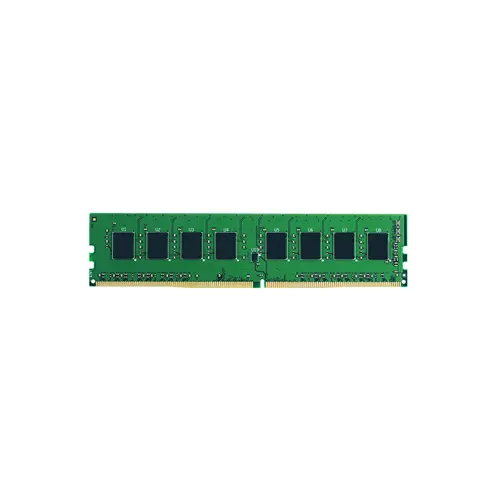
Designed for server platforms, this 32GB DDR4-2933 RDIMM with ECC and registered signal integrity ensures maximum data reliability and uptime in memory-intensive workloads like virtualization and in-memory databases. Its single-rank x4 configuration at CL21 latency delivers a strong balance of capacity and command rate efficiency, optimizing throughput in multi-DIMM configurations on compatible enterprise motherboards.
1. ECC protection detects and corrects single-bit errors in real time, preventing silent data corruption that could crash critical database or financial transaction workloads.
2. Registered signal buffering stabilizes command and address lines across fully populated server memory channels, enabling reliable operation even with multiple DIMMs per channel.
3. 32 GB capacity per module allows dense server configurations to support more virtual machines or containers per rack unit, maximizing consolidation ratios without sacrificing memory headroom.
4. Running at 2933 MHz delivers a sharp uplift in memory bandwidth over baseline speeds, accelerating in-memory analytics and large-scale virtualization data exchanges under heavy concurrent access.
5. Single Rank x4 organization leverages four-bit-wide DRAM devices to enable robust chip-kill error resilience, isolating and recovering from an entire chip failure while maintaining system uptime.
This Micron RDIMM is purpose‑built for enterprise servers, where uptime and data integrity are non‑negotiable. Its four defining characteristics directly address the real‑world pressures IT teams face every day. First, ECC error correction actively detects and corrects single‑bit memory errors caused by background radiation or electrical noise. In a dense virtualisation cluster running dozens of VMs, a silent bit flip can crash a critical application or corrupt a financial transaction; ECC eliminates that risk, preserving service reliability. Second, the registered buffer stabilises the address and command lines, allowing the platform to support far more DIMMs per channel without signal degradation. This means you can confidently populate all 24 slots in a virtualisation host, achieving the massive memory footprint that high‑density VM consolidation demands. Third, the single‑rank x4 organisation pairs 32GB of capacity with an optimised banking structure that reduces contention and boosts bandwidth utilisation. For an in‑memory database like SAP HANA or Redis, this translates directly into faster query responses and consistent low latency under heavy concurrent access. Finally, a true 2933MT/s transfer speed feeds the CPU with data aggressively, preventing stalls during memory‑intensive analytics. Together, these features turn a memory module into a strategic asset that keeps virtualised services resilient and latency‑sensitive databases performing at peak throughput around the clock.
General Virtualization
For server consolidation, install identical 32 GB RDIMMs evenly across all memory channels per CPU (e.g., 8 modules for an 8‑channel socket) to enable channel interleaving and maximum throughput. A 256–512 GB configuration (8–16 modules) comfortably hosts dozens of mid‑sized VMs while maintaining the full 2933 MHz speed. The ECC and registered buffering guarantee stability under mixed‑workload oversubscription.
In-Memory Database
Populate every channel with one or two 32 GB modules to keep 2933 MT/s and support massive datasets like SAP HANA or Redis. A balanced 16‑ to 24‑DIMM layout (512–768 GB) places the entire database in RAM, and the registered ECC design protects data integrity during heavy sustained writes. Uniform single‑rank x4 DIMMs minimize timing conflicts in dense multi‑DIMM configurations.
High-Performance Computing (HPC)
Maximize bandwidth for simulation and modeling codes by installing one 32 GB RDIMM per channel (e.g., 8 × 32 GB) on each socket; this avoids speed drops from multiple ranks per channel. For capacity‑hungry CFD or weather models, a 2‑DIMM‑per‑channel layout delivers 512 GB per node while retaining near‑peak 2933 MHz throughput, keeping vectorised workloads fed.
Rigorously tested, compatible with Dell PowerEdge R740, HPE DL380 Gen10, Lenovo SR650 servers.
Q: Can I mix this MTA18ASF4G72PZ-2G9E1R with other memory modules of different brands or speeds?
A: Mixing is not recommended for this registered ECC RDIMM. Different brands or speeds may cause signal integrity issues and system instability. Always use identical modules with the same Micron part number to ensure reliable 2933MHz operation.
Q: Is this memory compatible with my Intel or AMD server platform?
A: This DDR4-2933 registered ECC module is designed for dual-socket servers using Intel Xeon Scalable or AMD EPYC 7002/7003 processors. Verify that your server board supports 288-pin RDIMMs and 1.2V 2Gx4 single-rank configuration.
Q: What is the recommended DIMM population order for optimal performance?
A: Populate identical RDIMMs per memory channel starting with the farthest slot from the CPU. For a single-rank x4 32GB module, install one DIMM per channel first to maximize bandwidth, then add pairs symmetrically across CPU sockets.
Q: Does this module support overclocking or XMP profiles?
A: No. This is a JEDEC-compliant server RDIMM with fixed CL21 timings. It does not support XMP or overclocking. The firmware enforces strict reliability at 2933MT/s; any deviation is unsupported and may void warranty.
Q: What warranty and typical failure rate can I expect?
A: This Micron module includes a 1-year warranty. Typical annualized failure rate (AFR) for such enterprise RDIMMs is well below 0.5% under specified operating conditions, backed by rigorous testing and ECC protection for data integrity.