











 Secure payments
Standard refund policy
Trade Assurance
Secure payments
Standard refund policy
Trade Assurance
| Product Type | Memory Module |
|---|---|
| Memory Capacity | 64 GB |
| Memory Technology | DDR4 |
| Product Voltage | 1.2V |
| RAM Speed | 2933MHz |
| RAM Standard | DDR4-2933/PC4-23400 |
| Error Identifying | ECC |
| Signal Type | Registered |
| Column Access Strobe (CAS) | CL21 |
| Rank | Dual Rank x4 |
| Quantity of Pins | 288-pin |
| RAM Genre | RDIMM |
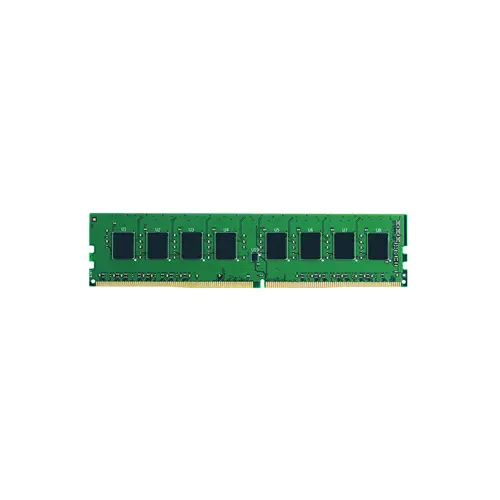
This 64GB DDR4-2933 Registered ECC RDIMM is engineered for server platforms handling memory-intensive workloads such as virtualization and in-memory databases, where its dual-rank x4 organization and CL21 latency deliver balanced capacity and throughput. The registered signal type and integrated ECC ensure reliable data integrity across high-density memory configurations, making it ideal for mission-critical enterprise environments.
1. 64 GB capacity enables dense server virtualization, allowing significantly higher VM-to-host consolidation ratios without triggering costly memory ballooning or swapping.
2. ECC protection continuously corrects single-bit errors and detects multi-bit faults, preserving data integrity for financial transactions and in-memory databases.
3. Registered signal type buffers command and address lines, stabilizing multi-DIMM channels and ensuring reliable operation across fully populated server boards.
4. 2933 MHz speed supplies the sustained bandwidth required for real-time analytics and high-frequency trading platforms operating on large in-memory datasets.
5. Dual rank x4 organization leverages rank interleaving to keep memory pipelines busy, boosting effective throughput during simultaneous heavy workloads like virtual desktop infrastructure bursts.
The Micron MTA36ASF8G72PZ-2G9E1TI is a 64GB DDR4-2933 RDIMM engineered specifically for enterprise servers, where unplanned downtime and data corruption are simply unacceptable. In a dense virtualization cluster running dozens of virtual machines, memory errors can cascade into host crashes. This module’s ECC technology actively detects and corrects single-bit flips caused by background radiation, preserving the integrity of every transaction without performance penalty. Its registered architecture buffers the command and address lines, decoupling the memory controller from the electrical load of high-capacity DIMMs. This allows a server to populate all memory channels with 64GB modules without sacrificing signal quality, giving you the massive, stable memory footprint required to consolidate more VMs per physical host.
For in-memory databases like SAP HANA or Redis, sustained bandwidth and parallelism are critical. The dual-rank x4 organization enables internal bank interleaving, overlapping data accesses to minimize latency gaps and push higher effective throughput at 2933MT/s. Combined with a modest 1.2V operating voltage that reduces thermal load in densely packed racks, this module translates directly to faster query responses and higher transactional throughput, while also contributing to lower cooling costs over the server’s lifecycle. This is not just a component; it is a reliability and performance baseline for business-critical workloads.
This is a server-class registered ECC DDR4-2933 module, designed for high-reliability compute platforms. Capacity planning guidance for three common server workloads appears below.
General Virtualization
For a typical dual-socket server, populate at least one DIMM per memory channel to prevent bandwidth starvation. Using 12 of these 64 GB modules (768 GB total) distributes capacity evenly across both sockets, enabling dense, NUMA-optimised VM consolidation. For larger private clouds, scale to 24 modules (1.5 TB) while maintaining a perfectly balanced population.
In-Memory Database
Always deploy a fully symmetrical memory configuration: identical 64 GB RDIMMs in every populated channel. For a dual-socket platform that supports 12 channels per CPU, 12 modules provide 768 GB, and 24 modules deliver 1.5 TB. This balanced approach unlocks the full interleaving potential, drastically reducing latency and supporting strict in-memory data tiers like SAP HANA.
High-Performance Computing (HPC)
Maximise bandwidth by fitting one 64 GB dual-rank RDIMM into each available memory channel—commonly 8 or 12 modules per node. The registered dual-rank x4 design sustains high command efficiency at 2933 MT/s. Uniform population eliminates access hotspots, keeping parallel simulation and modelling jobs tightly synchronised across all cores.
This Micron 64GB DDR4-2933 RDIMM, rigorously tested, is compatible with Dell PowerEdge R760, HPE ProLiant DL380 Gen11, and similar servers.
Q: Can I mix this MTA36ASF8G72PZ-2G9E1TI with other memory modules of different brands or speeds?
A: Mixing is not recommended for server environments. Different brands or speeds can cause signal integrity issues, ECC errors, and system instability. All modules in the same server should be identical to ensure reliability.
Q: Is this memory compatible with my system?
A: This DDR4-2933 RDIMM with ECC is designed for server platforms such as Intel Xeon Scalable (2nd Gen or newer) and AMD EPYC 7002/7003 series. Verify your motherboard's QVL or system specifications for 288-pin Registered DIMM support.
Q: What is the recommended DIMM population order for optimal performance?
A: Always consult your server's manual, but typically populate identical DIMMs into the furthest slot of each memory channel first (e.g., blue slots) to enable balanced interleaving. Maintain symmetry across all processor memory controllers for maximum bandwidth.
Q: Does this module support overclocking or XMP profiles?
A: No. This is a JEDEC-compliant registered server memory module operating at its native 2933 MT/s. It does not support overclocking or XMP profiles, as stability and data integrity are prioritized over performance tuning in enterprise environments.
Q: What warranty and typical failure rate can I expect?
A: This module includes a 1-year warranty. Enterprise-class registered memory typically exhibits very low annualized failure rates (AFR). When operated within rated specifications, it delivers high Mean Time Between Failures (MTBF), often measured in millions of hours.