











 Secure payments
Standard refund policy
Trade Assurance
Secure payments
Standard refund policy
Trade Assurance
| Product Type | Memory Module |
|---|---|
| Memory Capacity | 64 GB |
| Memory Technology | DDR4 |
| Product Voltage | 1.2 V |
| RAM Speed | 2933 MHz |
| RAM Standard | DDR4-2933/PC4-23400 |
| Error Identifying | ECC |
| Signal Type | Registered |
| Column Access Strobe (CAS) | CL21 |
| Rank | Dual Rank x4 |
| Quantity of Pins | 288-pin |
| RAM Genre | RDIMM |
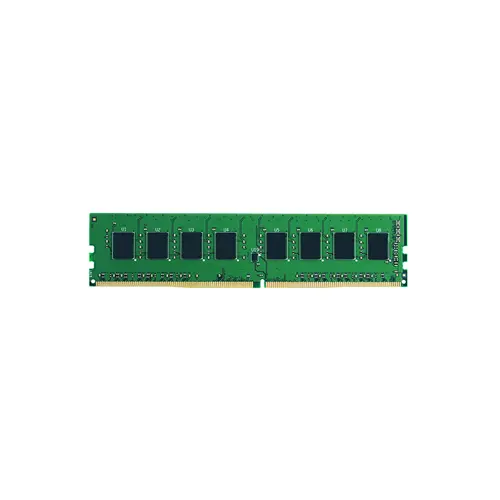
This 64 GB DDR4-2933 registered ECC RDIMM is engineered for enterprise servers and virtualization platforms, delivering the data integrity and reliability required for memory-intensive workloads such as in-memory databases and large-scale virtualization. Its dual-rank x4 configuration and low CL21 latency optimize bandwidth utilization and command-address stability under heavy load, while registered signal buffering ensures signal integrity across densely populated memory channels.
1. 64 GB capacity per module allows dense virtualization footprints, packing more VMs per server without sacrificing memory headroom for critical applications.
2. 2933 MHz speed delivers the sustained bandwidth needed for real-time database processing and in-memory analytics, reducing query latency under concurrent loads.
3. ECC protection silently corrects single-bit errors, safeguarding long-running transactional workloads against silent data corruption that could otherwise propagate into financial or scientific results.
4. Registered signal buffering stabilizes large memory populations by electrically isolating the command/address bus, enabling reliable operation when multiple high-capacity DIMMs are fully populated.
5. Dual Rank x4 organization interleaves accesses across internal banks, boosting effective throughput and ensuring steady memory subsystem performance during peak virtualization or HPC tasks.
The Micron MTA36ASF8G72PZ-2G9R is a 64GB DDR4-2933 Registered DIMM engineered specifically for enterprise servers, where it directly confronts the most critical challenges IT administrators face. Its ECC capability is non-negotiable for data integrity. In a 24/7 virtualized cluster hosting dozens of VMs, a single undetected bit flip caused by cosmic radiation can silently corrupt financial transaction logs or hypervisor data, leading to cascading system crashes; this module’s hardware-level error correction catches and corrects those errors in real time, preventing multi-hour forensic recovery sessions. The registered signal buffer stabilizes the electrical load when populating high-density memory channels, allowing you to scale to multi-terabyte footprints without memory training failures or random reboots under heavy NUMA traffic. For an in-memory database like Redis or SAP HANA handling millions of concurrent queries, the dual-rank x4 organization combined with 2933 MT/s bandwidth ensures that large datasets remain in the CPU’s sweet spot, dramatically reducing query latency by maximizing the internal bank interleaving that parallelizes row accesses. This isn’t just a memory stick—it is the foundation for deterministic uptime and uncompromised throughput in virtualized infrastructure and latency-sensitive analytics.
Based on the specifications—DDR4-2933, ECC, Registered, 288-pin RDIMM—this is clearly a server memory module. Below is the capacity planning guidance for typical server workloads using this 64 GB module.
General Virtualization
For a balanced virtualization host, install a minimum of 6 identical 64 GB RDIMMs (384 GB total) in a 6-channel configuration per socket to maximize memory bandwidth while leaving upgrade headroom. This 2933 MHz ECC memory ensures data integrity for multiple virtual machines with moderate overcommitment, and using 64 GB DIMMs allows high VM density without populating all slots.
In-Memory Database
In-memory databases like Redis or SAP HANA demand absolute reliability and massive capacity. Deploy 12 or more of these 64 GB RDIMMs per dual-socket server to reach 768 GB or higher, filling all channels with dual-rank modules for optimal latency. Registered ECC corrects single-bit errors critical for in-flight transactional data, and the CL21 latency at 2933 MHz strikes a balance between speed and stability under sustained write-intensive loads.
High-Performance Computing (HPC)
HPC clusters benefit from per-node memory bandwidth; equip each node with exactly 8 identical 64 GB RDIMMs (512 GB) in a balanced 8-channel layout to feed multi-core processors running MPI-based simulations. The dual-rank x4 organization delivers strong signal integrity and high throughput, while registered ECC ensures long-running calculation accuracy. Prioritize consistent module batches to avoid timing variations across nodes in a parallel file system or tightly coupled workload.
Rigorously tested 64GB DDR4-2933 ECC RDIMM, compatible with Dell PowerEdge R750, HPE ProLiant DL380 Gen10, Lenovo ThinkSystem SR650.
Q: Can I mix this MTA36ASF8G72PZ-2G9R with other memory modules of different brands or speeds?
A: Mixing is not recommended. For server environments, memory consistency is critical. Different brands, speeds, or ranks may cause system instability, reduced performance, or even failure to POST. Always use identical part numbers for guaranteed reliability.
Q: Is this memory compatible with my Intel or AMD server platform?
A: This DDR4-2933 ECC Registered RDIMM is compatible with platforms supporting 288-pin DDR4 ECC RDIMM, such as Intel Xeon Scalable or AMD EPYC. Verify your motherboard's QVL and ensure BIOS supports 64GB modules at this speed and rank configuration.
Q: What is the recommended DIMM population order for optimal performance?
A: Populate identical DIMMs symmetrically across memory channels following your server manual's guidelines. Typically, balance capacity per channel, install the same rank and size, and fill slots starting with the farthest from the CPU to maximize throughput and interleaving.
Q: Does this module support overclocking or XMP profiles?
A: No. This is a JEDEC-compliant DDR4-2933 server DIMM with fixed timings (CL21). It does not support overclocking or XMP profiles, as enterprise memory prioritizes stability and data integrity over variable clock speeds.
Q: What warranty and typical failure rate can I expect?
A: This module carries a 1-year warranty. Enterprise-grade ECC RDIMMs exhibit very low annualized failure rates, typically less than 0.2% under proper operating conditions. Ensure appropriate cooling and a stable power supply for optimal longevity.