











 Secure payments
Standard refund policy
Trade Assurance
Secure payments
Standard refund policy
Trade Assurance
| Product Type | Memory Module |
|---|---|
| Memory Capacity | 48 GB |
| Memory Technology | DDR5 |
| Product Voltage | 1.1V |
| RAM Speed | 6400MHz |
| RAM Standard | DDR5-6400/PC5-51200 |
| Error Identifying | ECC |
| Signal Type | Registered |
| Column Access Strobe (CAS) | CL52 |
| Rank | Dual Rank x8 |
| Quantity of Pins | 288-pin |
| RAM Genre | RDIMM |
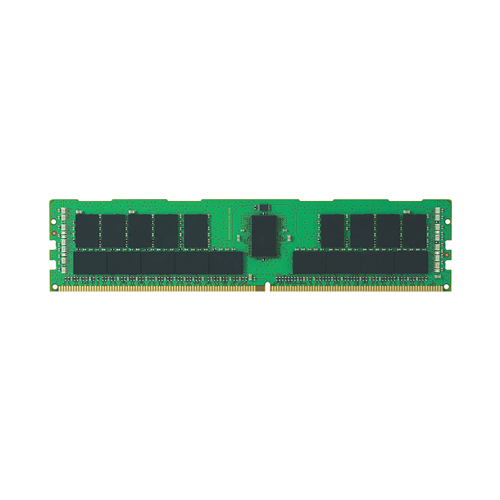
This 48 GB DDR5-6400 registered ECC module is purpose-built for enterprise servers handling latency-sensitive, memory-intensive workloads such as virtualization and in-memory databases. Its dual-rank x8 organization maximizes bank-level parallelism for higher sustained throughput, while the registered architecture and integrated ECC ensure reliable signal integrity and robust data protection across fully populated channels.
1. High-density module capacity allows servers to pack more virtual machines per node, directly improving consolidation ratios and reducing infrastructure costs.
2. Blazing-fast data rate accelerates in-memory databases and real-time analytics, shrinking response times under heavy query loads.
3. End-to-end error correction safeguards data integrity in financial transactions and scientific computing, eliminating silent data corruption risks.
4. Registered buffering preserves signal integrity across fully populated memory channels, ensuring non-stop stability in multi-socket platforms.
5. Dual-rank organization maximizes channel utilization, delivering consistent bandwidth that keeps latency low for hundreds of simultaneous cloud tenants.
In a dense virtualization cluster, every memory error matters. The MTC20F208XS1RC64BC1R is an RDIMM built for exactly this reality: its onboard ECC silently corrects single-bit flips that would otherwise corrupt a hypervisor’s state or silently flip a financial transaction inside a hosted virtual machine, turning invisible radiation into a non-event. Meanwhile, the registered buffer isolates the memory controller from the electrical load of 48 GB, so you can fully populate a server with multiple such modules and still keep signal integrity and boot-time stability—critical when a single unstable DIMM can crash dozens of tenants. In an in-memory database like Redis or SAP HANA, performance is non-negotiable. Here the DDR5-6400 speed, dual-rank organization, and the resulting bank-level parallelism deliver the sustained bandwidth that prevents data-hungry analytics from stalling on memory waits. The dual x8 rank interleaving means while one rank is refreshing or busy, the other is still serving low-latency reads, effectively hiding refresh gaps that used to cause jitter. With 1.1 V operation, the module further cuts power-per-gigabyte, so an entire rack of memory-heavy nodes runs cooler and with a lower electricity bill—without trading off an ounce of reliability.
Server Memory Identification
The module’s Registered DIMM (RDIMM) form factor, 288-pin layout, and ECC functionality clearly designate it as server-grade DDR5 memory. The 48 GB capacity per stick, 6400 MT/s speed, and dual‑rank x8 organization suit modern multi‑channel server platforms. Below are capacity planning recommendations for typical enterprise workloads.
General Virtualization
Deploy two or four 48 GB RDIMMs (96–192 GB total) for moderate VM density. Dual‑rank modules enhance bandwidth, while populating one DIMM per channel (e.g., 1DPC) maintains high memory speeds. This configuration balances cost with headroom for hypervisor overhead and multiple guest operating systems.
In‑Memory Database
Maximize capacity per socket by using six or eight 48 GB modules (288–384 GB) to keep large datasets in memory. The ECC and registered design ensure data integrity under constant load. Distribute modules evenly across all memory channels to sustain the low latency required for real‑time analytics and high transaction rates.
High Performance Computing
Populate all eight memory channels with one 48 GB DIMM each to achieve 384 GB of fast 6400 MT/s capacity. This balanced, one‑DIMM‑per‑channel layout provides the peak throughput needed for simulation, modeling, and parallel computation. The dual‑rank x8 organization further optimizes bandwidth, preventing memory bottlenecks in compute‑intensive jobs.
Rigorously tested server compatibility: Dell PowerEdge R760, HPE ProLiant DL380 Gen11, Lenovo ThinkSystem SR650 V3.
Q: Can I mix this MTC20F208XS1RC64BC1R with other memory modules of different brands or speeds?
A: Mixing memory is not recommended. Even if other modules match the RDIMM type, mixing brands or speeds can cause signal integrity issues on registered platforms. For maximum reliability, use identical modules from the same validated kit.
Q: Is this memory compatible with my Intel or AMD server platform?
A: This DDR5-6400 ECC RDIMM is designed for latest-generation Intel Xeon Scalable and AMD EPYC 9004 series platforms. Please consult your server board's QVL to verify support for 48GB dual-rank x8 DIMMs and this specific speed grade.
Q: What is the recommended DIMM population order for optimal performance?
A: Populate identical DIMMs symmetrically across memory channels, typically filling slots of the same color first. Follow your server's manual: balance capacity per channel and install 2DPC configurations with uniform dual-rank modules for best memory bandwidth.
Q: Does this module support overclocking or XMP profiles?
A: No. This is a JEDEC-compliant registered server memory module, engineered for data integrity and stability. It does not support XMP or end-user overclocking. Operations rely on fixed 6400MHz with ECC at a hard-coded CL52 latency.
Q: What warranty and typical failure rate can I expect?
A: This module includes a 1-year warranty. Typical enterprise-grade ECC RDIMMs exhibit an annualized failure rate (AFR) well under 0.5%, ensuring robust long-term reliability for mission-critical server environments when operated within specified conditions.