











 Secure payments
Standard refund policy
Trade Assurance
Secure payments
Standard refund policy
Trade Assurance
| Product Type | Memory Module |
|---|---|
| Memory Capacity | 128 GB |
| Memory Technology | DDR4 |
| Product Voltage | 1.2V |
| RAM Speed | 1600MHz |
| RAM Standard | DDR4-1600/PC4-12800 |
| Error Identifying | ECC |
| Signal Type | Registered |
| Column Access Strobe (CAS) | CL11 |
| Rank | Quad Rank x4 |
| Quantity of Pins | 276-pin |
| RAM Genre | CDIMM |
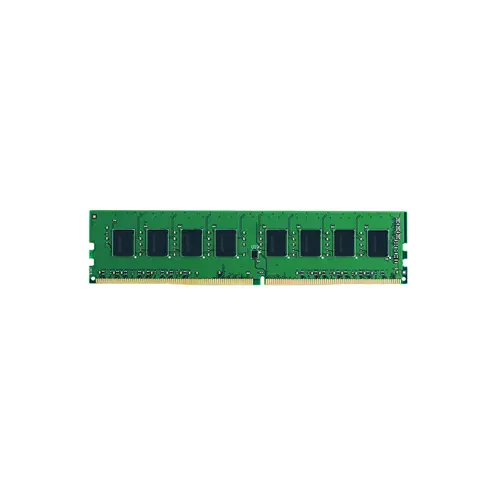
This 128GB DDR4-1600 Registered ECC CDIMM is purpose-built for enterprise servers and is ideally suited for memory-intensive workloads such as virtualization, in-memory databases, and large-scale data analytics where data integrity is critical. Its quad-rank x4 configuration and registered signal type deliver exceptional per-channel capacity and signal stability, while ECC protection and a low CAS latency of 11 ensure reliable, responsive operation under sustained heavy loads.
1. 128 GB capacity per module dramatically raises memory density per server node, empowering high-count VM consolidation and large in-memory database operations without sacrificing performance.
2. ECC error correction silently catches and fixes single-bit faults, preserving data integrity in 24/7 financial trading systems and mission-critical analytics.
3. Registered signal buffering decouples the memory controller from heavy DRAM loads, sustaining rock-solid stability when all DIMM slots are populated in dense virtualized platforms.
4. Quad Rank x4 organization employs rank interleaving and x4 device-level redundancy, maintaining peak memory bandwidth and enabling advanced chip-kill protection under demanding multi-tenant workloads.
5. The 1600 MBps per pin transfer rate supplies a reliable 12.8 GB/s per channel, ensuring consistent low-latency throughput for memory-bound databases and real-time streaming services.
Designed for enterprise servers, this 128GB DDR4-1600 Registered ECC module employs a quad-rank layout. Its four traits tackle real-world pain points. ECC is critical for virtualization clusters: silent bit-flips from cosmic radiation can corrupt hypervisors and crash multiple VMs; this module corrects errors on the fly, preserving uptime. Registered buffering lets dense quad-rank DIMMs fully populate channels without signal degradation—essential for in-memory databases like Redis or SAP HANA where dataset access must be flawless. The quad-rank x4 organization interleaves bank access, boosting effective bandwidth and query throughput under heavy analytics loads. Meanwhile, the native 1.2V low-voltage design slashes power and cooling costs, directly reducing OPEX in a 24/7 datacenter. For virtualized environments and real-time data processing, this memory ensures the integrity, scalability, and efficiency your business demands.
General Virtualization
For virtualization hosts running multiple VMs, capacity is paramount. Deploy these 128GB Registered ECC DDR4 modules in identical pairs or sets of four to populate all memory channels and maximize bandwidth while avoiding performance penalties. Aim for a balanced configuration across CPUs to ensure consistent latency and throughput under heavy consolidation.
In-Memory Database
In-memory databases demand both capacity and reliable low-latency access. Fill every memory channel with a single 128GB module to achieve the highest per-socket capacity while maintaining uniform interleaving; avoid mixing different ranks or capacities to prevent memory-speed degradation. This symmetric population guards against ECC errors and sustains peak database throughput.
High-Performance Computing
HPC workloads often balance capacity with bandwidth. Although 1600MHz is a modest speed, the 128GB density suits memory‑intense simulations that exceed typical DIMM slot limits. Install one module per channel across all available channels to saturate the memory controller’s bandwidth, and prefer Quad Rank x4 modules only if your platform fully supports them—otherwise drop to Dual Rank for stability at scale.
Rigorously tested and validated for Cisco UCS B200 M4, B260 M4, and B460 M4 blade servers.
Q: Can I mix this M352AAK40BB0-CK0M0 with other memory modules of different brands or speeds?
A: Mixing RDIMMs of different brands or speeds is not recommended for server environments. This can cause signal integrity and timing conflicts, leading to instability. Use identical modules for guaranteed performance.
Q: Is this memory compatible with my system?
A: This 128GB DDR4-1600 Registered ECC CDIMM requires a server platform supporting quad-rank x4 RDIMMs at 1.2V, such as Intel Xeon Scalable (Purley) or select AMD EPYC motherboards. Verify your board’s RDIMM support list.
Q: What is the recommended DIMM population order for optimal performance?
A: Follow your server motherboard’s population guide. Typically, populate identical DIMMs in the farthest slot of each memory channel first, balancing across all CPU memory controllers to enable interleaving and maximize throughput.
Q: Does this module support overclocking or XMP profiles?
A: No. This is a JEDEC-standard server RDIMM operating at fixed DDR4-1600 with CL11 timings. It does not support XMP or overclocking, ensuring 24/7 enterprise stability under sustained workloads.
Q: What warranty and typical failure rate can I expect?
A: This module carries a 1-year warranty. Enterprise RDIMMs like this typically exhibit an annualized failure rate (AFR) below 0.5% when operated within specified environmental and voltage conditions.