











 Secure payments
Standard refund policy
Trade Assurance
Secure payments
Standard refund policy
Trade Assurance
| Product Type | Memory Module |
|---|---|
| Memory Capacity | 128 GB |
| Memory Technology | DDR4 |
| Product Voltage | 1.2V |
| RAM Speed | 2666MHz |
| RAM Standard | DDR4-2666/PC4-21300 |
| Error Identifying | ECC |
| Signal Type | Registered |
| Column Access Strobe (CAS) | CL19 |
| Rank | Octal Rank x4 |
| Quantity of Pins | 288-pin |
| RAM Genre | RDIMM |
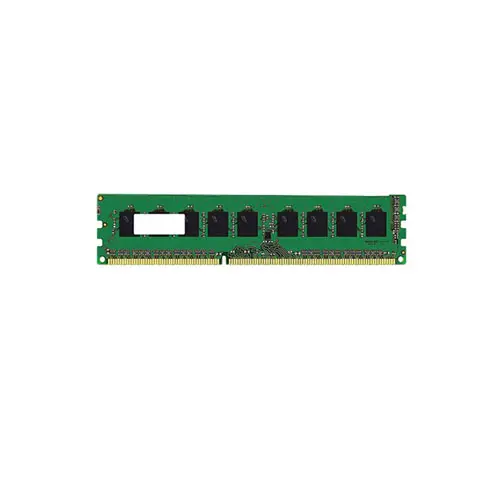
This 128GB DDR4-2666 Registered ECC RDIMM (PC4-21300) is purpose-built for server platforms handling memory-intensive workloads such as virtualization, in-memory databases, and critical enterprise applications where data integrity cannot be compromised. Its Octal Rank x4 architecture combined with registered signaling delivers superior signal stability and enables dense memory configurations at capacity, while integrated ECC error correction ensures continuous protection against single-bit errors for maximum system reliability.
1. A massive 128GB per module unlocks higher VM density per server, allowing data centers to consolidate workloads without sacrificing memory headroom.
2. Error-correcting code protection automatically detects and corrects single-bit errors, preserving data integrity in mission-critical databases and financial transactions.
3. The registered buffer isolates the memory controller from the DRAM chips, ensuring clean signal integrity across large memory populations essential for 24/7 system stability.
4. Octal Rank x4 organization maximizes channel interleaving, boosting effective memory bandwidth for multi-threaded enterprise applications under heavy loads.
5. DDR4-2666 frequency delivers a solid balance of throughput and power efficiency, sustaining consistent performance in virtualized and memory-intensive environments.
When you operate a multi-node virtualization cluster or an in-memory database like SAP HANA, the integrity and capacity of your memory define business outcomes. The M386AAK40D40-CWD6Q is a 128GB DDR4-2666 Registered DIMM with ECC, built precisely for these enterprise server environments.
Its ECC technology actively corrects single-bit errors in real time, preventing silent data corruption that could crash a virtual machine or distort a financial transaction—an absolute necessity when dozens of workloads share the same physical host. The Registered interface buffers command and address signals, allowing you to populate all memory channels without signal degradation; this stability is critical when you need a full 512GB or 1TB footprint to keep a large in-memory dataset fully resident. With an octal-rank x4 organization, the module interleaves accesses across multiple internal banks, delivering higher sustained bandwidth during simultaneous read/write operations in a heavily loaded hypervisor. Finally, the 1.2V operating voltage minimizes thermal load across dense server racks, helping maintain consistent clock margins during prolonged database batch processing. Together, these four characteristics ensure your virtualized services and latency-sensitive analytics run with uncompromising reliability and performance, not just on paper but under real production pressure.
General Virtualization
For a 128GB DDR4-2666 RDIMM, populate all available channels with identical modules to maintain balanced memory interleaving and NUMA optimization. A typical dual-socket server equipped with 12 or 16 DIMM slots can deploy eight to twelve such modules, delivering 1TB–1.5TB total capacity to support dozens of mixed-application VMs without memory ballooning or swapping.
In-Memory Database
In-memory analytics and real-time transactional databases demand the lowest latency and highest reliability, making 128GB ECC Registered DIMMs ideal for preventing silent data corruption. Configure the server with a fully populated memory topology—one or two modules per channel—to maximize bandwidth while retaining a single rank access pattern (if possible) or leveraging octal-rank interleaving for improved throughput under heavy cache pressure.
High-Performance Computing
HPC clusters benefit from the large granularity of 128GB modules to achieve terabyte-scale memory per node while keeping DIMM counts low and power budgets manageable. Install these RDIMMs in a symmetric layout across all memory controllers to sustain peak stream bandwidth; pair them with high-core-count CPUs, and select CL19 timing to balance latency against the reliability required for week-long simulation runs.
This rigorously tested 128GB DDR4 RDIMM is compatible with Dell PowerEdge R740, HPE DL380 Gen10, and Lenovo ThinkSystem SR650.
Q: Can I mix this M386AAK40D40-CWD6Q with other memory modules of different brands or speeds?
A: Mixing with different brands or speeds is not recommended for RDIMMs. Mixed configurations often cause instability and compatibility issues. Always use identical modules across the server for guaranteed reliability.
Q: Is this memory compatible with my system?
A: This 128GB DDR4-2666 Registered ECC module is compatible with server platforms supporting PC4-21300, such as Intel Xeon Scalable or AMD EPYC. Always verify against your system’s qualified vendor list.
Q: What is the recommended DIMM population order for optimal performance?
A: Follow your server motherboard manual. Typically, populate the farthest DIMM slots first per channel across all CPU memory controllers, balancing identical ranks. Symmetric loading maximizes memory bandwidth and access efficiency.
Q: Does this module support overclocking or XMP profiles?
A: No. This is server-grade Registered ECC memory designed for maximum reliability at JEDEC standard speed (2666MHz). It does not support XMP or any overclocking features.
Q: What warranty and typical failure rate can I expect?
A: It comes with a 1-year warranty. Enterprise RDIMMs exhibit extremely low failure rates, typically achieving MTTF measured in millions of hours under specified data center operating conditions.