











 Secure payments
Standard refund policy
Trade Assurance
Secure payments
Standard refund policy
Trade Assurance
| Product Type | Memory Module |
|---|---|
| Memory Capacity | 128 GB |
| Memory Technology | DDR4 |
| Product Voltage | 1.2 V |
| RAM Speed | 2933 MHz |
| RAM Standard | DDR4-2933/PC4-23400 |
| Error Identifying | ECC |
| Signal Type | Registered |
| Column Access Strobe (CAS) | CL21 |
| Rank | Quad Rank x4 |
| Quantity of Pins | 288-pin |
| RAM Genre | RDIMM |
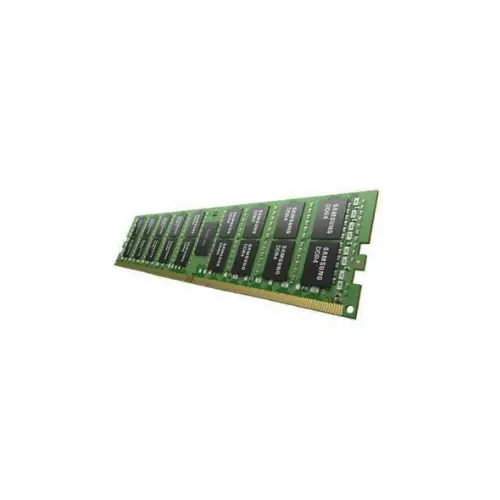
This 128GB DDR4-2933 RDIMM with ECC and a quad-rank x4 organization is engineered for high-density server deployments, providing exceptional data integrity and stable registered signaling under heavy memory populations—ideal for virtualization clusters and in-memory databases. The quad-rank design maximizes capacity per channel while the CL21 latency and 1.2V low-power operation ensure efficient, reliable throughput in 24/7 enterprise environments.
1. A 128GB module density allows a single server to support massive in-memory databases and higher VM counts, reducing hardware sprawl and licensing costs.
2. ECC protection corrects single-bit errors and detects multi-bit faults in real time, preserving data integrity for financial transactions and long-running computational workloads.
3. Registered signal buffering isolates the memory controller from heavy loads, so large-capacity configurations remain stable without sacrificing maximum capacity per channel.
4. Quad Rank x4 organization packs high capacity into one slot, sustaining throughput even under multi-threaded access patterns common in virtualized infrastructure.
5. DDR4-2933 transfer rate balances bandwidth and power, supplying enough throughput for analytics queries on consolidated platforms without exceeding typical server thermal limits.
The M393AAG40M3B-CYFC0 is a 128GB DDR4-2933 Registered ECC RDIMM purpose-built for enterprise servers, where its four defining characteristics directly shield your operations from risk while escalating workload density. In a virtualization cluster hosting dozens of guest VMs, ECC memory actively corrects single-bit errors before they become silent data corruption—a bit flip in non-ECC memory can quietly crash a critical VM or poison a database page, leading to costly unplanned downtime. The registered clock driver buffers command and address signals, stabilizing the memory bus when every channel is fully populated; this allows you to saturate your server with multiple high-capacity DIMMs without sacrificing reliability, essential for maximizing VM consolidation ratios. For in-memory databases like SAP HANA or Redis, the quad-rank x4 organization leverages deep rank interleaving to pipeline access requests across internal banks, delivering the consistently low latency and high throughput that real-time transaction processing demands. Meanwhile, the 1.2V operating voltage and 2933MT/s speed balance performance per watt, tangibly reducing cooling and energy expenses inside dense rack environments. This module means you can deploy more virtual machines on fewer servers, accelerate financial or analytical databases with uncompromising integrity, and trust that every computation remains accurate, hour after hour.
Server Memory Capacity Planning
The module is a 128GB DDR4-2933 Registered ECC DIMM (Quad Rank x4), designed exclusively for enterprise servers. Its high per-DIMM density and error correction are ideal for scaling memory-bound workloads. Below are configuration guidelines for typical server scenarios.
General Virtualization
For multi-tenant VMware or Hyper‑V hosts, balance cost and density by installing one 128GB DIMM per memory channel. On a dual‑socket platform with eight channels per CPU, populate all 16 channels (16 × 128GB = 2TB) to maximize bandwidth while leaving headroom for future expansion. This 1 DIMM per channel (1DPC) approach maintains full 2933 MT/s speed and provides ample capacity for hundreds of moderate VMs.
In‑Memory Database
When hosting SAP HANA or Redis clusters, prioritize both enormous capacity and predictable latency. Fully load each channel with two 128GB DIMMs (2DPC) if supported, accepting a possible speed drop to 2666 MT/s to achieve 4TB per node. Alternatively, stick to 1DPC and use twelve DIMMs for 1.5TB of pure, uncompromised 2933 MT/s capacity—ideal for dataset persistence and real‑time analytics.
High‑Performance Computing
HPC simulations and EDA jobs demand maximum memory bandwidth. Install a single 128GB DIMM in every channel of a dual‑processor system—often 16 or more modules—to saturate all memory controllers. This 1DPC configuration guarantees the rated 2933 MT/s frequency, minimizes access latency, and provides a substantial 2TB workspace for large‑scale parallel solvers or CFD meshes. Avoid mixing quad‑rank DIMMs with other ranks to maintain uniform signal integrity.
Rigorously tested, compatible with Dell PowerEdge R750, HPE ProLiant DL380 Gen10 Plus, Lenovo ThinkSystem SR650 V2, and more.
Q: Can I mix this M393AAG40M3B-CYFC0 with other memory modules of different brands or speeds?
A: Mixing this 128GB DDR4-2933 RDIMM with modules of different brands, speeds, or ranks is strongly discouraged. Inconsistent parameters can cause stability issues, POST failures, and compromise the server's reliability. Always use identical modules.
Q: Is this memory compatible with my system?
A: This is an ECC Registered DDR4 RDIMM designed for server platforms. It requires a motherboard with a chipset supporting 288-pin DDR4 RDIMMs, typically Intel Xeon Scalable or AMD EPYC series. Verify your server's Qualified Vendor List for this specific 128GB 4Rx4 module.
Q: What is the recommended DIMM population order for optimal performance?
A: Refer to your server motherboard's manual for the exact population sequence. Generally, for this Quad Rank RDIMM, populate identical modules per channel starting from the farthest slot from the CPU, balancing ranks across memory channels to ensure optimal signal integrity and performance.
Q: Does this module support overclocking or XMP profiles?
A: No. This is a server-grade RDIMM that strictly adheres to JEDEC DDR4-2933 standards (PC4-23400). It does not support XMP profiles or overclocking, as enterprise servers prioritize absolute stability and data integrity over variable clock speeds.
Q: What warranty and typical failure rate can I expect?
A: This Samsung module comes with a 1-year warranty. As an enterprise-class RDIMM built with high-quality components and thorough testing, it exhibits an exceedingly low annualized failure rate, making it suitable for demanding 24/7 data center operations.