











 Secure payments
Standard refund policy
Trade Assurance
Secure payments
Standard refund policy
Trade Assurance
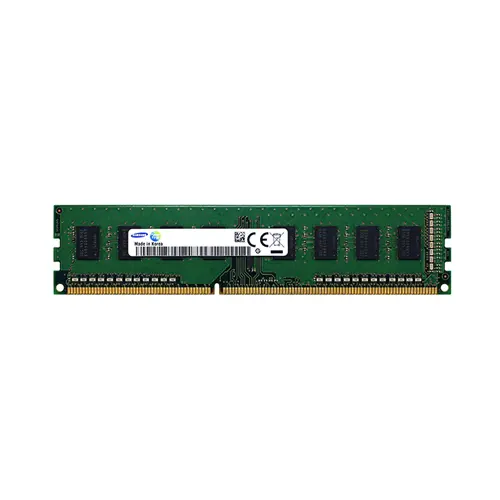
| Model | M392B2G70BM0-CK0 |
|---|---|
| Product Type | Memory Module |
| Compliance Standards | EU RoHS,FCC |
| Memory Capacity | 16 GB |
| Memory Technology | DDR3 |
| Product Voltage | 1.5V |
| RAM Speed | 1600MHz |
| RAM Standard | DDR3-1600/PC3-12800 |
| Error Identifying | ECC |
| Signal Type | Registered |
| Column Access Strobe (CAS) | CL11 |
| Rank | Dual Rank x4 |
| Quantity of Pins | 240-pin |
| RAM Genre | VLP RDIMM |
Designed specifically for server environments, this Samsung M392B2G70BM0-CK0 16GB VLP RDIMM leverages ECC and registered signaling to ensure mission-critical data integrity in virtualization clusters and memory-intensive database applications. Its dual-rank x4 configuration and low 1.5V operating voltage deliver stable 1600MHz throughput with a compact very-low-profile form factor, maximizing DIMM density in thermally constrained 1U/2U rack deployments.
1. ECC memory detects and corrects single-bit errors in real time, safeguarding transactional integrity for databases and financial applications that demand zero data corruption.
2. Registered signal buffering stabilizes command and address lines across fully loaded server boards, making large-scale memory configurations reliable under 24/7 operation.
3. Dual Rank x4 organization leverages rank interleaving to keep data buses fully utilized, boosting sustained throughput for dense virtualization clusters.
4. The VLP RDIMM form factor minimizes Z-height obstruction in 1U and blade servers, preserving critical airflow to maintain thermal compliance across all installed DIMMs.
5. A 16GB per module capacity provides the density needed to allocate memory generously to virtual machines, reducing swap latency and accelerating consolidation ratios.
The M392B2G70BM0-CK0 is a DDR3-1600 VLP RDIMM built specifically for server environments, where every design choice directly impacts uptime and data fidelity. Its Error-Correcting Code is not a checkbox; in a virtualized cluster running dozens of VMs on a single host, a cosmic-ray-induced bit flip can silently corrupt financial transactions or customer records. ECC detects and corrects these single-bit errors on the fly, turning a potential silent data corruption into a non-event. The registered buffer on this module stabilizes the command and address signals when you populate multiple DIMMs per channel, which is critical when you need to scale to 16GB per stick in dense configurations—without the signal degradation that would cause unexpected reboots in a production database. The 1600MHz speed combined with dual-rank x4 organization delivers the bandwidth headroom essential for in-memory databases like Redis or SAP HANA during real-time analytics, where latency spikes translate directly into lost revenue. Finally, the Very Low Profile form factor allows this module to fit effortlessly into 1U rack servers and blade enclosures, improving airflow and simplifying maintenance in cramped colocation racks. For a hypervisor running mission-critical workloads or a storage server mitigating bit rot, these four characteristics mean you can consolidate more workloads reliably without gambling on data integrity.
General Virtualization
This registered ECC DDR3-1600 module is ideal for virtualization hosts running VMware ESXi or Hyper‑V. Populate all available DIMM slots evenly across memory channels — typically in multiples of 6 or 8 identical 16 GB modules per CPU — to maximize memory bandwidth for dense VM consolidation. A starting configuration of 64 GB (4×16 GB) per socket supports dozens of light VMs, scaling to 128 GB or more for heavier workloads while retaining error correction for data integrity.
In‑Memory Database
For in‑memory databases like SAP HANA or Redis, capacity and reliability are paramount. Deploy a full set of dedicated DIMMs per memory channel — often 12×16 GB or 24×16 GB in dual‑socket servers — to reach the 384 GB–768 GB range essential for large datasets. The registered ECC design and dual‑rank x4 organization ensure consistent latency and tolerate single‑bit errors, preventing silent data corruption in mission‑critical caches.
High‑Performance Computing
In HPC clusters, balance core count and memory bandwidth by fully populating channels with identical 16 GB RDIMMs, typically 8 or 16 modules per node for 128 GB–256 GB. The DDR3‑1600 speed and CL11 timing provide predictable throughput for memory‑bound simulations. Always maintain uniform dual‑rank population to keep access symmetry and avoid performance pitfalls from mixed ranks, while the very‑low‑profile form factor aids dense 1U node cooling.
Rigorously tested and validated for Dell PowerEdge R720/R620, HPE ProLiant DL380p Gen8, and Lenovo System x3650 M4.
Q: Can I mix this M392B2G70BM0-CK0 with other memory modules of different brands or speeds?
A: Mixing is not recommended. This Registered ECC DIMM requires identical specifications—speed, rank, and CAS—to maintain system stability. Mismatched modules may cause POST failures or signal integrity issues in server environments.
Q: Is this memory compatible with my system?
A: It is designed for servers supporting DDR3 Registered ECC, such as Intel Xeon E5-2600 series or AMD Opteron 6300 series platforms. Please verify your server board's Qualified Vendor List (QVL) for M392B2G70BM0-CK0.
Q: What is the recommended DIMM population order for optimal performance?
A: Follow your server motherboard manual. Typically, populate identical DIMMs in balanced configurations per channel (e.g., fill blue slots first). Matching Dual Rank x4 modules ensures optimal interleaving and memory bandwidth.
Q: Does this module support overclocking or XMP profiles?
A: No. Server memory runs strictly at JEDEC standard DDR3-1600 CL11 for maximum stability and data integrity. Overclocking or XMP profiles are not supported, as they compromise reliability in mission-critical workloads.
Q: What warranty and typical failure rate can I expect?
A: This module includes a 1-year warranty. Enterprise-grade testing ensures an extremely low annualized failure rate (AFR), typically well below 0.5%, delivering proven long-term reliability for 24/7 operations.