











 Secure payments
Standard refund policy
Trade Assurance
Secure payments
Standard refund policy
Trade Assurance
| Model | M393B2G70BH0-CMAQ8M |
|---|---|
| Product Type | Memory Module |
| Compliance Standards | EU RoHS,FCC |
| Memory Capacity | 16 GB |
| Memory Technology | DDR3 |
| Product Voltage | 1.5V |
| RAM Speed | 1866MHz |
| RAM Standard | DDR3-1866/PC3-14900 |
| Error Identifying | ECC |
| Signal Type | Registered |
| Column Access Strobe (CAS) | CL13 |
| Rank | Dual Rank x4 |
| Quantity of Pins | 240-pin |
| RAM Genre | RDIMM |
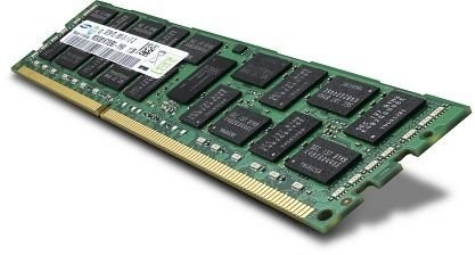
This Samsung M393B2G70BH0-CMAQ8M is a 16GB DDR3-1866 Registered ECC RDIMM engineered for server platforms, where its dual-rank x4 organization and CL13 latency boost memory bandwidth in virtualized environments and in-memory databases. The module’s registered signal buffering and full ECC protection guarantee rock‑solid data integrity under sustained heavy loads, making it a reliable choice for mission‑critical enterprise workloads.
1. ECC error correction detects and fixes single-bit memory faults in real time, safeguarding transactional data integrity for mission-critical enterprise databases.
2. Registered buffering stabilizes high-capacity memory configurations by reducing electrical load on the CPU's memory controller, ensuring reliable operation in dense server racks.
3. Dual Rank x4 organization maximizes interleaving and bandwidth utilization, keeping multiple VM instances responsive under heavy consolidation workloads.
4. 16GB capacity per module allows dense memory population for virtualization hosts, enabling more concurrent virtual machines without exhausting DIMM slots.
5. 1866MHz clock speed delivers high throughput for memory-bound analytics tasks, accelerating large dataset processing in legacy DDR3-based server farms.
Operating at the heart of enterprise data centers, the Samsung M393B2G70BH0-CMAQ8M is a 16GB DDR3 Registered DIMM engineered for relentless server workloads. Its defining characteristics directly address the real-world pain points of IT infrastructure managers.
The integrated ECC engine silently corrects single-bit memory errors caused by cosmic radiation or electrical noise, preventing silent data corruption. For mission-critical virtualization clusters hosting dozens of virtual machines, this means unplanned downtime and data inconsistencies become avoidable rather than inevitable. The Registered signal buffer on this 240-pin module stabilizes command and address lines, enabling you to populate all memory channels without signal degradation. When scaling a large in-memory database like SAP HANA or a dense VMware farm, you can trust the platform to remain stable under heavy load. Meanwhile, the dual-rank x4 organization interleaves internal banks, delivering higher sustained bandwidth than single-rank alternatives. Coupled with the responsive DDR3-1866 speed and tight CL13 latency, it accelerates database transaction processing and reduces query latency during peak hours. Finally, the solid 16GB capacity per module allows a dual-socket server to reach cost-effective high memory densities—perfect for virtual desktop infrastructure deployments where consolidating more sessions per host directly saves licensing and power costs. In these environments, this memory doesn't just meet specifications—it safeguards your business continuity and application responsiveness.
General Virtualization
For a typical hypervisor hosting multiple VMs, capacity is often constrained by memory, not CPU. Deploy these 16GB RDIMMs in balanced quantities — aim for at least six to eight modules (96GB–128GB) across all memory channels to maximize bandwidth while leaving room for growth. Populate identical DIMMs per channel to maintain uniform access latencies and avoid NUMA imbalances.
In-Memory Database
In-memory databases such as Redis or SAP HANA demand both capacity and data integrity. Maximize total RAM by fully populating all available DIMM slots with these ECC Registered modules, prioritizing capacity over raw speed — 16GB DIMMs are a solid building block, with a target of 256GB or more per node. Configure memory sparing or mirroring sparingly to preserve usable capacity, and strictly use identical part numbers to guarantee error-correction reliability under heavy write loads.
High-Performance Computing (HPC)
HPC clusters rely on memory bandwidth for parallel processing. Install these DDR3-1866 RDIMMs across all memory channels — ideally one DIMM per channel — to achieve peak bandwidth, since a dual-rank x4 configuration already balances load well. For capacity-hungry workloads, deploy multiple 16GB modules per channel while monitoring for any frequency downshift, and favor 2DPC (two DIMMs per channel) only if the platform guide confirms 1866 MT/s is maintained.
Rigorously tested, compatible with Dell PowerEdge R720, HP ProLiant DL380p Gen8, and similar servers.
Q: Can I mix this M393B2G70BH0-CMAQ8M with other memory modules of different brands or speeds?
A: Mixing brands or speeds is strongly discouraged in server environments. It can lead to instability and performance bottlenecks. For reliable operation, populate all channels with identical M393B2G70BH0-CMAQ8M modules.
Q: Is this memory compatible with my system?
A: It is compatible with servers using Intel Xeon E5-2600 v2/v3 or AMD Opteron 6300 series platforms that support DDR3-1866 Registered ECC memory. Always check your motherboard's qualified vendor list for confirmation.
Q: What is the recommended DIMM population order for optimal performance?
A: Populate identical DIMMs in sets per channel, starting with the first slot on each memory riser. Follow the server motherboard manual for balanced interleaving to maximize bandwidth and minimize latency.
Q: Does this module support overclocking or XMP profiles?
A: No, this server-grade Registered ECC module does not support overclocking or XMP. It runs strictly at JEDEC-standard 1866MHz CL13 to guarantee 24/7 stability and data integrity in mission-critical systems.
Q: What warranty and typical failure rate can I expect?
A: This module includes a 1-year warranty. Server memory typically has a very low annualized failure rate below 0.2% under proper cooling. Every unit undergoes rigorous testing for long-term reliability.